Why ZK-Rollups Matter Now
Zero-knowledge (ZK) rollups have transitioned from experimental technology to the dominant Layer 2 scaling solution for 2026. Driven by the need for immediate finality and cryptographic security, enterprises are migrating away from optimistic models that require waiting periods for dispute resolution. As Ethereum co-founder Vitalik Buterin noted, ZK-rollups are likely to become the main Layer 2 solution for the network, signaling a clear industry shift toward cryptographic certainty over probabilistic safety.
The primary advantage lies in finality. While optimistic rollups assume transactions are valid and rely on fraud proofs, ZK-rollups generate a validity proof upfront. Once verified on Ethereum, the transaction is final. This eliminates the seven-day withdrawal window that often frustrates enterprise users and financial institutions requiring real-time settlement. For high-stakes applications, this difference between "probable" and "proved" validity is the deciding factor.
This architectural shift is evident in market adoption. The correlation between Ethereum mainnet activity and ZK-rollup throughput suggests that as network congestion rises, enterprises increasingly turn to ZK solutions to maintain performance without compromising security. The technology no longer competes on theoretical potential; it is actively handling the bulk of complex, security-sensitive transactions on Ethereum today.
Validity proofs versus fraud proofs
The difference between ZK-rollups and Optimistic rollups comes down to when security is verified. ZK-rollups use validity proofs to show a transaction is correct before it lands on the blockchain. Optimistic rollups assume transactions are valid and only check them if someone reports a problem. This distinction matters most for enterprise applications where immediate finality is non-negotiable.
Think of ZK-rollups as a pre-screened guest list. The host checks every ID at the door. If you have a valid ticket, you walk right in. Optimistic rollups are like a large office building where everyone is allowed in, but security guards patrol the halls looking for trouble. If they spot someone who shouldn't be there, they remove them. For high-stakes financial transactions, waiting for a security guard to patrol the halls introduces unacceptable risk.
ZK-rollups provide immediate finality once the cryptographic proof is verified on Ethereum. This process typically takes minutes. Optimistic rollups require a challenge window, often lasting several days, before funds are considered safe to withdraw. During this window, a fraudulent transaction could theoretically move funds out of the system. For enterprises managing liquidity or compliance, this delay is a significant operational hurdle.
The table below compares the core mechanics of both approaches. ZK-rollups prioritize speed and certainty through upfront verification. Optimistic rollups prioritize developer flexibility and lower upfront costs, accepting a longer wait for security.
| Feature | ZK-Rollup | Optimistic Rollup |
|---|---|---|
| Proof Type | Validity Proof | Fraud Proof |
| Finality Time | Minutes | 7 Days |
| Security Model | Cryptographic Guarantee | Economic Incentive |
| Gas Costs | Higher (Proof Generation) | Lower |
ZK-rollups are increasingly becoming the standard for enterprise scaling because they remove the uncertainty of the challenge period. While Optimistic rollups remain popular for general-purpose smart contracts due to their EVM compatibility and ease of development, the strict security requirements of financial institutions favor the immediate assurance of validity proofs.
Top zkEVM projects for 2026
The enterprise scaling standard is moving from theoretical validation to production deployment. In 2026, the leading zkEVM projects are defined not just by transaction throughput, but by their ability to integrate with existing financial infrastructure and meet strict regulatory requirements. zkSync, Polygon zkEVM, Linea, and Starknet represent the primary choices for organizations prioritizing zero-knowledge proof efficiency.
zkSync Era remains the dominant choice for projects requiring strict EVM equivalence. Its architecture allows developers to deploy Solidity smart contracts with minimal modification, reducing the friction of migrating legacy financial applications. For enterprises, this compatibility means faster time-to-market for compliant DeFi and tokenized asset platforms. The network has consistently ranked high in total value locked, demonstrating strong institutional confidence in its underlying ZK technology.
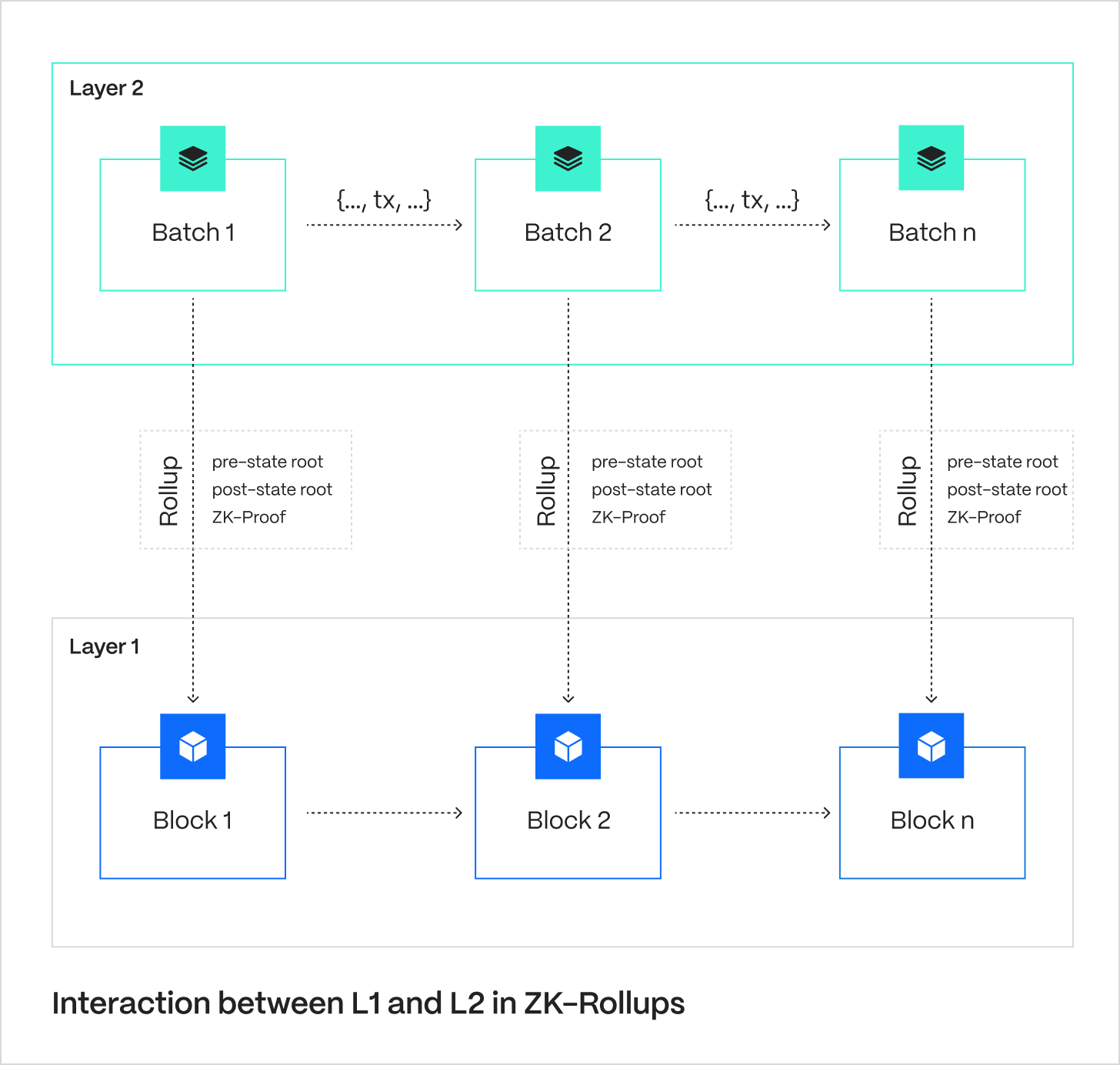
Polygon zkEVM focuses on bridging the gap between Ethereum's security and enterprise-grade usability. Its integration with major traditional finance players and its support for account abstraction make it a preferred layer for payment processors and large-scale data aggregation. The project emphasizes a "full EVM equivalence" that ensures deterministic execution, a critical requirement for audit trails and regulatory reporting in banking sectors.
Developed by ConsenSys, Linea leverages its parent company's extensive enterprise network to drive adoption. It utilizes a unique architecture that optimizes for gas efficiency and transaction finality. Linea is particularly strong in the realm of decentralized identity and credential verification, offering enterprise solutions that protect user privacy while maintaining on-chain verifiability. Its focus on developer tooling simplifies the integration of zero-knowledge proofs into existing enterprise software stacks.
Starknet distinguishes itself with STARK-based proofs, which offer post-quantum security and higher throughput than earlier ZK-SNARK implementations. While it uses Cairo instead of Solidity, its growing ecosystem of bridges and wrappers allows for EVM-compatible interactions. This makes Starknet ideal for high-frequency trading platforms and complex derivative structures that require massive parallelization and minimal latency.
The choice between these zkEVM projects often depends on the specific regulatory and technical constraints of the enterprise. zkSync and Polygon offer the lowest barrier to entry for Solidity-based teams, while Starknet provides superior scalability for high-volume computational tasks. As the zkEVM landscape matures in 2026, interoperability between these networks will become the next critical frontier for enterprise adoption.
Enterprise adoption drivers
By 2026, the conversation around ZK-rollups has shifted from technical novelty to operational necessity. Enterprises are not adopting these Layer 2 solutions for speculation; they are adopting them to solve three specific, high-stakes problems that legacy infrastructure cannot handle: regulatory compliance, data privacy, and cost reduction.
Regulatory compliance and finality
The primary driver for enterprise adoption is the certainty of finality. Unlike optimistic rollups, which assume validity and require a challenge period to resolve disputes, ZK-rollups generate a cryptographic proof of validity upfront. Once this proof is verified on Ethereum, the transaction is final. For financial institutions and supply chain managers, this eliminates the uncertainty of pending states. A trade-off that matters is speed: ZK rollups finalize in minutes, not days, allowing for real-time settlement that meets traditional banking standards.
Data privacy and zero-knowledge proofs
Businesses often handle sensitive data that cannot be broadcast to a public ledger. ZK-rollups solve this by moving computation and state off-chain while storing only the proof on-chain. This allows companies to prove compliance or ownership without revealing underlying details. For example, a bank can verify a customer’s creditworthiness or a company can prove a transaction is valid without exposing the customer’s wallet balance or transaction history. This capability is critical for industries bound by strict data protection laws like GDPR or HIPAA.
Cost reduction and scalability
The economic argument is equally compelling. By batching thousands of transactions off-chain and settling them with a single proof on Ethereum, ZK-rollups drastically reduce gas fees. This makes high-frequency microtransactions economically viable for the first time. A Callout flagging this efficiency gain is essential for context:
This cost structure allows enterprises to scale operations without the linear cost increase associated with Layer 1 congestion. As the network effects grow, the marginal cost of additional transactions approaches zero, making ZK-rollups the standard for high-throughput enterprise applications.
Choosing the right ZK-rollup
Selecting a ZK-rollup requires matching the protocol’s technical constraints to your enterprise’s specific operational needs. The decision hinges on three factors: compatibility with existing infrastructure, transaction speed, and ecosystem liquidity.
Prioritize rollups that natively support Ethereum Virtual Machine (EVM) execution. This ensures your smart contracts deploy without modification, reducing development overhead and security risks associated with custom virtual machines.
ZK-rollups provide immediate finality once the validity proof is verified on Ethereum, typically within minutes. For high-frequency trading or real-time settlement systems, this cryptographic guarantee eliminates the dispute windows inherent in optimistic rollups.
Ensure the chosen network has sufficient liquidity on major decentralized exchanges. A deep liquidity pool minimizes slippage for large enterprise transactions and provides the necessary depth for stablecoin operations and cross-chain interoperability.
| Feature | ZK-Rollup | Optimistic Rollup |
|---|---|---|
| Finality | Immediate (minutes) | Delayed (7 days) |
| Proof Type | Validity Proof | Fraud Proof |
| Cost | Higher (computationally) | Lower (post-L1) |
The choice between ZK-rollups and optimistic rollups ultimately depends on your tolerance for delay versus computational cost. ZK-rollups offer superior speed and security guarantees, making them ideal for mission-critical enterprise applications where immediate settlement is non-negotiable.
Common questions about ZK-rollups
Does Bitcoin use ZK-rollups?
Bitcoin currently does not support ZK-rollups natively. While zero-knowledge proofs (ZKP) can theoretically verify Bitcoin transactions without revealing wallet balances or history, the protocol lacks the smart contract infrastructure required to settle rollup validity proofs on-chain. Most ZK-rollup development focuses on Ethereum and compatible chains where EVM logic enables immediate fraud or validity verification.
What is the difference between an optimistic rollup and a ZK-rollup?
The core difference lies in how validity is established. Optimistic rollups assume transactions are valid and use fraud proofs to challenge incorrect states afterward. In contrast, ZK-rollups generate a cryptographic proof for every batch before submission. This means ZK-rollups offer faster finality—often within minutes—as soon as Ethereum verifies the proof, whereas optimistic rollups require a multi-day challenge window.
Are ZK-rollups secure enough for enterprise use?
Yes. Because ZK-rollups rely on mathematical proofs rather than assumptions, they inherit the security of the underlying Ethereum mainnet. For enterprise scaling, this eliminates the risk of fraud attacks that can affect optimistic models. The primary trade-off is computational cost, but as proof generation hardware improves, ZK-rollups are becoming the standard for high-throughput, secure financial applications.
No comments yet. Be the first to share your thoughts!