Why ZK rollups matter in 2026
Zero-knowledge rollups have transitioned from experimental Layer 2 concepts to foundational infrastructure for enterprise blockchain applications. Unlike earlier scaling solutions that relied on optimistic fraud proofs, ZK rollups generate cryptographic validity proofs for every batch of transactions. This mechanism ensures that the state of the rollup is mathematically guaranteed to be correct before it is settled on the Ethereum mainnet. For legal and regulatory frameworks, this shift from "guaranteed correctness" to "guaranteed finality" significantly reduces counterparty risk and simplifies compliance auditing.
The primary driver for 2026 adoption is the combination of instant finality and native privacy. Traditional Layer 2 solutions often require a challenge period before transactions are considered final, creating a window of uncertainty that is incompatible with high-frequency settlement or regulated financial instruments. ZK rollups eliminate this latency by providing immediate proof of validity. Additionally, the zero-knowledge aspect allows enterprises to process sensitive data off-chain while still proving compliance on-chain. This capability addresses the tension between public transparency and private data protection, a core requirement for institutional adoption.
Technical efficiency remains a critical factor. By batching thousands of transactions and posting only a minimal summary to the mainnet, ZK rollups drastically reduce gas costs and network congestion. This efficiency is not merely a speculative benefit but a structural necessity for scaling enterprise-grade applications that require high throughput without compromising security guarantees.
The integration of ZK rollups into enterprise workflows represents a maturation of the technology. As the infrastructure becomes more robust and the proofs faster to generate, the barriers to entry for regulated industries continue to fall. The focus has shifted from proving that ZK rollups work to demonstrating how they can be integrated into existing legal and operational frameworks.
How ZK rollups process transactions
Zero-knowledge rollups operate by bundling thousands of transactions off-chain before submitting a single validity proof to the Ethereum mainnet. This mechanism allows the network to verify the integrity of the entire batch using cryptographic mathematics rather than re-executing every individual transaction. For enterprise applications, this distinction is critical: the mainnet only receives the compressed state changes and the proof, ensuring that the underlying data remains available while the computational load stays off-chain.
The core technical advantage lies in immediate finality. Unlike optimistic rollups, which require a seven-day challenge period to detect fraud, ZK rollups provide instant confirmation once the validity proof is accepted by the smart contract. This eliminates the withdrawal latency that often hinders high-throughput enterprise workflows. The system relies on the assumption that the cryptographic proof is mathematically sound; if the proof verifies, the state transition is considered final and immutable.
Data availability remains the primary constraint for these systems. While the computation occurs off-chain, the transaction data (or its availability sample) must be posted to Ethereum to ensure that nodes can reconstruct the state if necessary. This creates a tradeoff between throughput and data costs. As the volume of transactions increases, the cost of posting this data to the mainnet becomes the dominant factor in the rollup's operational expenses.
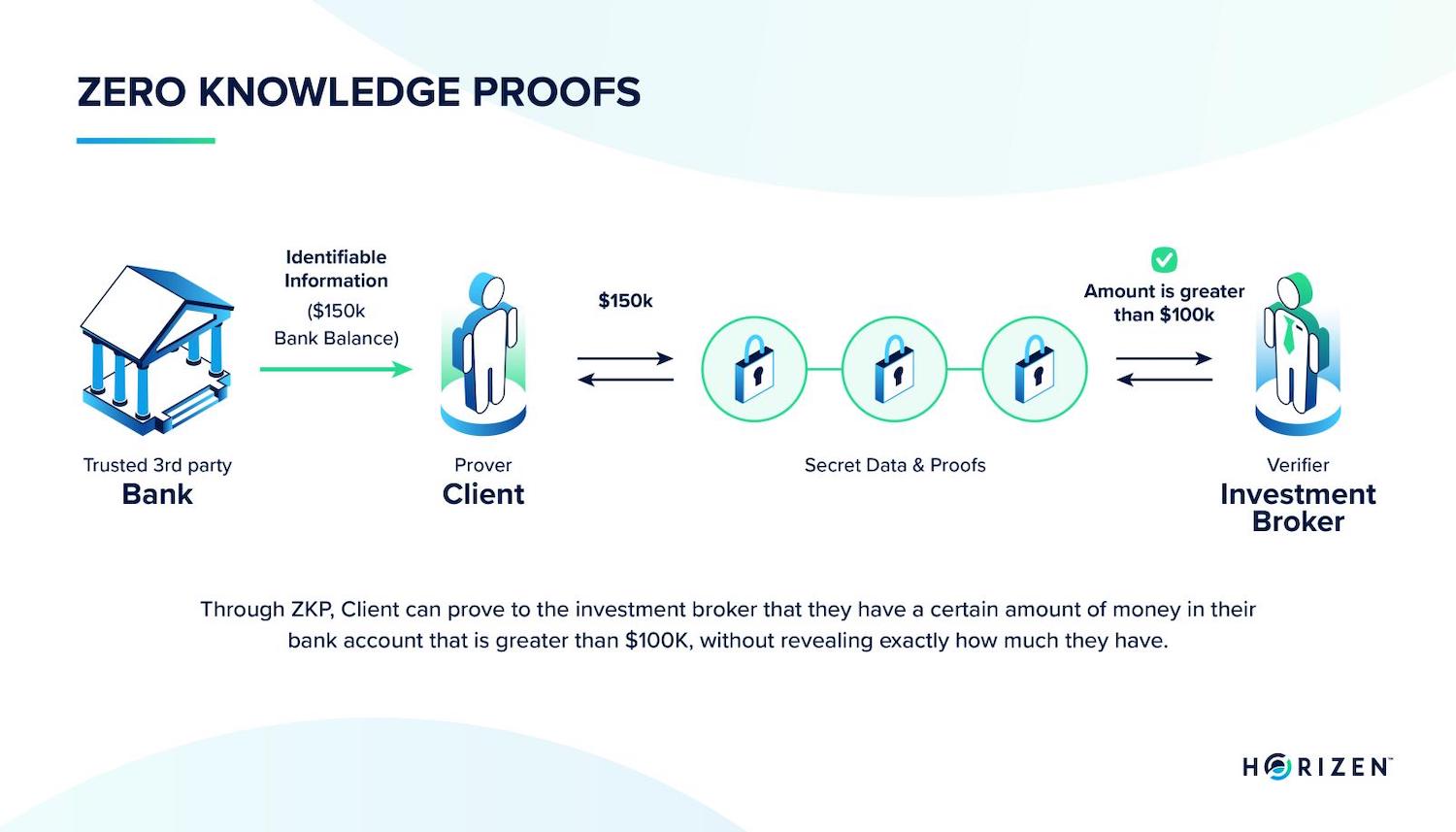
For legal and compliance teams, the clarity of this process simplifies audit trails. Because the validity proof is generated before the state update is committed, there is no ambiguity regarding which transactions are included in the final state. This deterministic nature aligns well with regulatory requirements for transparent and verifiable transaction histories.
Comparing ZK rollup architectures
Selecting a ZK rollup architecture requires balancing ZK-EVM compatibility, proof generation latency, and data availability mechanisms. As of 2026, the ecosystem has bifurcated between projects prioritizing strict EVM equivalence and those optimizing for throughput via non-EVM execution environments. The tradeoff is rarely neutral: higher compatibility often incurs greater proof generation overhead, while specialized architectures achieve faster finality at the cost of broader developer tooling support.
The following comparison outlines the technical distinctions among leading ZK rollup implementations. These metrics reflect current operational realities rather than theoretical maximums, focusing on how each architecture handles transaction processing and settlement.
| Project | ZK-EVM Compatible | Proof Type | Estimated TPS |
|---|---|---|---|
| Polygon zkEVM | Yes | Plonk | ~4,000 |
| StarkNet | No | STARK | ~13,000 |
| Scroll | Yes | Plonk | ~2,500 |
| Linea | Yes | Plonk | ~3,000 |
| zkSync Era | Partial | Plonk | ~2,000 |
Polygon zkEVM and Scroll prioritize binary compatibility with existing Ethereum smart contracts. This approach minimizes migration friction for enterprises but requires complex circuit design, which can constrain theoretical throughput. Conversely, StarkNet utilizes a custom virtual machine (Cairo) and STARK proofs. While this architecture delivers significantly higher transaction capacity, it necessitates rewriting smart contracts in a domain-specific language, creating a steeper learning curve for developers accustomed to Solidity.
Proof type also dictates finality characteristics. Plonk-based systems, used by Polygon, Scroll, and Linea, generally offer faster proof generation times, enabling quicker on-chain settlement. STARKs, employed by StarkNet, provide quantum resistance and parameter-free setups but may involve longer proof generation cycles. For regulatory compliance and auditability, the transparency of Plonk proofs often simplifies verification processes compared to the more opaque STARK constructions, although both are mathematically sound.
Enterprise adoption in 2026 favors architectures that support existing Ethereum tooling. Projects like Scroll and Linea are gaining traction among legacy financial institutions because they allow seamless deployment of unmodified Solidity code. However, high-frequency trading applications may still prefer StarkNet’s superior throughput despite the ecosystem fragmentation. The choice ultimately depends on whether the priority is developer ease-of-use or raw transactional efficiency.
Enterprise Use Cases and Compliance
Zero-knowledge rollups (ZK rollups) address the specific friction points that have historically hindered enterprise blockchain adoption: cost, speed, and data privacy. Unlike optimistic rollups, which rely on dispute periods to ensure security, ZK rollups generate a cryptographic proof of validity for every batch of transactions before settling on the main chain. This architecture allows enterprises to process thousands of transactions off-chain while maintaining the security guarantees of the underlying Layer 1 network, such as Ethereum.
For financial institutions and regulated entities, the primary value proposition lies in privacy-preserving compliance. ZK rollups enable the verification of transaction validity without exposing sensitive underlying data on the public ledger. This capability is critical for meeting regulatory requirements such as GDPR and HIPAA, where data minimization is a legal obligation. By keeping sensitive customer data off-chain and only publishing zero-knowledge proofs, enterprises can audit transaction integrity without compromising user confidentiality.
The economic model of ZK rollups also offers significant advantages for high-volume, low-value transactions. By aggregating thousands of transactions into a single proof, the gas cost per transaction is drastically reduced compared to direct Layer 1 execution. This efficiency makes micro-transactions and high-frequency trading viable on-chain, scenarios that were previously economically unfeasible due to network congestion and high fees. The reduction in operational costs allows enterprises to scale their blockchain infrastructure without proportional increases in expenditure.
Regulatory compliance is further strengthened by the deterministic finality provided by ZK proofs. Once a proof is verified, the state transition is immutable and final, eliminating the need for the observation periods required by optimistic rollups. This immediate finality is essential for real-time settlement systems and regulatory reporting, where latency and uncertainty are unacceptable risks. The cryptographic nature of the proofs also provides an auditable trail that regulators can verify independently, enhancing trust in the system's integrity.
The adoption of ZK rollups by enterprises is not without trade-offs. The computational cost of generating zero-knowledge proofs is higher than simple transaction execution, requiring specialized hardware or off-chain computation resources. However, as proof generation algorithms continue to improve and become more efficient, these costs are expected to decrease. For enterprises, the trade-off between computational overhead and the benefits of privacy, security, and cost reduction is increasingly favorable, making ZK rollups a compelling choice for next-generation enterprise blockchain solutions.
No comments yet. Be the first to share your thoughts!