The zero-knowledge proofs 2026 limits to account for
The landscape for zero-knowledge proofs 2026 has shifted from experimental research to industrial deployment. The primary constraint is no longer whether ZKPs work, but how quickly and cheaply they can be generated at scale. In 2026, the focus is on reducing prover latency and minimizing verifier complexity across heterogeneous hardware.
The ZKProof initiative, convening in Rome this May, highlights the industry's push for standardized interoperability. Rather than fragmented proprietary solutions, the 2026 constraint demands open standards that allow proofs generated on one platform to be verified on another without loss of trust or efficiency. This standardization is critical for cross-chain finance and AI verification.
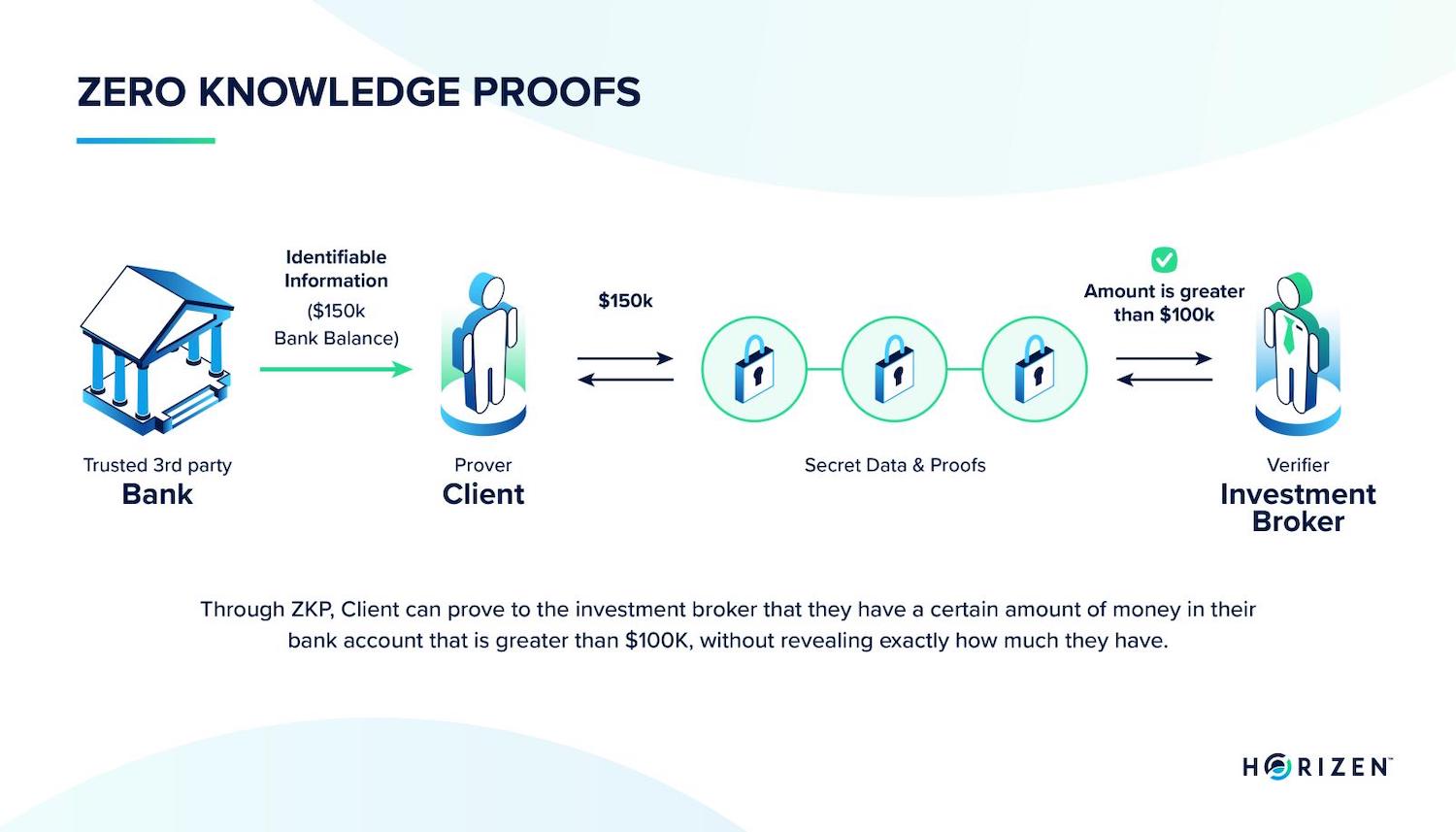
Practical adoption now hinges on "proofs of knowledge" rather than just "proofs of validity." Systems must prove that sensitive data exists without revealing it, a distinction that drives the current wave of privacy-preserving AI and decentralized identity protocols. The 2026 constraint is essentially a test of practical utility: can these proofs run on consumer devices, or do they require specialized infrastructure?
Zero-knowledge proofs 2026 choices that change the plan
As zero-knowledge proofs move from experimental labs to mainnet deployment, the choice of proving system dictates your operational reality. In 2026, there is no single dominant standard; instead, developers must weigh distinct tradeoffs between proving speed, verification cost, and hardware requirements. The ZKProof initiative continues to drive standardization, but practical implementation depends on matching the protocol to your specific use case.
The following comparison breaks down the most common proving frameworks available today, focusing on the concrete factors that affect deployment costs and user experience.
| System | Prover Cost | Verifier Cost | Trusted Setup | Best For |
|---|---|---|---|---|
| Plonk | Medium | Low | Universal (No) | General-purpose smart contracts |
| Binius | High | Medium | None | High-throughput rollups |
| STARKs | High | Medium | None | Long-term security guarantees |
| Groth16 | Low | Low | Circuit-specific (Yes) | Low-cost, single-use proofs |
Plonk remains a strong default for general-purpose smart contracts due to its universal trusted setup, meaning a single ceremony can secure multiple circuits. However, if you are building a high-throughput rollup where prover efficiency is paramount, newer schemes like Binius offer significant computational advantages without requiring a trusted setup. For applications demanding long-term security against quantum threats, STARKs provide a robust, setup-free alternative, albeit at a higher prover cost.
Groth16 continues to dominate scenarios where verification gas fees must be minimized, such as simple privacy attestations or low-value transactions. The tradeoff is the need for a circuit-specific trusted setup, which introduces a one-time risk during deployment. Understanding these distinctions prevents over-engineering complex proofs for simple tasks or under-securing high-value financial operations.
Evaluating ZK proof systems for your stack
Zero-knowledge proofs are no longer experimental; they are infrastructure. The 2026 landscape demands a shift from abstract curiosity to rigorous engineering assessment. You are not just choosing a cryptographic primitive; you are selecting a performance profile that dictates your user experience and cost structure.
The decision framework below outlines the four primary ZK proof systems dominating the current market. Each offers distinct tradeoffs in verification speed, proof generation cost, and trust assumptions. Select the system that aligns with your specific latency and security requirements.
zk-SNARKs (Succinct Non-interactive Arguments of Knowledge) produce the smallest proofs, typically under 200 bytes. This makes them ideal for on-chain verification where gas costs are prohibitive. However, they require a trusted setup ceremony to generate public parameters. If your protocol cannot tolerate a one-time trusted setup, SNARKs are likely unsuitable.
zk-STARKs (Scalable Transparent Arguments of Knowledge) eliminate the need for a trusted setup, relying instead on public randomness. They are post-quantum secure and scale better for large circuits than SNARKs. The tradeoff is larger proof sizes (often several kilobytes), which can increase verification costs on legacy blockchains.
PLONK (Permutation Argument of Knowledge) is a general-purpose SNARK that allows a single universal trusted setup. Once the parameters are generated, they can be used for any circuit without re-running the ceremony. This flexibility makes PLONK a strong default for many application-specific blockchain (ASB) projects seeking a balance between SNARK efficiency and setup convenience.
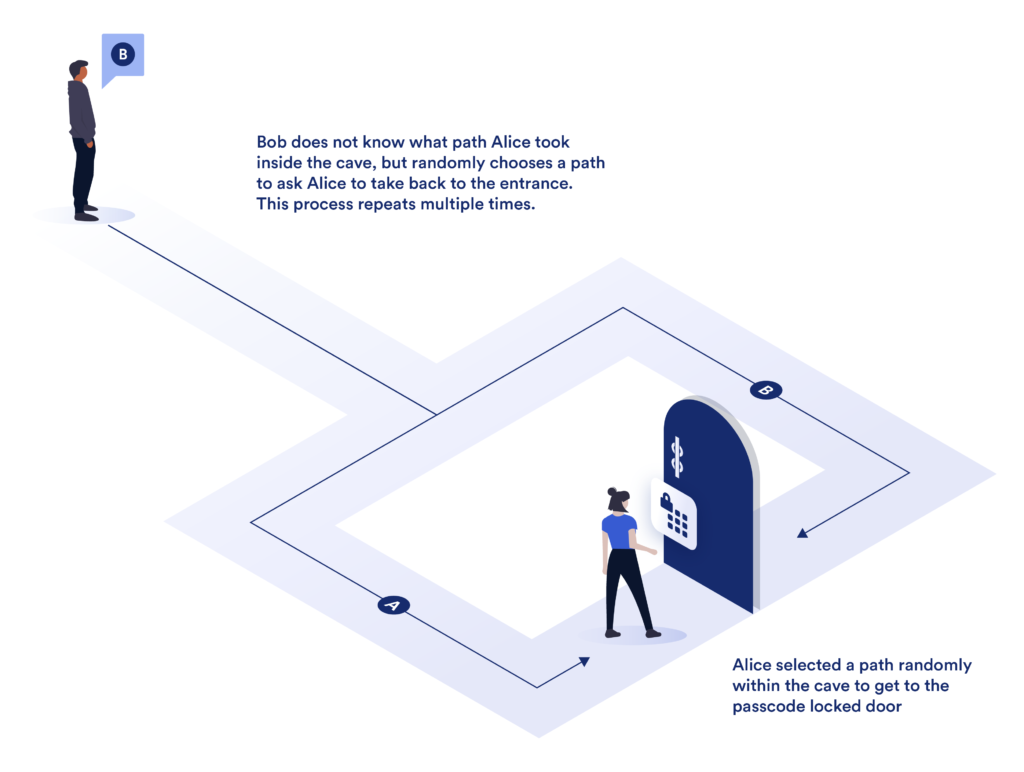
Halo2 is a SNARK designed specifically for recursive proof composition, allowing proofs to be verified within other proofs. This is critical for rollup architectures that need to aggregate multiple transactions into a single state root without re-verifying the entire history. It offers a middle ground between the transparency of STARKs and the efficiency of SNARKs.
Implementation checklist
Before deploying any ZK system, validate your choice against these operational constraints. The ZKProof standards initiative provides a rigorous framework for evaluating these components ZKProof Standards.
- Trusted Setup Dependency: Determine if your protocol can accept a one-time trusted setup ceremony. If not, discard SNARKs and PLONK.
- Proof Size vs. Verification Time: Calculate the gas cost of verification. Small proofs (SNARKs) are cheaper on-chain but slower to generate; large proofs (STARKs) are cheaper to generate but expensive to verify.
- Quantum Resistance: Assess your long-term security horizon. If post-quantum security is a priority, STARKs are the only viable option among current mainstream systems.
- Circuit Complexity: Benchmark your specific circuit against the chosen system. Some systems handle arithmetic circuits more efficiently, while others excel with boolean logic.
Spotting weak zero-knowledge claims
Not all zero-knowledge proofs are created equal. As the 2026 ZK Renaissance accelerates, distinguishing robust cryptographic standards from marketing hype becomes critical for privacy and finance. The ZKProof initiative emphasizes that mainstream adoption requires rigorous academic validation, not just vendor promises [src-serp-1].
The "Trusted Setup" Trap
Many protocols claim full trustlessness but rely on a "trusted setup" ceremony. If the initial parameters are compromised, the entire system's security collapses. Look for proofs that eliminate this requirement entirely, such as Transparent ZKPs, which allow anyone to verify validity without prior trusted coordination [src-serp-2].
Proof Size vs. Verification Speed
Some solutions prioritize tiny proof sizes at the cost of slow verification times. Others optimize for speed but generate massive data payloads. The best options balance both: compact enough to transmit efficiently on-chain, yet fast enough to validate in milliseconds. Avoid systems that require heavy computational overhead for simple checks.
Lack of Formal Verification
A working demo is not a secure product. Reputable projects publish formal verification reports from independent auditors. If a protocol cannot demonstrate mathematical proof of its correctness against its specification, treat it as a high-risk option. Always verify that the code matches the published cryptographic specification.
Zero-knowledge proofs 2026: what to check next
As zero-knowledge proofs (ZKPs) move from experimental cryptography to mainstream infrastructure, practical questions about their real-world application are surfacing. This section addresses common concerns regarding privacy, regulatory compliance, and technical integration in 2026.
No comments yet. Be the first to share your thoughts!