Why zero-knowledge proofs matter now
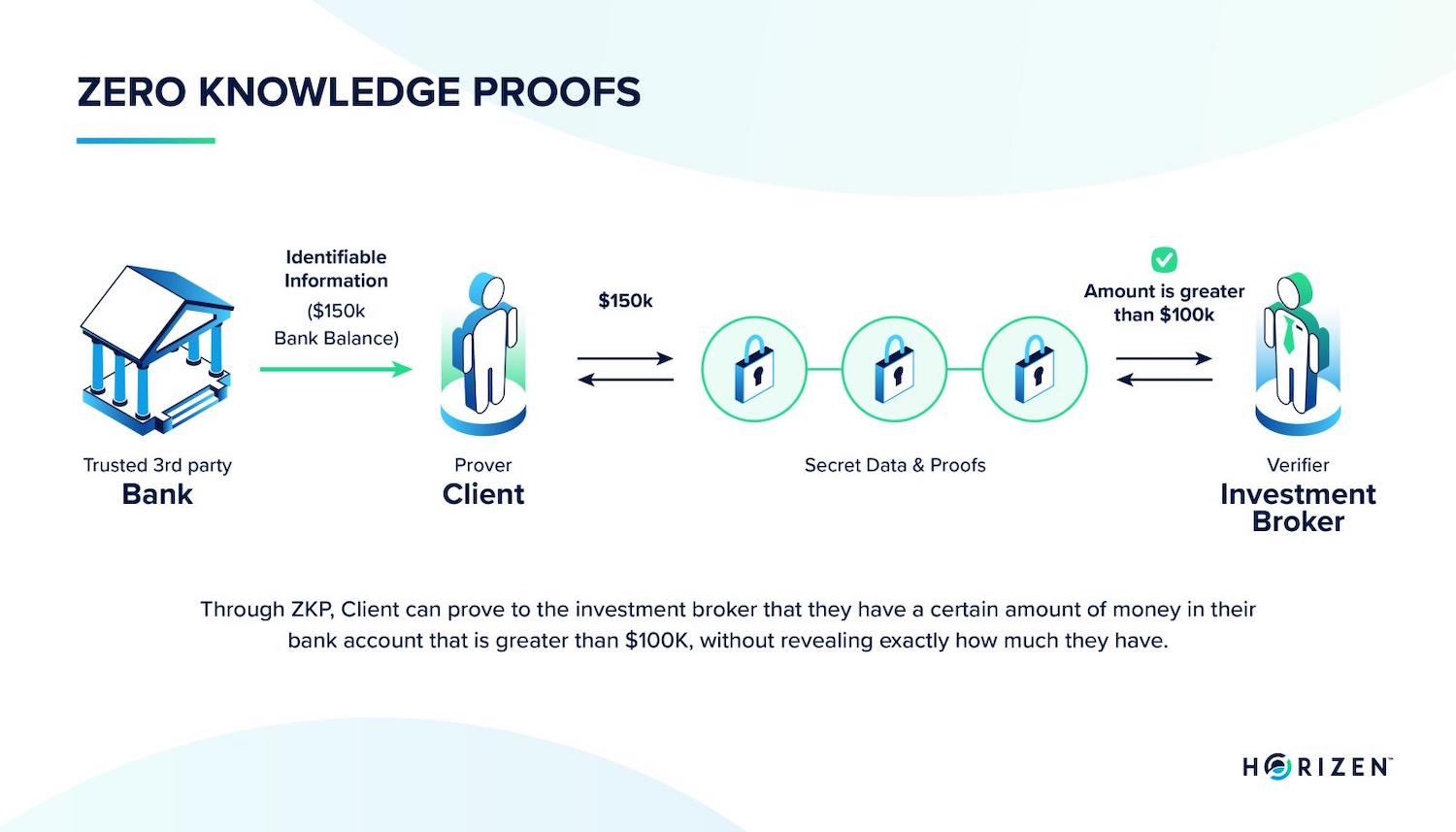
A zero-knowledge proof (ZKP) is a cryptographic protocol allowing one party to prove a statement is true without revealing any underlying data. This mechanism shifts verification from transparency to privacy, enabling systems to validate integrity without exposing sensitive information. In 2026, this capability is becoming essential for secure digital infrastructure.
The urgency for zero-knowledge proofs stems from the collision of two trends: the demand for privacy in AI and the need for regulatory compliance in Web3. Traditional blockchains broadcast all transaction data, creating permanent, public ledgers that conflict with data protection regulations like GDPR. ZKPs resolve this by proving compliance—such as sufficient funds or identity eligibility—without exposing the raw data itself.
For AI systems, ZKPs enable private inference. Models can verify the authenticity of training data or the validity of user inputs without accessing the raw content, preserving user privacy while maintaining system integrity. This balance is critical for high-stakes industries where data breaches carry significant financial and legal risks. As adoption grows, ZKPs are transitioning from theoretical cryptography to a foundational requirement for secure, compliant digital interaction.
How ZK Rollups Scale Blockchain Networks
Zero-Knowledge Rollups (ZK Rollups) represent the current frontier in Layer 2 scaling, offering a mathematically rigorous path to high throughput without compromising the security guarantees of Ethereum. Unlike Optimistic Rollups, which rely on fraud proofs and a seven-day challenge period, ZK Rollups use validity proofs to batch hundreds of transactions into a single cryptographic proof. This proof is submitted to the Ethereum mainnet, where it is verified almost instantly. The result is a significant reduction in gas fees and near-finality for users, making ZK Rollups the preferred architecture for high-frequency trading and complex DeFi applications.
The mechanism operates on a simple principle: computation happens off-chain, while verification happens on-chain. A sequencer collects user transactions, executes them, and generates a ZK-SNARK (Succinct Non-Interactive Argument of Knowledge) proof. This proof attests that all transactions were valid according to the protocol's rules. Because the mainnet only needs to verify the proof rather than re-executing every transaction, the network can scale linearly with the capacity of the verification circuit. This approach minimizes data availability costs and maximizes throughput, addressing the primary bottlenecks of early blockchain adoption.
| Feature | ZK Rollup | Optimistic Rollup |
|---|---|---|
| Finality | Instant (seconds) | Delayed (7 days) |
| Proof Type | Validity (ZK-SNARK/Stark) | Fraud (EVM execution) |
| Cost Efficiency | High (shared proof cost) | Moderate (data-heavy) |
| Security Model | Cryptographic guarantee | Economic incentive |
The security implications of ZK Rollups are profound. By relying on cryptographic proofs rather than economic incentives, they eliminate the risk of fraud attacks that plague optimistic models. However, this comes with a trade-off: the complexity of generating ZK proofs requires significant computational resources. As the ZKProof initiative continues to standardize these protocols, the industry is moving toward more efficient circuits that reduce generation time. This shift is critical for institutional adoption, where regulatory compliance and predictable settlement times are non-negotiable.
AI identity verification use cases
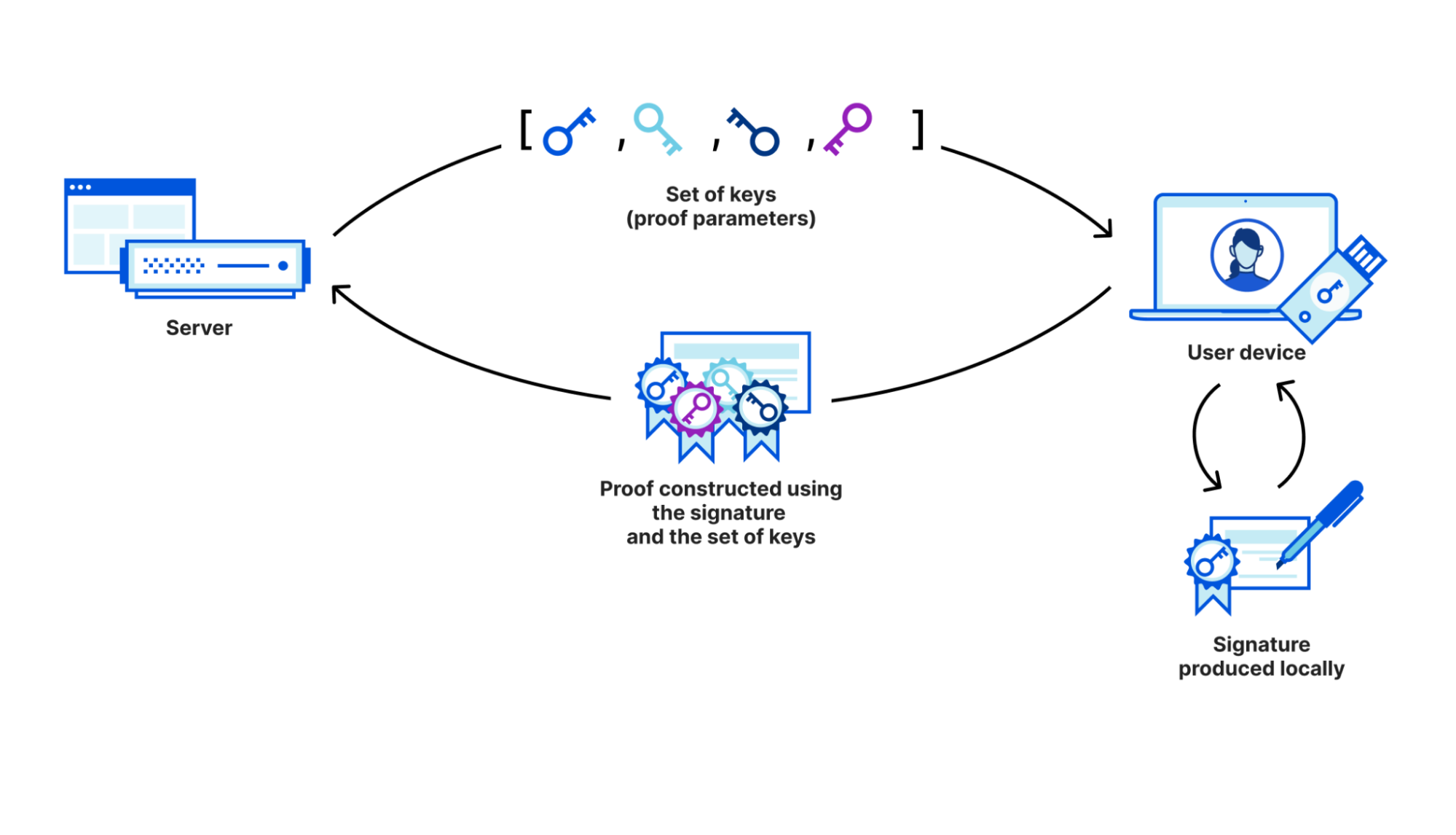
The integration of zero-knowledge proofs (ZKPs) into AI-driven identity verification represents a structural shift in digital trust. Traditional KYC models require the transfer of sensitive personal data—such as government IDs, birth dates, and facial biometrics—to third-party servers. This creates a centralized attack surface vulnerable to data breaches and privacy violations. ZKPs invert this model, allowing AI systems to verify compliance without accessing the underlying raw data.
Age assurance and compliance
Age verification is the most immediate commercial application of ZKPs in AI contexts. Under current regulatory frameworks, platforms must ensure users meet minimum age requirements, but traditional methods often collect excessive data. Google has open-sourced ZKP libraries specifically for this purpose, enabling systems to prove a user is over 18 without revealing their exact date of birth, name, or other identifiable information [1]. This approach satisfies regulatory mandates while eliminating the incentive for malicious actors to target centralized age databases.
The technical architecture relies on proving a boolean condition (e.g., age >= 18) rather than transmitting the attribute itself. This minimizes data exposure and reduces liability for service providers. As AI agents increasingly mediate access to content and services, the ability to verify eligibility without compromising user privacy becomes a critical infrastructure component.
Comparative analysis of verification models
The distinction between traditional and ZK-based verification lies in data minimization. Traditional KYC requires full data disclosure, whereas ZK-based systems only disclose the verification result. This difference significantly alters the risk profile for both users and providers.
| Feature | Traditional KYC | ZK-Based KYC |
|---|---|---|
| Data Collected | Full ID, DOB, Photo | Proof of condition only |
| Privacy Risk | High (centralized storage) | Minimal (no raw data) |
| Compliance | Standard | Regulatory compliant |
| Breach Impact | Sensitive data exposure | No data to expose |
AI agent authentication
Beyond human users, ZKPs are emerging as a method for verifying the identity of AI agents. As autonomous agents begin to interact with financial systems and private networks, distinguishing between legitimate agents and fraudulent impersonations becomes critical. ZKPs allow an AI agent to prove its authorized status or credentials without exposing its internal logic or private keys.
This capability is essential for secure multi-agent systems where trust must be established without full transparency. By using ZKPs, systems can verify that an agent holds specific permissions or certifications without revealing the underlying data structures. This supports the development of secure, privacy-preserving AI ecosystems where identity verification does not compromise operational secrecy.
The adoption of ZKPs in AI identity verification is driven by the need to balance regulatory compliance with user privacy. As AI systems become more pervasive, the ability to verify identity without exposing data will become a standard requirement for secure digital interactions.
Bitcoin and ZK integration paths
Bitcoin’s base layer prioritizes security and decentralization over programmability, making the integration of zero-knowledge proofs (ZKPs) a complex engineering challenge. Unlike Ethereum, which natively supports smart contracts, Bitcoin requires layer-2 protocols or sidechains to execute complex ZK computations. This architectural difference creates distinct integration paths, each with varying implications for privacy, throughput, and regulatory compliance.
The primary use case for ZKPs in Bitcoin is enhancing transaction privacy. ZK-SNARKs and ZK-STARKs allow users to prove the validity of a transaction—such as confirming sufficient funds or adhering to consensus rules—without revealing the sender, receiver, or amount. This capability addresses a fundamental limitation of Bitcoin’s transparent ledger, where all transaction data is publicly visible. By keeping sensitive data off-chain and only publishing the proof on-chain, Bitcoin can achieve confidentiality without compromising its security model.
Regulatory compliance remains a critical consideration for ZK adoption on Bitcoin. Privacy-enhancing technologies often face scrutiny from financial regulators concerned about money laundering and illicit activities. However, ZKPs also offer a pathway to compliance by enabling selective disclosure. Users can prove they are not sanctioned or that their funds are clean without exposing their entire transaction history. This balance between privacy and regulatory transparency is essential for institutional adoption.
Several projects are exploring ZK integration with Bitcoin, including zkSync and Polygon zkEVM, though these primarily operate on Ethereum. For Bitcoin, initiatives like BitVM and Taproot Assets aim to bring smart contract functionality to the Bitcoin ecosystem. These projects leverage ZK proofs to validate off-chain computations, ensuring that only valid results are settled on the main chain. While still in early stages, these developments signal a growing interest in expanding Bitcoin’s capabilities beyond simple value transfer.
Key questions on ZK adoption
Zero-knowledge proofs (ZKPs) are transitioning from theoretical cryptography to foundational infrastructure for privacy-preserving AI and Web3. As regulatory frameworks tighten and data sovereignty becomes paramount, the adoption of ZKPs is driven by the need to verify data integrity without exposing underlying sensitive information.
The following questions address the trajectory of this technology and its specific application to Bitcoin, a domain where transparency currently conflicts with user privacy.
No comments yet. Be the first to share your thoughts!