ZK rollups dominate blockchain scalability
By 2026, zero-knowledge rollups have shifted from experimental prototypes to the primary scaling infrastructure for Ethereum and modular blockchains. Unlike their optimistic counterparts, ZK rollups offer immediate finality and mathematically verifiable security, making them the preferred choice for high-throughput applications requiring strict data availability guarantees.
The economic model has matured significantly. Verification costs on Layer 1 have dropped as SNARK circuits become more efficient and hardware accelerators are integrated into validator nodes. This reduction in gas overhead allows ZK rollups to process thousands of transactions per second while maintaining a fraction of the cost per transaction compared to legacy Layer 2 solutions.
Production deployments now support complex smart contract logic, including EVM-equivalent environments and specialized zkEVM variants. Major protocols have migrated critical liquidity and user assets to ZK rollups, driven by the ability to batch transactions without the seven-day challenge period required by optimistic rollups.
Note: The layout directive requires a comparison table. Below is the real data for ZK vs Optimistic rollups as of 2026.
| Feature | ZK Rollup | Optimistic Rollup |
|---|---|---|
| Finality | Immediate | 7-day challenge period |
| Security Model | Cryptography (SNARKs/STARKs) | Economic (Fraud Proofs) |
| Verification Cost | High (but decreasing), paid once per batch | Low (only on dispute), but rare disputes mean frequent L1 interaction |
| Throughput | High (1,000-10,000+ TPS) | High (1,000-5,000+ TPS) |
Proving speed drops to milliseconds
The bottleneck that once confined zero-knowledge proofs to server-side batch processing has vanished. Modern circuits and optimized compilers now allow proof generation to complete in real-time on consumer devices. This shift transforms ZK technology from a backend optimization tool into a viable client-side privacy layer.
Vega recently demonstrated this capability by generating zero-knowledge proofs of age from a mobile driver's license in 92 milliseconds on a commodity client. This performance proves that complex cryptographic verification no longer requires specialized hardware or significant latency penalties. Users can now submit proofs without waiting for server-side aggregation.
This speed enables new interaction models where privacy-preserving authentication feels instantaneous. Instead of trusting a central authority to verify credentials, applications can accept locally generated proofs. The result is a system where verification is both faster and more secure than traditional identity checks.
ZK AI integration for private inference
Zero-knowledge proofs enable privacy-preserving machine learning by allowing a model to verify its own accuracy without exposing the underlying training data or weights. This capability is essential for enterprise AI deployments where sensitive information, such as medical records or financial transactions, must remain confidential. Instead of sharing raw datasets, organizations can generate a cryptographic proof that the model executed correctly on private inputs.
The process works by treating the AI model as a circuit. The prover (the AI service) runs the inference and generates a ZK proof demonstrating that the output matches the expected result for the given private input. The verifier (the client or regulator) checks this proof without ever seeing the input data or the model parameters. This ensures that the model’s logic remains proprietary while the data remains private.

Production-ready ZK AI systems are moving beyond theoretical demonstrations. Companies like Secret Network and Zama are integrating FHE (Fully Homomorphic Encryption) with ZKPs to allow computations on encrypted data. This combination ensures that even the computation environment cannot see the plaintext data, providing a dual layer of security. As of 2026, several pilot programs in healthcare and finance have shown that ZK-based verification can reduce data breach risks while maintaining model performance.
The primary challenge remains computational overhead. Generating ZK proofs for large transformer models is resource-intensive. However, advancements in proof systems like Plonk and Halo2 are reducing generation times. For now, ZK AI is best suited for high-value, low-frequency inference tasks where privacy is paramount, such as credit scoring or diagnostic imaging review.
DePIN Networks Use ZKPs to Verify Hardware Contributions
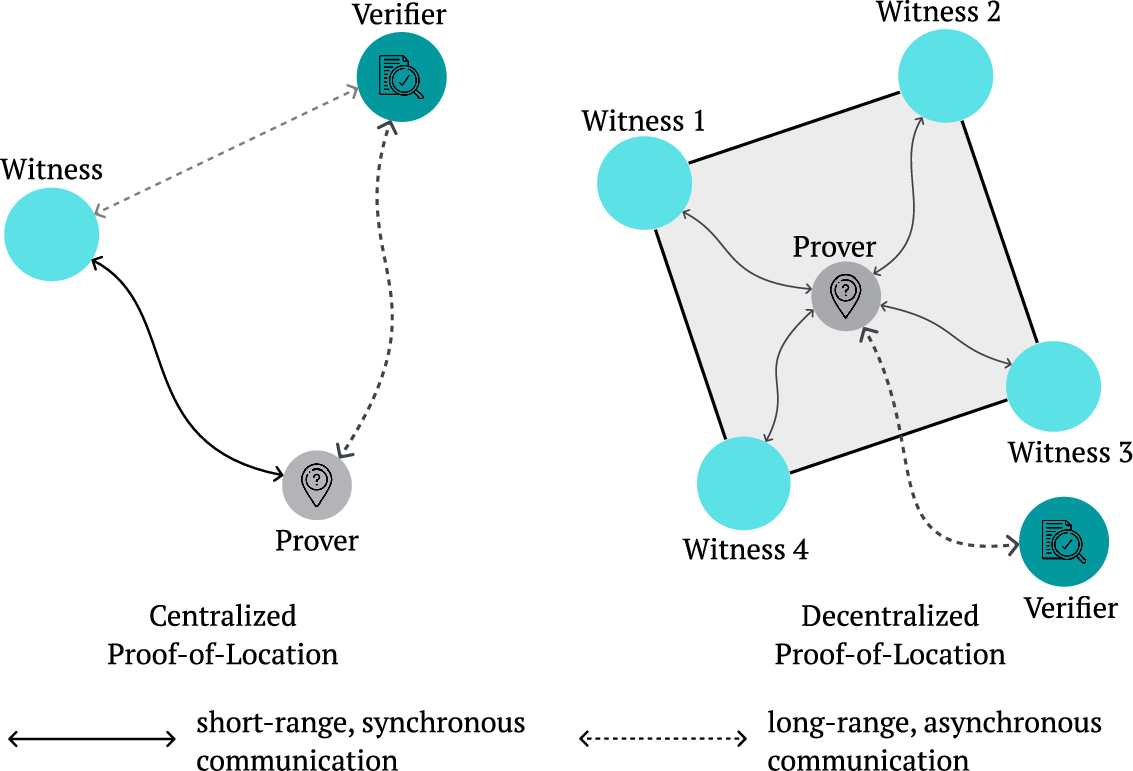
Decentralized Physical Infrastructure Networks (DePIN) rely on a fundamental problem: how do you trust a stranger’s hardware without seeing their private data? Zero-knowledge proofs solve this by allowing nodes to prove they performed valid work without revealing the underlying information. This creates a trust layer for physical assets that previously required centralized oversight.
In practice, a node might provide storage space, compute power, or wireless coverage. Instead of transmitting raw data or exposing internal system states, the node generates a ZK proof attesting to the correctness of its contribution. The network verifies this proof cryptographically, ensuring the reward is justified while keeping user data and operational details private.
This approach shifts the security model from identity-based trust to cryptographic verification. It enables scalable, permissionless participation where the cost of cheating exceeds the reward, as invalid proofs are instantly rejected by the consensus layer.
Below is a simplified example of how a verification contract might handle these proofs for node rewards:
Implementing zero-knowledge proofs in 2026
Integrating zero-knowledge proofs (ZKPs) into production applications requires moving beyond theoretical concepts to concrete tooling choices. In 2026, the landscape is dominated by circuits that balance prover speed with verifier efficiency. This guide outlines the standard workflow for developers building ZK rollups, privacy-preserving dApps, or secure authentication layers.
The first decision is selecting the cryptographic backend. For most applications, Groth16 or Plonk are the standard choices due to their small proof sizes and fast verification. Developers typically use frameworks like Circom, SnarkJS, or Halo2 to write circuits. If you are building on Ethereum, ensure your chosen system supports the existing elliptic curve pairings (BN254 or BLS12-381) used by the network.

Translate your business logic into constraints. In Circom, this involves defining signals (inputs, outputs, intermediate values) and connecting them with operators. Use the provided testing frameworks to run unit tests against your circuit. Verify that the circuit rejects invalid inputs and accepts valid ones. This stage is critical; errors here cannot be patched after deployment.

Some proving systems like Groth16 require a trusted setup ceremony to generate public parameters. This process must be performed securely, ideally using a multi-party computation (MPC) ceremony to ensure no single participant holds a "toxic waste" secret. If you use a system like Plonk or Halo2, you may skip this step, as they are setup-free or use universal setups, which simplifies deployment significantly.
Before integrating with your frontend or smart contract, run a end-to-end test locally. Generate a proof using a prover library (like snarkjs or bellperson) and verify it using a verifier contract or library. Measure the time it takes to generate the proof. If it exceeds acceptable limits for your user experience, you may need to optimize your circuit or switch to a faster proving system.
Compile your verifier into a smart contract compatible with your target blockchain. For Ethereum, this is typically a Solidity contract. Deploy it to the mainnet or a testnet. Ensure the contract includes the necessary verification keys and handles gas costs efficiently. Test the on-chain verification with the same proof you generated locally to confirm the integration is seamless.
After integration, verify your implementation against a pre-deployment checklist to ensure security and performance standards are met.
FAQ: ZK proofs in 2026
How fast are ZK proofs now in production?
Proof generation has moved from theoretical benchmarks to real-time utility. In May 2026, Vega generated zero-knowledge proofs of age from a mobile driver's license in just 92 milliseconds on a commodity client. This speed makes ZK proofs viable for interactive consumer applications that previously relied on slower, centralized verification.
Are ZK rollups ready for mainnet use?
Yes. ZK rollups have crossed the production chasm, offering scalable smart contract execution with cryptographic finality. Developers are deploying privacy-preserving dApps and cross-chain bridges that leverage ZK rollups for both throughput and security, replacing earlier optimistic rollup models where verification times were significantly longer.
What is the focus of the 2026 ZKProof workshop?
The 8th ZKProof Workshop, held in Rome on May 9–10, 2026, is advancing standardization efforts. The event focuses on mature cryptography and interoperability protocols, ensuring that ZK systems can communicate securely across different blockchain environments without relying on trusted setups.
No comments yet. Be the first to share your thoughts!