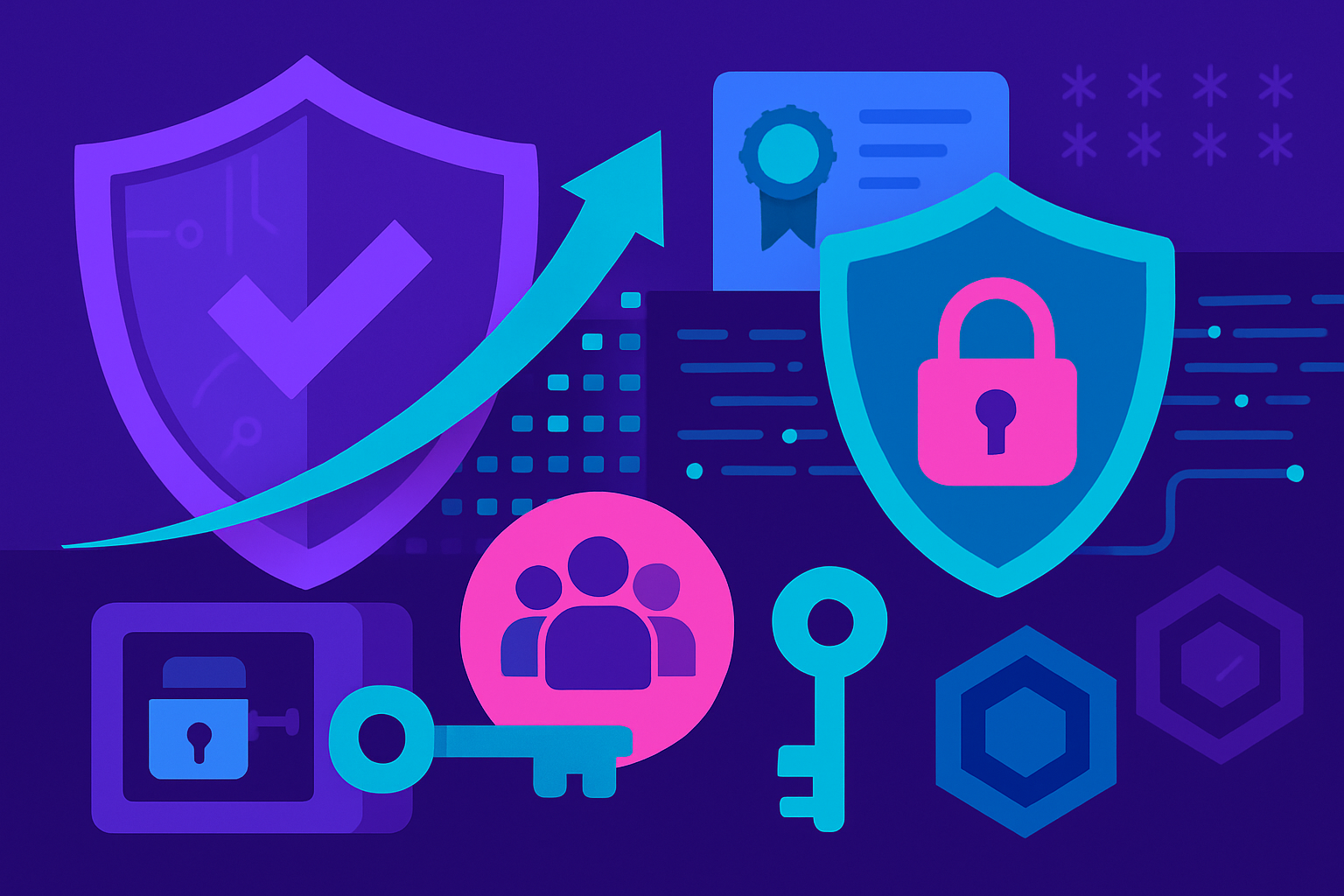
Zero-knowledge (ZK) rollups are frequently discussed as privacy solutions, but their most transformative impact on blockchain lies in scalability through succinctness. While privacy is a powerful byproduct in some implementations, the core technical innovation of ZK rollups is their ability to compress and validate large volumes of transactions efficiently. This article explores how succinctness, rather than privacy, is the true engine behind ZK rollup scalability.
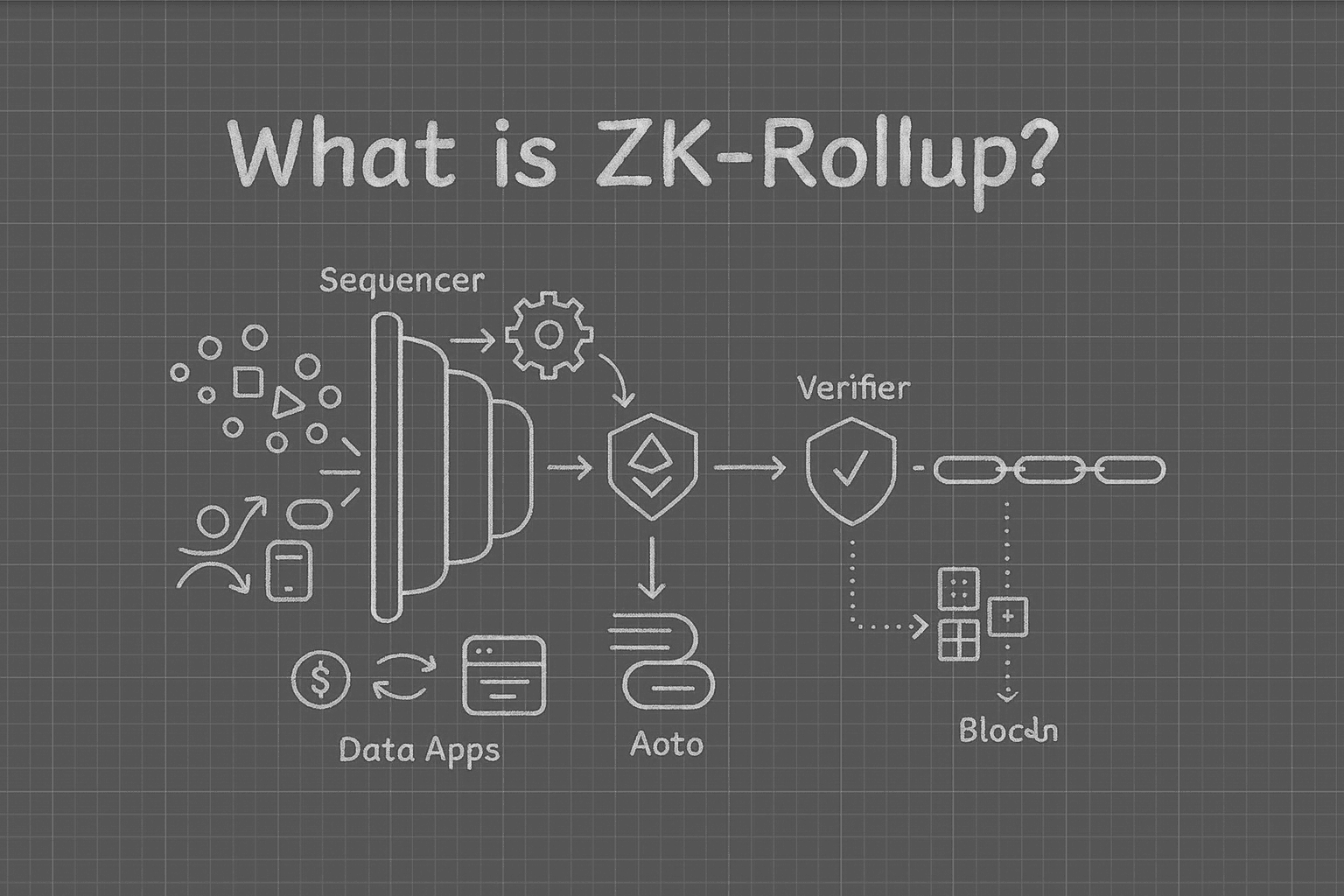
Succinctness: The Heart of ZK Rollup Scalability
Succinctness in zero-knowledge proofs refers to the creation of compact cryptographic attestations that verify the validity of an entire batch of transactions. Instead of submitting every transaction to Layer 1 (L1), a ZK rollup aggregates them off-chain and posts only a succinct proof: typically a zk-SNARK or zk-STARK, to the base chain. This proof can be verified by L1 nodes in milliseconds, regardless of how many transactions it covers.
The practical result is dramatic: blockchains like Ethereum can process far more transactions per second without overloading L1 with data or computation. Succinct proofs allow thousands, or even tens of thousands, of off-chain operations to be confirmed with a single on-chain transaction, creating an exponential gain in throughput.
How Succinct Proofs Transform Blockchain Efficiency
The efficiency gains from succinctness manifest in three critical ways:
- Increased Throughput: By batching transactions and submitting only proofs, ZK rollups raise network capacity well beyond native L1 limits.
- Reduced On-Chain Data: Only essential metadata and the proof itself are stored on-chain, minimizing state bloat and long-term storage costs for validators.
- Lower Transaction Fees: Gas costs are amortized across all users in each batch, making high-frequency trading and micro-payments viable even during network congestion.
This approach stands in sharp contrast to traditional Layer 1 verification, where every node must execute every transaction. With succinct proofs, nodes simply check the validity proof, a process orders of magnitude faster and less resource-intensive.
ZK Rollups: Privacy vs. Scalability Misconceptions
A common misconception conflates zero-knowledge with privacy. While zero-knowledge cryptography can certainly provide confidentiality (as seen in some shielded pool designs), most mainstream ZK rollups today focus on scalability rather than hiding transaction details. The proof attests that all batched transactions are valid according to protocol rules, but does not necessarily conceal sender, receiver, or amounts from public view. For most deployments on Ethereum and similar chains, data transparency remains intact while verification becomes vastly more efficient.
This distinction is crucial for developers and investors evaluating scaling solutions. If your priority is throughput and cost reduction, not anonymity, ZK rollups deliver immediate benefits without introducing new trust assumptions or opaque data layers. For use cases where both privacy and scalability are needed, specialized architectures exist but often trade off complexity or auditability.
If you want to dive deeper into how cryptographic proofs solve blockchain verification bottlenecks for ZK rollups specifically, see our detailed breakdown at this link.
As adoption of ZK rollup scalability accelerates, the technical community is increasingly focused on optimizing succinct proof generation and verification. The two most prominent proof systems provides zkSNARKs and zkSTARKs: each offer tradeoffs between succinctness, transparency, and computational complexity. zkSNARKs are highly compact and fast to verify but require a trusted setup, while zkSTARKs are transparent (no trusted setup) and post-quantum secure but produce slightly larger proofs. Both, however, maintain the core property of enabling efficient batch validation for massive transaction sets.
Real-World Impact: Throughput, Fees, and Developer Experience
The impact of succinctness in ZK rollups is measurable across key blockchain metrics:
- Throughput: Networks utilizing ZK rollups routinely achieve transaction rates 10,100x higher than their L1 counterparts.
- Fees: Users benefit from significantly reduced gas costs, batching hundreds or thousands of transactions into a single proof amortizes fees to fractions of a cent per transaction during optimal conditions.
- Developer Experience: By abstracting away the need for every dApp to engineer its own scaling logic, ZK rollup frameworks let teams focus on core product features rather than infrastructure bottlenecks.
Comparison of zkSNARKs vs zkSTARKs for ZK Rollup Succinctness and Scalability
| Feature | zkSNARKs | zkSTARKs |
|---|---|---|
| Succinctness | Highly succinct; proofs are very small (a few hundred bytes) and quick to verify | Succinct, but larger proof sizes than zkSNARKs (tens to hundreds of kilobytes); still efficient for scalability |
| Trusted Setup | Requires a trusted setup ceremony, which can be a security risk if compromised | No trusted setup required; more secure and transparent |
| Transparency | Less transparent due to the need for trusted setup | Fully transparent; no trusted setup, making the process auditable |
| Computational Cost | Lower computational cost for verification, but higher for proof generation | Higher computational cost for both proof generation and verification, but improving with new techniques |
This efficiency is already transforming DeFi protocols and NFT marketplaces where high throughput and predictable fees are mission-critical. For example, leading DEXes leveraging ZK rollups now settle trades with near-instant finality while maintaining full auditability for regulators and users alike. If your use case demands both scale and open data access, not just privacy, ZK rollups represent the most advanced solution available today.
Addressing Common Questions About ZK Rollup Succinctness
The future trajectory for ZK rollup scalability will be shaped by ongoing research into more efficient proof systems (recursive proofs), decentralized provers that further reduce trust assumptions, and interoperability layers connecting multiple L2 ecosystems. As these innovations mature, expect even greater gains in performance without sacrificing the permissionless ethos of public blockchains.
If you’re evaluating which scaling path aligns with your project’s needs or want to understand how succinct proofs could transform your business model or trading strategy, explore our deep-dive resources on trustless scaling via provers/verifiers, or discover how sub-second finality is achieved at scale through advanced L2 architectures at this link.
Which is more important to you in current Layer 2 (L2) solutions: scalability or privacy?
ZK Rollups use zero-knowledge proofs to boost blockchain scalability by enabling more transactions and lower fees, but they don't inherently provide privacy. As a developer or user, do you prioritize higher throughput and lower costs, or would you prefer enhanced privacy features?



No comments yet. Be the first to share your thoughts!