Zk-rollups 2026 limits to account for
ZK-rollups are Layer 2 scaling solutions that process thousands of transactions offchain and post a single validity proof to Ethereum Mainnet. This approach solves the throughput bottleneck by keeping computation off the base layer while relying on zero-knowledge cryptography to guarantee security. In 2026, the technology has shifted from experimental prototypes to production-grade infrastructure capable of handling enterprise-level volume.
The 2026 roadmap for major platforms like ZKsync centers on three pillars: evolving the Prividium privacy engine into bank-grade infrastructure, transforming the ZK Stack into a collaborative system for public and private chains, and advancing the Airbender proof system into a universal standard. These developments aim to reduce proof generation times and lower gas costs for end users.
The primary constraint remains the cost and time required to generate validity proofs. While ZK-rollups offer the highest security guarantees among Layer 2 options, the computational overhead of creating zero-knowledge proofs can create latency during high-traffic periods. As the Airbender system matures, this tradeoff is expected to narrow, making ZK-rollups the dominant scaling solution for high-value transactions.
Zk-rollups 2026 choices that change the plan
Choosing a ZK-rollup in 2026 requires balancing three competing forces: proof generation speed, user experience during withdrawals, and ecosystem maturity. While ZK-rollups offer the strongest security guarantees by moving computation off-chain, the technology is still evolving. The tradeoffs are no longer just about theoretical throughput but about practical constraints like liquidity depth and withdrawal latency.
The following comparison highlights the primary distinctions between the leading ZK-rollup architectures currently shaping the Ethereum landscape. These metrics reflect the state of the network in 2026, where proof systems have matured but implementation details vary significantly by project.
| Rollup | Security Model | Withdrawal Time | Ecosystem Focus |
|---|---|---|---|
| Starknet | STARK-based ZK | Fast (L2 finality) | High-throughput DeFi |
| zkSync | zk-SNARKs | ~2 weeks (Challenge period) | General-purpose L2 |
| Linea | Plonky2 (STARKs) | Fast (L2 finality) | Enterprise & Privacy |
| Scroll | zk-SNARKs (EVM equivalent) | ~2 weeks (Challenge period) | EVM Compatibility |
The most critical tradeoff is the withdrawal window. Projects using zk-SNARKs (like zkSync and Scroll) often rely on a challenge period, meaning users must wait approximately two weeks to withdraw funds to L1. This creates a liquidity friction that matters for large holders. In contrast, STARK-based systems like Starknet and Linea are moving toward faster withdrawal finality, reducing this friction significantly.
Ecosystem maturity is the second major factor. zkSync and Scroll benefit from deep EVM compatibility, allowing developers to deploy existing Solidity code with minimal changes. Starknet, however, uses a custom virtual machine (Cairo), which offers better performance for complex computations but requires developers to learn a new language. For general-purpose DeFi, EVM equivalence is often preferred. For high-frequency trading or complex financial derivatives, the STARK-based performance advantages may outweigh the learning curve.
Ultimately, the "best" ZK-rollup depends on your specific use case. If you are a developer prioritizing ease of migration, EVM-equivalent chains like Scroll are the logical choice. If you are a user prioritizing capital efficiency and faster access to funds, STARK-based solutions with faster finality may be more suitable. The 2026 landscape is not about one winner, but about matching the right proof system to the right application.
Choosing the Right ZK-Rollup for Your Use Case
Selecting a ZK-rollup in 2026 requires matching your specific throughput and privacy needs to the underlying technology stack. Not all rollups are created equal; the choice between a public, permissionless environment and a private, compliant chain dictates your security model and user experience. This decision framework helps you assess the tradeoffs between speed, cost, and sovereignty.
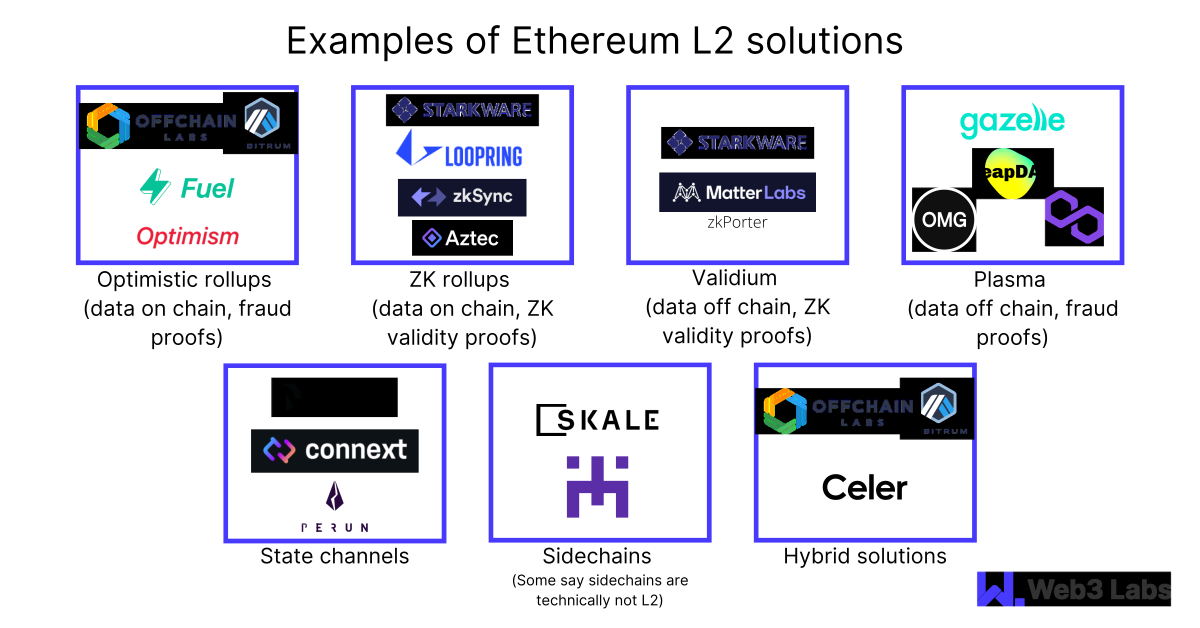
Public ZK-rollups like Starknet or zkSync offer high throughput for decentralized applications (dApps) but may face congestion during peak network activity. If your application requires consistent low-latency transactions for high-frequency trading or gaming, evaluate the rollup’s historical block space utilization. Private or hybrid rollups often provide more predictable performance by isolating your traffic from public network volatility.
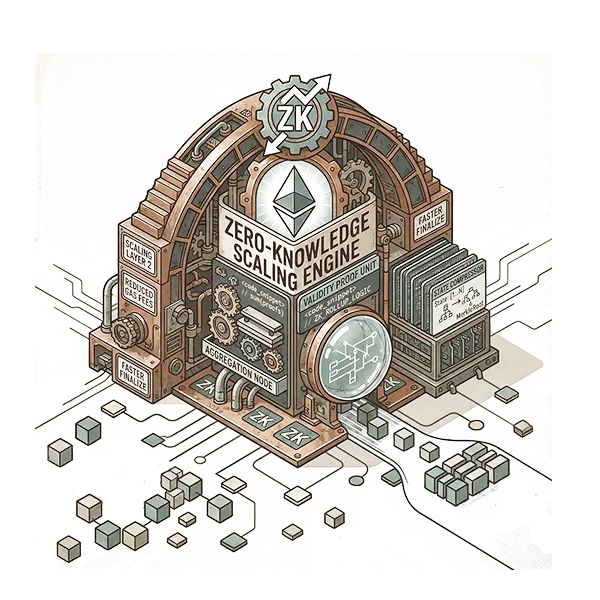
For financial institutions or enterprises handling sensitive data, privacy is the primary differentiator. Look for rollups integrating advanced zero-knowledge proof systems, such as zkSync’s evolving Prividium engine, which aims for bank-grade infrastructure. If your use case requires regulatory compliance (e.g., KYC/AML), choose a rollup that supports selective disclosure or private state channels, allowing you to prove validity without exposing raw transaction data on-chain.
The developer experience and available liquidity significantly impact your project’s longevity. Verify that the rollup supports your preferred smart contract language (e.g., Cairo, Solidity) and has robust SDKs for frontend integration. A mature ecosystem reduces deployment risk and ensures access to established liquidity pools. If you are building on Ethereum, prioritize rollups with deep integration into existing DeFi protocols and wallet infrastructure to minimize user friction during onboarding.
| Feature | Public ZK-Rollup | Private/Hybrid ZK-Rollup |
|---|---|---|
| Throughput | High (shared) | Predictable (isolated) |
| Privacy | Pseudonymous | Selective Disclosure |
| Compliance | Minimal | Built-in KYC/AML |
| Cost | Lowest | Higher (infrastructure) |
The final decision rests on your risk tolerance and regulatory constraints. Public rollups offer the best cost-efficiency and decentralization guarantees, making them ideal for consumer-facing dApps. Private rollups provide the control and compliance features necessary for enterprise adoption. Align your technical requirements with these distinct models to ensure your ZK-rollup integration delivers both scalability and security.
The Weakest Links in ZK-Rollup Hype
The ZK-rollup space in 2026 is crowded, but not every project delivers the promised scalability. Several platforms rely on opaque proof systems or lack the decentralization security that Ethereum purists demand. Before committing capital, you must distinguish between genuine cryptographic innovation and marketing gloss.
The "Privacy-First" Trap
Many newer ZK-providers market themselves as privacy engines, citing roadmaps like ZkSync’s 2026 focus on the Prividium privacy engine. While useful for specific enterprise use cases, these closed-loop systems often sacrifice transparency. If the proof generation is centralized, you are merely trading one trusted third party for another. True ZK-scalability requires open, verifiable proof systems that anyone can audit, not just bank-grade infrastructure locked behind proprietary gates.
The Decentralization Gap
A common mistake is assuming all ZK-rollups are created equal. Some projects still rely on sequencers that are not fully decentralized, creating single points of failure. If the sequencer can censor transactions or halt the chain, the "rollup" is only a fast database, not a secure Layer 2. Always check the decentralization roadmap. Projects that delay sequencer decentralization for speed are taking on significant long-term risk.
The Liveness Risk
Finally, watch out for projects that struggle with data availability. If a ZK-rollup cannot reliably publish its calldata to Ethereum Mainnet, it risks being stuck or forced into a slow, expensive recovery mode. This is not a theoretical concern; it has happened. Ensure the project has a robust, redundant data availability strategy before you trust it with your assets.
Zk-rollups 2026: what to check next
These answers address the practical objections and roadmap details readers need before deciding on a ZK-rollup strategy.
No comments yet. Be the first to share your thoughts!