What ZK rollups 2026 actually do
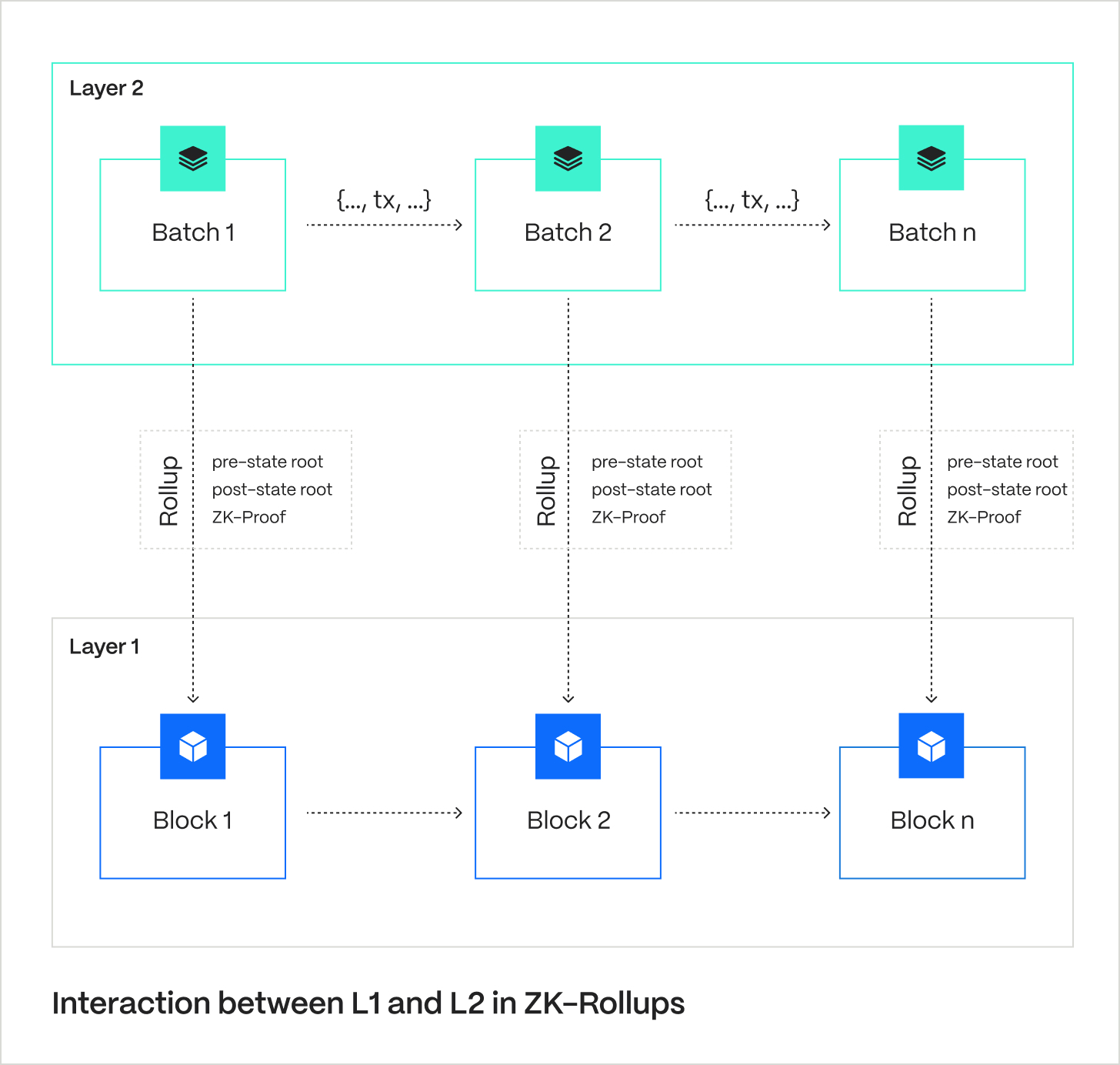
ZK rollups have emerged as the dominant Layer 2 scaling solution for Ethereum in 2026. Unlike earlier approaches, they batch thousands of transactions off-chain and settle them on the mainnet using a single zero-knowledge validity proof. This mechanism allows the network to process high throughput while inheriting Ethereum's security guarantees, effectively solving the scalability trilemma without compromising on decentralization.
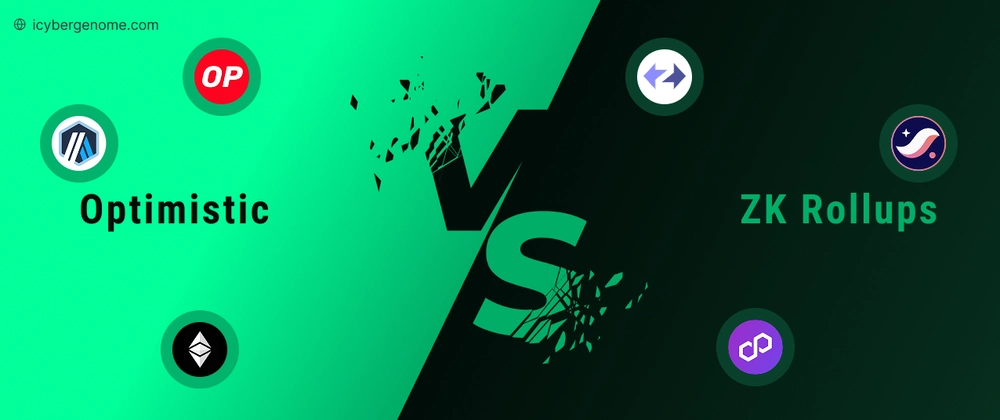
The shift from optimistic rollups to validity proofs marks a fundamental change in how Ethereum handles data. Optimistic rollups require a challenge period to detect fraud, meaning users must wait days for their funds to be available. ZK rollups eliminate this friction by mathematically proving that every transaction in a batch is valid before it is posted. This results in instant finality, allowing users to withdraw assets to the mainnet immediately after the proof is verified.
For developers and users, this means ZK rollups can process thousands of transactions per second while keeping costs low. The technology moves computation and state storage off-chain, posting only minimal summary data to Ethereum Mainnet. This efficiency makes ZK rollups the preferred choice for high-frequency applications like decentralized exchanges and gaming, where speed and low fees are critical.
How validity proofs replace fraud proofs
Optimistic rollups assume transactions are valid until proven otherwise, requiring a seven-day challenge period to detect fraud. This safety mechanism creates friction for users who must wait to withdraw their funds. ZK rollups remove this bottleneck by using zero-knowledge proofs to guarantee correctness immediately.
Instead of trusting that no one will dispute a transaction, ZK rollups generate a mathematical proof for every batch of off-chain transactions. This proof, known as a validity proof, is submitted to Ethereum along with the compressed transaction data. The Ethereum network verifies this proof in seconds. If the proof is valid, the state transition is accepted instantly. There is no waiting period, no risk of a fraudulent state update, and no need for users to monitor for challenges.
This shift from "optimistic" to "valid" changes the security model entirely. The security of the rollup no longer depends on the vigilance of network participants but on the cryptographic strength of the proof system. As a result, withdrawals become near-instantaneous, removing the primary usability barrier that has slowed the adoption of earlier layer 2 solutions.
Comparing top zkEVM projects in 2026
The zkEVM landscape has matured from experimental prototypes to production-grade infrastructure. In 2026, the primary differentiator is no longer just the ability to process transactions, but how closely a network mimics the Ethereum Virtual Machine (EVM) while maintaining high throughput. This comparison focuses on the leading general-purpose zkEVMs—zkSync Era, Polygon zkEVM, and Linea—alongside Starknet, which offers a high-performance alternative with distinct architectural trade-offs.
General-purpose zkEVMs: Compatibility and Scale
zkSync Era, Polygon zkEVM, and Linea all prioritize EVM equivalence, allowing developers to deploy Solidity smart contracts with minimal modification. zkSync Era focuses on high transaction throughput and low fees, leveraging its native account abstraction for better user experience. Polygon zkEVM emphasizes full EVM equivalence, ensuring that existing Ethereum tooling works out-of-the-box, which has accelerated its adoption for DeFi applications. Linea, developed by ConsenSys, benefits from deep integration with the MetaMask ecosystem, offering a seamless bridge for millions of existing Ethereum users.
Starknet: High Performance with Non-EVM Architecture
Starknet takes a different approach, using a custom virtual machine (Cairo) rather than strict EVM compatibility. This allows for higher computational efficiency and lower costs for complex calculations, making it ideal for high-frequency trading and data-heavy applications. While this requires developers to learn Cairo, the performance gains are significant. Starknet’s architecture is designed for scalability that general-purpose zkEVMs struggle to match in specific high-load scenarios.
Side-by-Side Comparison
The table below compares these four networks based on key technical and economic metrics available in 2026. Note that transaction speeds and TVL fluctuate with market conditions; the values reflect average recent performance.
| Project | EVM Compatibility | TVL (Approx.) | Avg. Tx Speed | VM Type |
|---|---|---|---|---|
| zkSync Era | High (Full) | $1.2B | ~2s finality | zkEVM |
| Polygon zkEVM | Full | $800M | ~3s finality | zkEVM |
| Linea | High (Full) | $600M | ~3s finality | zkEVM |
| Starknet | Low (Cairo) | $900M | ~1.5s finality | Cairo VM |
Choosing the Right zkEVM
For developers prioritizing ease of migration from Ethereum, zkSync Era, Polygon zkEVM, and Linea are the safest bets. Their full EVM compatibility reduces development friction and security risks associated with rewriting smart contracts. However, if your application involves complex computation or requires maximum throughput regardless of tooling familiarity, Starknet’s Cairo VM offers superior performance. The choice ultimately depends on whether you value developer convenience or raw computational efficiency.
zk-SNARKs versus zk-STARKs explained
Zero-knowledge rollups rely on one of two primary cryptographic proof systems to verify transactions offchain: zk-SNARKs and zk-STARKs. While both achieve the same goal of privacy and scalability, they differ significantly in their underlying mathematics, performance characteristics, and security assumptions.
zk-SNARKs: Efficiency and Maturity
zk-SNARKs (Succinct Non-Interactive Arguments of Knowledge) have been the dominant choice for early ZK rollups like zkSync and StarkEx. Their primary advantage is proof size. SNARK proofs are extremely small—often just a few hundred bytes—which makes them cheap and fast to verify on Ethereum Mainnet. This efficiency has driven their adoption for high-throughput applications where gas costs are a critical constraint.
However, SNARKs rely on elliptic curve cryptography, which is vulnerable to quantum computing attacks. Additionally, most SNARK implementations require a "trusted setup," a ceremonial process where initial parameters are generated. If the random secrets used in this setup are not destroyed, they could theoretically be used to forge proofs, introducing a centralization risk that many projects are working to eliminate.
zk-STARKs: Transparency and Quantum Resistance
zk-STARKs (Scalable Transparent Arguments of Knowledge) address the limitations of SNARKs by eliminating the need for a trusted setup and offering post-quantum security. STARKs rely on hash functions rather than elliptic curves, making them resistant to future quantum attacks. This transparency and robustness are why STARKs are gaining traction among projects prioritizing long-term security and decentralization.
The trade-off is proof size. STARK proofs are significantly larger than SNARKs—sometimes kilobytes or megabytes in size. While this increases the data posted to the blockchain, recent advancements in data availability layers and compression techniques are narrowing the cost gap. For many developers, the security benefits of STARKs outweigh the current overhead in gas fees.
Choosing the Right Approach
The choice between SNARKs and STARKs often depends on the specific use case. SNARKs remain the standard for applications requiring minimal on-chain data and maximum efficiency, such as decentralized exchanges or gaming. STARKs are increasingly favored for enterprise-grade applications, high-security DeFi protocols, and any system where transparency and quantum resistance are non-negotiable.
As the technology matures, we are seeing a hybrid approach emerge. Some projects are experimenting with "recursive proving," where smaller STARK proofs are aggregated into SNARK proofs, combining the best of both worlds: the security of STARKs and the efficiency of SNARKs. This evolution suggests that the future of ZK rollups may not be a winner-take-all scenario, but rather a complementary ecosystem where each proof system serves its optimal niche.
Privacy in zero-knowledge cryptography
Traditional blockchains operate like glass houses: every transaction is visible to anyone who knows how to look. ZK rollups change this dynamic by separating the validity of a transaction from its visibility. They allow a network to verify that a transaction is correct without exposing the underlying data, creating a layer of privacy that public ledgers cannot offer.
This capability is particularly valuable for institutional users and enterprises. While retail users might prioritize speed and low fees, institutions often require confidentiality to protect trade secrets, customer identities, or proprietary trading strategies. ZK rollups enable these entities to transact on Ethereum with the same security guarantees as the mainnet, while keeping sensitive details off the public eye.
The technology works by generating a cryptographic proof that attests to the correctness of a batch of transactions. This proof is posted to Ethereum Mainnet, where it is verified in seconds. The actual transaction data remains off-chain or encrypted, ensuring that the network can confirm the state update without revealing who sent what, to whom, or for how much.
Choosing the right ZK rollup for your needs
Selecting a ZK rollup requires balancing three competing priorities: EVM equivalence, raw throughput, and security model. There is no single "best" option; the right choice depends entirely on whether you are migrating an existing DeFi protocol or building a high-frequency trading application.
If your primary goal is to migrate existing smart contracts or dApps, choose a rollup that offers full EVM equivalence. Platforms like zkSync or Scroll allow developers to deploy standard Solidity code with minimal modifications. This reduces development time and leverages the existing tooling ecosystem, making it the safest path for established protocols seeking scalability without a complete rewrite.
For use cases like high-frequency trading or gaming, raw transaction throughput and low latency matter more than standard EVM compatibility. Starknet and other non-EVM rollups often achieve higher TPS by using custom virtual machines (like Cairo). These platforms sacrifice some developer familiarity for significant performance gains, making them ideal for applications where speed is the primary value proposition.
Always assess the security assumptions. ZK rollups rely on cryptographic proofs, which are generally considered more secure than optimistic rollups because they do not require a fraud-proof challenge period. However, verify the maturity of the proof system and the decentralization of the sequencer. A rollup with a centralized sequencer may offer speed but introduces a single point of failure for censorship or downtime.
| Use Case | Key Priority | Example Rollups |
|---|---|---|
| DeFi Migration | EVM Compatibility | zkSync, Scroll, Polygon zkEVM |
| High-Frequency Trading | Throughput & Latency | Starknet, Aztec |
| Gaming & NFTs | Cost & Speed | Loopring, Immutable zkEVM |
No comments yet. Be the first to share your thoughts!