Why ZK-Rollups 2026 Matter Now
Zero-knowledge scaling has graduated from experimental code to institutional infrastructure. In 2026, ZK-Rollups 2026 represent a fundamental shift in how enterprise-grade applications handle blockchain throughput. The technology no longer relies on speculative optimism; it relies on cryptographic certainty.
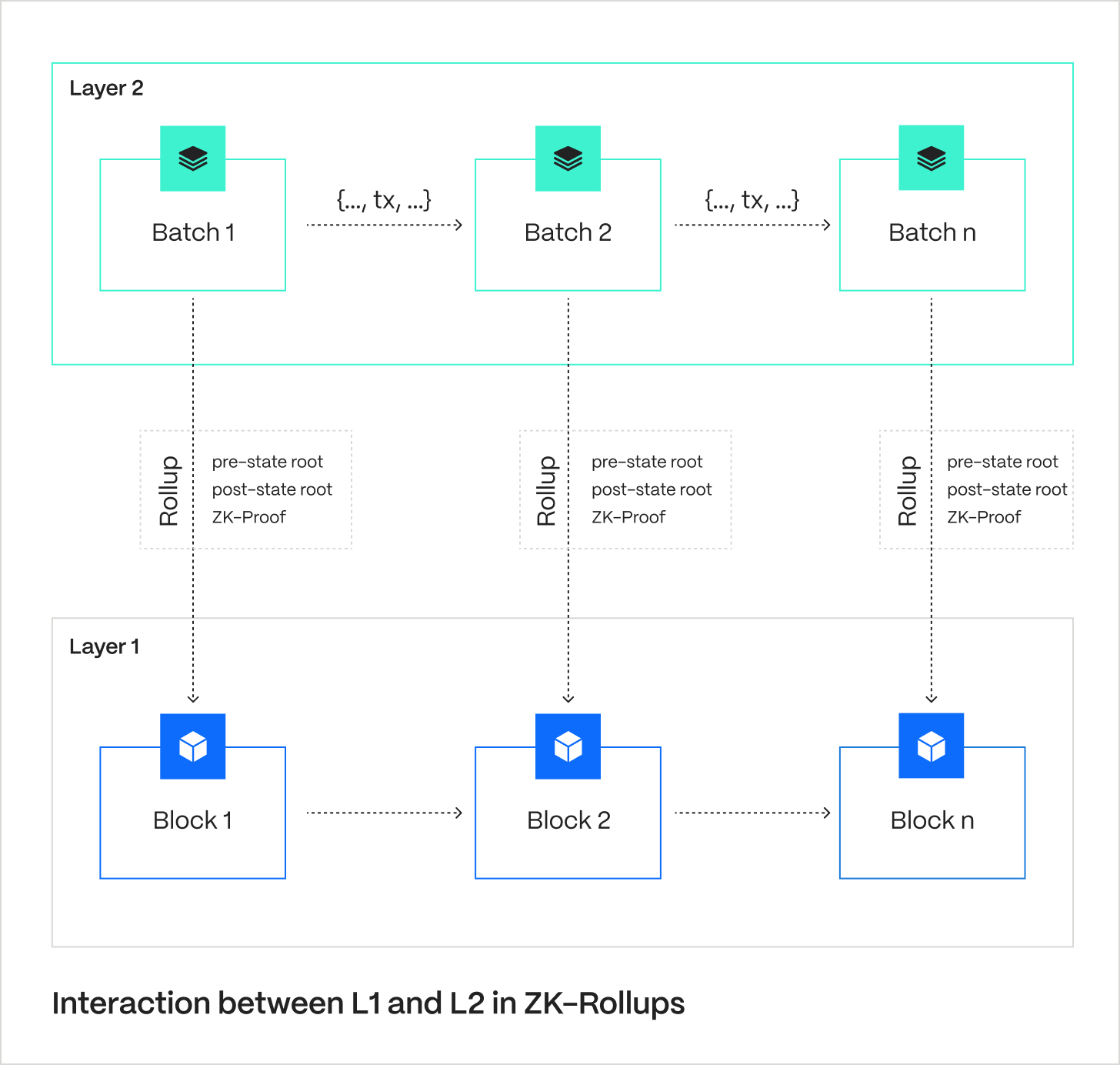
A ZK rollup is a Layer 2 blockchain that batches thousands of transactions offchain and settles them back to Ethereum using a single validity proof. This mechanism replaces the slower dispute windows of earlier models with immediate finality. For enterprises, this means compliance-ready settlement without the latency that previously made on-chain finance impractical.
The friction that once deterred mainstream adoption is now almost invisible to users. While optimistic rollups like Arbitrum prioritize immediate developer accessibility, ZK-rollups like zkSync focus on cryptographic security advancements. This distinction is critical for financial institutions that require proof of correctness rather than just the possibility of fraud.
As onchain activity migrates to these high-throughput environments, the underlying market dynamics reflect a maturing ecosystem. The correlation between L2 activity and broader market trends suggests that scalability is no longer a bottleneck but a driver of utility. This maturity allows enterprises to build complex financial products with confidence in the settlement layer's integrity.
Comparing the Top ZK-Rollup Platforms
Enterprise adoption of ZK-Rollups 2026 requires matching specific cryptographic proofs to business constraints. The leading platforms—zkSync, Starknet, and Polygon zkEVM—offer distinct tradeoffs between EVM compatibility, proof generation speed, and developer accessibility.
zkSync Era prioritizes immediate developer familiarity by offering full EVM equivalence. It uses SNARKs, which allow for smaller proof sizes and faster on-chain verification but require a trusted setup phase. This makes it ideal for teams already invested in the Ethereum Virtual Machine ecosystem who need rapid deployment without rewriting smart contracts.
Starknet takes a different approach with STARKs. These proofs are quantum-resistant and do not require a trusted setup, offering stronger long-term security guarantees. However, Starknet uses its own Cairo programming language, meaning developers must learn a new stack. This platform suits enterprises prioritizing maximum cryptographic assurance and high throughput over immediate EVM compatibility.
Polygon zkEVM aims for a middle ground, providing full EVM equivalence with zk-SNARK technology. It allows seamless migration of existing Ethereum applications while leveraging Polygon’s extensive infrastructure and liquidity. This makes it a pragmatic choice for enterprises seeking a balance between ease of migration and ZK security benefits.
The following table summarizes the technical differences that drive these architectural choices.
| Platform | Proof Type | EVM Compatible | Trusted Setup | Primary Language |
|---|---|---|---|---|
| zkSync Era | SNARK | Yes | Yes | Solidity |
| Starknet | STARK | Partial (via adapters) | No | Cairo |
| Polygon zkEVM | SNARK | Yes | Yes | Solidity |
Choosing the right platform depends on whether your team values immediate EVM compatibility or long-term cryptographic robustness. zkSync and Polygon offer the lowest barrier to entry for existing Ethereum developers, while Starknet provides the highest security floor for mission-critical applications.
Enterprise Use Cases for Privacy
Zero-knowledge proofs allow organizations to verify transactions on public ledgers without exposing sensitive data. For regulated industries like finance and healthcare, this capability resolves the conflict between transparency and confidentiality. Instead of publishing raw patient records or trade details, institutions can submit cryptographic proofs that confirm compliance with privacy laws and transaction integrity.
Healthcare Data Verification
Healthcare providers face strict regulations like HIPAA that prohibit the public disclosure of patient information. ZK-Rollups enable hospitals to verify insurance eligibility or treatment history without revealing the underlying medical data. A provider can prove a patient has valid coverage or has completed a required screening while keeping the specific diagnosis private. This approach maintains audit trails for regulators without violating patient privacy.
Financial Compliance and Auditing
In finance, institutions must prove solvency and transaction validity to regulators and auditors. Traditional auditing requires sharing full transaction histories, which exposes competitive strategies and customer behavior. With ZK-Rollups, banks can generate proofs that demonstrate sufficient reserves or compliance with anti-money laundering (AML) rules. The ledger confirms the proof is valid, but no sensitive financial data is exposed to the public.
Supply Chain and Trade Finance
Supply chains involve multiple parties who need to verify goods movement without sharing proprietary logistics data. ZK-Rollups allow shippers to prove delivery and ownership transfer without exposing supplier contracts or pricing. This transparency builds trust among partners while protecting trade secrets. The result is a more efficient supply chain where compliance is automated and private.
Cost and performance choices that change the plan
ZK-Rollups 2026 deliver lower transaction costs than Layer 1 networks, but the savings come with distinct technical friction. Unlike Optimistic Rollups, which rely on fraud proofs and longer dispute windows, ZK-Rollups use cryptographic proofs to validate state transitions instantly. This architectural difference creates a unique balance between gas efficiency, proof generation time, and data availability.
Proof Generation and Latency
The primary bottleneck for ZK-Rollups is the computational cost of generating zero-knowledge proofs. While settlement on Ethereum is fast, the off-chain process of creating these proofs requires significant processing power. For high-frequency trading or real-time applications, this proof generation latency can introduce delays that Optimistic Rollups avoid. However, as hardware accelerators and proof systems like Plonk and Halo2 mature, this gap is narrowing rapidly in 2026.
Gas Costs and Data Availability
Transaction fees on ZK-Rollups are typically a fraction of Ethereum mainnet costs, but they remain sensitive to data availability. Since ZK-Rollups must post compressed transaction data to Ethereum, the cost fluctuates with network congestion and the chosen data availability layer. If the data blob space is saturated, fees spike. This makes ZK-Rollups highly efficient during low-traffic periods but potentially volatile during peak demand.
The Economic Equation
For enterprises, the tradeoff is clear: ZK-Rollups offer immediate finality and strong security guarantees at a lower base cost, but they require more complex infrastructure to manage proof generation. Optimistic Rollups offer easier developer onboarding and predictable costs, but at the expense of settlement speed. The choice depends on whether the use case prioritizes instant verification or development simplicity.
Choosing a ZK-Rollup for Your Stack
Selecting the right ZK-Rollups 2026 infrastructure requires balancing cryptographic security with developer velocity. There is no single best option; the decision depends on whether your priority is EVM compatibility or raw transaction throughput. Use the framework below to align your technical requirements with the right rollup architecture.
If your team relies on existing Solidity codebases, prioritize rollups with full EVM equivalence. Solutions like zkSync or Polygon zkEVM allow you to deploy existing contracts with minimal modification. This reduces migration friction and accelerates time-to-market compared to custom VMs.
Proof generation time directly impacts finality and user experience. If your application requires near-instant withdrawals or high-frequency trading, evaluate the rollup’s proving latency. Some architectures optimize for faster proof assembly, while others prioritize smaller proof sizes for lower L1 gas costs.
Robust SDKs, debugging tools, and documentation are critical for enterprise adoption. Look for rollups that offer comprehensive testing environments and clear migration guides. Poor tooling can delay development cycles significantly, outweighing the benefits of lower transaction fees.
Review the rollup’s security model and independent audit reports. Prefer networks with transparent vulnerability disclosure policies and a history of successful mainnet operations. The cryptographic guarantees of ZK-Rollups 2026 are only as strong as their implementation.
| Feature | zkSync Era | Polygon zkEVM | Starknet |
|---|---|---|---|
| EVM Compatibility | High | Full | Low (Cairo) |
| Proof Type | Plonk | Plonk | STARKs |
| Target Use Case | General Purpose | DeFi & Gaming | High Throughput |
Frequently asked: what to check next
Is Arbitrum a ZK Rollup?
No. Arbitrum is an optimistic rollup, not a ZK rollup. While both are Ethereum Layer 2 scaling solutions, they use different verification methods. Arbitrum relies on fraud proofs and a challenge window, prioritizing immediate developer accessibility and EVM equivalence. In contrast, ZK rollups like zkSync use zero-knowledge proofs to provide cryptographic security and finality, focusing on advanced cryptographic verification rather than the optimistic dispute model.
Will Ethereum reach $10,000 in 2026?
Most prediction market traders remain cautious about a $10,000 ETH price in 2026. Current sentiment suggests Ethereum will likely finish the year between $3,000 and $3,500. While ZK rollups are driving significant network utility and throughput, market expectations for the asset price itself are grounded in more conservative growth trajectories rather than speculative highs.
How do ZK Rollups compare to Optimistic Rollups?
The primary difference lies in how they handle security and speed. Optimistic rollups assume transactions are valid unless challenged, which can delay withdrawals due to the challenge window. ZK rollups generate a cryptographic proof for every batch, allowing for near-instant finality and faster withdrawals. For enterprises needing immediate settlement guarantees, ZK rollups offer a more robust security model, whereas optimistic rollups often provide easier onboarding for existing smart contracts.
No comments yet. Be the first to share your thoughts!