Why ZK rollups lead scaling in 2026
Zero-knowledge (ZK) rollups have emerged as the dominant scaling solution for 2026, driven by their ability to deliver immediate finality and robust privacy. Unlike optimistic rollups, which require a seven-day challenge period to confirm transactions, ZK rollups generate a cryptographic validity proof for every batch of transactions. This proof is verified on the Ethereum mainnet before the state is updated, eliminating the withdrawal delays that have historically frustrated users on networks like Arbitrum and Optimism.
The architectural advantage of ZK rollups lies in their efficiency. By batching thousands of transactions offchain and settling a single proof onchain, they drastically reduce gas costs while maintaining Ethereum's security guarantees. As noted by industry analyses, this mechanism makes the friction of Layer 2 usage nearly invisible to retail users. The shift toward ZK technology is not just theoretical; it is reflected in the growing onchain activity and developer migration toward ZK-native ecosystems like Scroll and zkSync.
Privacy is another critical differentiator. ZK rollups can natively support private transactions, allowing users to verify the validity of a transaction without revealing the underlying data. This capability is increasingly vital for institutional adoption, where confidentiality is as important as security. While optimistic rollups have captured significant market share in the early days of Layer 2 expansion, the combination of speed, cost, and privacy positions ZK rollups as the superior choice for high-volume, sensitive, or time-critical applications in 2026.
Comparing the top three zkEVM networks
Choosing a ZK rollup requires balancing transaction throughput, finality speed, and ecosystem compatibility. While several networks operate on zero-knowledge proofs, three general-purpose zkEVMs dominate the current landscape: zkSync Era, Polygon zkEVM, and Linea. Each uses a different proving system and economic model, resulting in distinct tradeoffs for developers and users.
To help you assess these differences, we compare their core technical specifications side-by-side. These metrics reflect current mainnet performance and architecture as of early 2026.
| Network | Max TPS | Finality Time | EVM Compatibility | Proving System |
|---|---|---|---|---|
| zkSync Era | ~4,000 | ~10-15 mins | High (ERC-20/712) | Matter Labs (Custom) |
| Polygon zkEVM | ~9,000 | ~20-40 mins | Full Binary Equivalent | Polygon CDK (StarkEx) |
| Linea | ~4,000 | ~10-15 mins | High (Full EVM) | Consensys (StarkEx) |
Throughput and finality choices that change the plan
Polygon zkEVM currently leads in theoretical throughput, leveraging its StarkEx-based architecture to handle higher transaction volumes. However, this comes with a longer finality window. Users must wait approximately 20 to 40 minutes for transactions to be considered fully settled on Ethereum L1. This delay is acceptable for most DeFi interactions and NFT minting but may hinder high-frequency trading applications.
zkSync Era and Linea offer faster finality, typically settling within 10 to 15 minutes. This speed is achieved through optimized proof generation and aggressive batch aggregation. For users prioritizing quick transaction confirmation, these two networks provide a more responsive experience. The difference in finality time is a critical factor for applications requiring near-instant settlement guarantees.
EVM Compatibility and Developer Experience
All three networks aim for EVM compatibility, but the degree of equivalence varies. Polygon zkEVM is designed as a binary-equivalent EVM, meaning existing Solidity smart contracts can be deployed with minimal to no modification. This makes it the easiest transition point for projects already built on Polygon PoS or Ethereum.
zkSync Era and Linea offer high EVM compatibility but may require minor code adjustments for certain opcodes or gas accounting mechanisms. Linea’s full EVM compatibility is particularly notable, as it supports complex EVM features that other rollups might restrict. Developers should test their specific smart contracts on testnets before committing to a mainnet deployment, as subtle differences in gas estimation can affect user experience.
Market Context
The performance of these networks is closely tied to the broader Ethereum ecosystem. As ETH continues to serve as the primary settlement layer, the value proposition of each zkEVM depends on its ability to attract liquidity and developers.
Note: Widget displays live ETH price. Network activity and transaction fees fluctuate based on network congestion and proof generation costs.
Choosing the Right Network
Your choice should depend on your specific use case. If you are migrating an existing Ethereum or Polygon project, Polygon zkEVM’s binary equivalence offers the smoothest transition. For applications requiring faster finality and lower latency, zkSync Era and Linea are stronger candidates. Developers should also consider the existing ecosystem and liquidity on each network, as network effects play a significant role in user adoption and transaction success rates.
zk-SNARKs versus zk-STARKs explained
Zero-knowledge rollups rely on two distinct cryptographic families to prove transaction validity: zk-SNARKs and zk-STARKs. While both methods allow a network to verify thousands of transactions with a single, compact proof, they make fundamentally different tradeoffs regarding proof size, verification speed, and security assumptions. Understanding these differences is essential for evaluating which rollup architecture best fits a specific use case.
zk-SNARKs: Compact but Trusted Setup
zk-SNARKs (Succinct Non-Interactive Arguments of Knowledge) are the older and more widely deployed technology. Their primary advantage is efficiency. SNARK proofs are extremely small—often just a few hundred bytes—and can be verified very quickly on-chain. This makes them ideal for rollups that prioritize low transaction fees and high throughput, as the cost of posting the proof to Ethereum remains minimal.
However, this efficiency comes with a significant caveat: the trusted setup. Creating the initial parameters for a SNARK circuit requires a ceremonial key generation process. If the secret randomness used in this setup is not destroyed or is compromised, an attacker could forge proofs. This introduces a trust assumption that many purists view as a security risk. Additionally, SNARKs are generally vulnerable to quantum computing attacks, which could break the underlying elliptic curve cryptography in the future.
zk-STARKs: Scalable and Quantum-Resistant
zk-STARKs (Scalable Transparent Arguments of Knowledge) were developed to address the limitations of SNARKs. They eliminate the need for a trusted setup entirely, relying instead on publicly verifiable randomness. This transparency removes the trust assumption, making the system more robust against insider threats. More importantly, STARKs are based on hash functions, which are believed to be resistant to quantum computing attacks, offering a longer-term security horizon.
The tradeoff is size. STARK proofs are significantly larger than SNARKs, often reaching several kilobytes. This increases the data availability cost on Ethereum, potentially raising transaction fees. However, recent advancements in proof composition and data compression are steadily closing this gap. As STARK technology matures, the performance difference is narrowing, making them a compelling choice for rollups that prioritize long-term security and decentralization over immediate cost minimization.
Choosing the Right Architecture
The choice between zk-SNARKs and zk-STARKs is not merely technical; it reflects a philosophical stance on trust and security. zk-SNARKs are best suited for applications where low fees and fast finality are paramount, and where the risk of a trusted setup compromise is deemed acceptable. zk-STARKs are better for high-value, long-term settlements where quantum resistance and trustless verification are non-negotiable.
As the zk-rollup landscape evolves, we are seeing a hybrid approach emerge. Some networks are experimenting with combining both technologies to leverage the speed of SNARKs for execution and the security of STARKs for settlement. This convergence suggests that the future of scaling may not be about choosing one winner, but about integrating the strengths of both cryptographic families.
Choosing a rollup for development or trading
Selecting the right ZK rollup requires matching the network’s technical constraints to your specific use case. High-frequency trading demands low latency and deep liquidity, while private DeFi applications prioritize cryptographic privacy and state complexity. There is no single "best" rollup; the optimal choice depends on whether you value execution speed, data availability, or developer tooling maturity.
For high-frequency trading, finality time is the primary bottleneck. Compare rollups based on their block time and proof generation speed. Optimistic rollups may offer faster user-facing interactions if fraud proofs are infrequent, while ZK rollups provide cryptographic certainty but may have longer batch submission intervals. Check the current block time metrics for your target chain to ensure it meets your slippage tolerance.
Trading volume dictates execution quality. A rollup with superior technology but thin order books will suffer from high slippage. Prioritize networks with established decentralized exchanges (DEXs) and high total value locked (TVL). Use the widget below to monitor real-time price action and liquidity trends for major assets on these networks, ensuring you are not trading on a ghost chain.
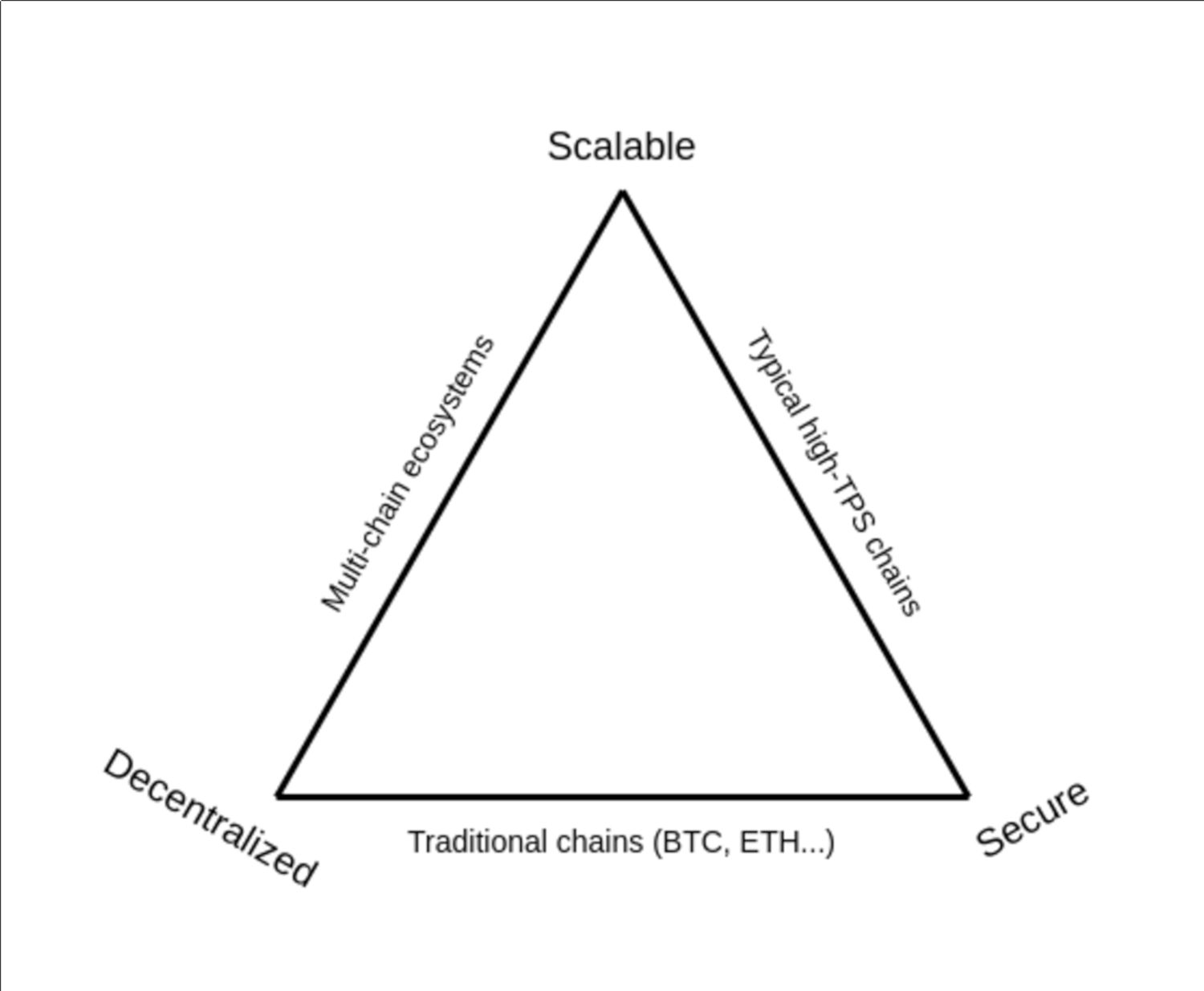
For developers, the ease of deployment and debugging is critical. Check if the rollup supports standard Ethereum Virtual Machine (EVM) tooling like Hardhat, Foundry, and Remix. Networks with robust SDKs and comprehensive documentation reduce development time significantly. If you are building complex smart contracts, ensure the rollup’s gas model aligns with your contract’s computational needs.
For private DeFi applications, verify how the rollup handles data availability. Does it publish compressed data to Ethereum mainnet, or does it use alternative data availability layers like Celestia or EigenDA? This choice impacts security assumptions and transaction costs. Ensure the rollup’s privacy features, such as zero-knowledge state proofs, meet your regulatory and user anonymity requirements.
| Rollup Type | Latency | Privacy | Best Use Case |
|---|---|---|---|
| ZK Sync | Medium | Low | General-purpose dApps |
| StarkNet | High | Medium | Complex computations |
| Aztec | Medium | High | Private DeFi |
| Loopring | Low | Low | High-frequency trading |
Frequently asked questions about ZK rollups
Will ETH reach $10,000 in 2026?
Ethereum is unlikely to hit the $10,000 mark in the next year. However, sustained blockchain development and increased demand suggest ETH could reach this valuation by the end of 2028.
Is Ethereum still a good investment in 2026?
Yes. Ethereum processed over $50 billion in DeFi lending and handled $2.82 trillion in stablecoin transactions in October 2025. The network continues to upgrade and currently has the largest developer community in crypto.
Does XRP use ZKP?
The XRP Ledger has integrated with Boundless, bringing native zero-knowledge proof verification to the ledger for the first time. Institutions can now verify transactions without revealing amounts, senders, or receivers.
What are the main ZK rollup projects in 2026?
Top ZK rollup projects are leading the industry by comparing technology, transaction speeds, and ecosystems to help users make informed fintech decisions.
How do ZK rollups compare to optimistic rollups?
ZK rollups use cryptographic proofs for immediate finality, while optimistic rollups assume transactions are valid unless challenged. ZK rollups generally offer faster settlement but higher computational costs for proof generation.
No comments yet. Be the first to share your thoughts!