The 2026 shift toward data sovereignty
Zero-knowledge proofs 2026 are no longer just a theoretical curiosity for cryptographers. They have become the foundational infrastructure for data sovereignty, allowing systems to verify claims without exposing the underlying data. This shift marks a transition from speculative blockchain applications to practical regulatory compliance and privacy preservation.
In 2026, the primary driver for zero-knowledge proofs is the need to comply with stringent data protection laws while maintaining operational efficiency. The European Union’s updated eIDAS Regulation, set to take full effect in 2026, creates a legal framework where zero-knowledge proofs are not just optional but increasingly necessary for digital identity verification. This regulation emphasizes that users should retain control over their personal information, a principle that aligns perfectly with the core mechanism of ZKPs: proving validity without revealing the statement itself.
The technology works by enabling a prover to demonstrate to a verifier that a specific condition is met, such as being over a certain age or having sufficient funds, without disclosing the actual data points like birthdate or account balance. This capability addresses the central tension in modern data management: the need to share information for verification against the right to keep it private. By keeping sensitive data local and only sharing cryptographic proofs, organizations can reduce their data liability while meeting compliance requirements.
This move toward privacy-preserving verification is reshaping how digital identities and financial transactions are handled. As regulations tighten and consumer awareness of data privacy grows, zero-knowledge proofs are becoming the standard for secure, compliant interactions. The focus is no longer on whether ZKPs work, but on how they integrate into existing legal and technical frameworks to empower individuals with true data sovereignty.
Comparing ZK privacy technology standards
The landscape for zero-knowledge proofs 2026 is defined by a trade-off between proof size and cryptographic assumptions. While the ZKProof initiative works to standardize these protocols, developers must choose between systems that prioritize compactness and those that prioritize post-quantum security. Understanding these technical distinctions is essential for selecting the right privacy layer for your application.
SNARKs vs. STARKs: The Core Trade-off
Selective Non-Interactive Argument of Knowledge (SNARKs) have long been the default for blockchain scalability due to their small proof sizes, often under 200 bytes. This compactness allows for efficient verification on constrained devices. However, most SNARK schemes require a trusted setup—a ceremony where initial parameters are generated. If the randomness used in this setup is compromised, the entire system's security collapses. This reliance on a one-time trusted event remains a significant barrier for high-security applications.
Scalable Transparent Arguments of Knowledge (STARKs) eliminate the trusted setup requirement, relying instead on publicly verifiable randomness. This transparency makes them more resilient to insider threats. STARKs are also post-quantum secure, meaning they remain safe even against future quantum computing attacks. The cost of this security is larger proof sizes, typically ranging from 10 to 30 kilobytes, which can increase bandwidth and storage requirements for verifiers.
Performance Comparison
The following table compares the primary characteristics of these standards to help you evaluate their fit for specific use cases.
| Metric | SNARKs | STARKs | Bulletproofs |
|---|---|---|---|
| Proof Size | Very Small (<1 KB) | Medium (10-30 KB) | Medium (1 KB) |
| Verification Time | Fast | Slower | Slow |
| Trusted Setup | Required | Not Required | Not Required |
| Post-Quantum Security | No | Yes | No |
Choosing the Right Standard
For applications where bandwidth is limited and a one-time trusted setup is acceptable, SNARKs remain the practical choice. They are widely supported by existing infrastructure and hardware accelerators. However, for environments demanding long-term security without trust assumptions, STARKs are becoming the preferred standard. As hardware improves, the verification speed gap between STARKs and SNARKs is expected to narrow, making the larger proof size less of a bottleneck.
Real-world data sovereignty use cases
Zero-knowledge proofs 2026 shift data sovereignty from theoretical privacy to practical enforcement. By allowing users to prove attributes without exposing underlying data, ZK technology enables control over personal information in high-stakes environments. This section examines how this capability is applied in age assurance, identity verification, and private transactions.
Age assurance and compliance
The European Union’s eIDAS Regulation, set to take effect in 2026, mandates strict age verification for online services. Traditional methods often require uploading government IDs or revealing exact birth dates, creating privacy risks. Google’s open-source ZKP libraries demonstrate a solution: users can prove they are over a certain age without disclosing their actual date of birth or identity. This approach aligns with regulatory requirements while minimizing data exposure.
Identity protection
Self-sovereign identity systems use ZK proofs to verify credentials without revealing the full credential. For example, a user can prove they hold a valid professional license or residency status without exposing their full name, address, or license number. This reduces the attack surface for identity theft and allows users to share only the necessary attributes for each interaction. The result is a more granular control over personal data.
Private transactions
In financial contexts, zero-knowledge proofs enable transaction privacy without compromising network integrity. Users can prove they have sufficient funds or that a transaction meets regulatory criteria (such as anti-money laundering checks) without revealing their balance or transaction history. This balance between transparency and privacy is critical for mainstream adoption of digital assets. The following chart illustrates the volatility of the underlying asset class, highlighting the need for privacy-preserving mechanisms in volatile markets.
Comparison of ZK applications
| Use Case | Data Revealed | Data Proven | Primary Benefit |
|---|---|---|---|
| Age Assurance | None | Age threshold met | Compliance without PII |
| Identity Verification | Selected attributes | Credential validity | Reduced identity theft risk |
| Private Transactions | Transaction validity | Sufficient funds | Financial privacy |
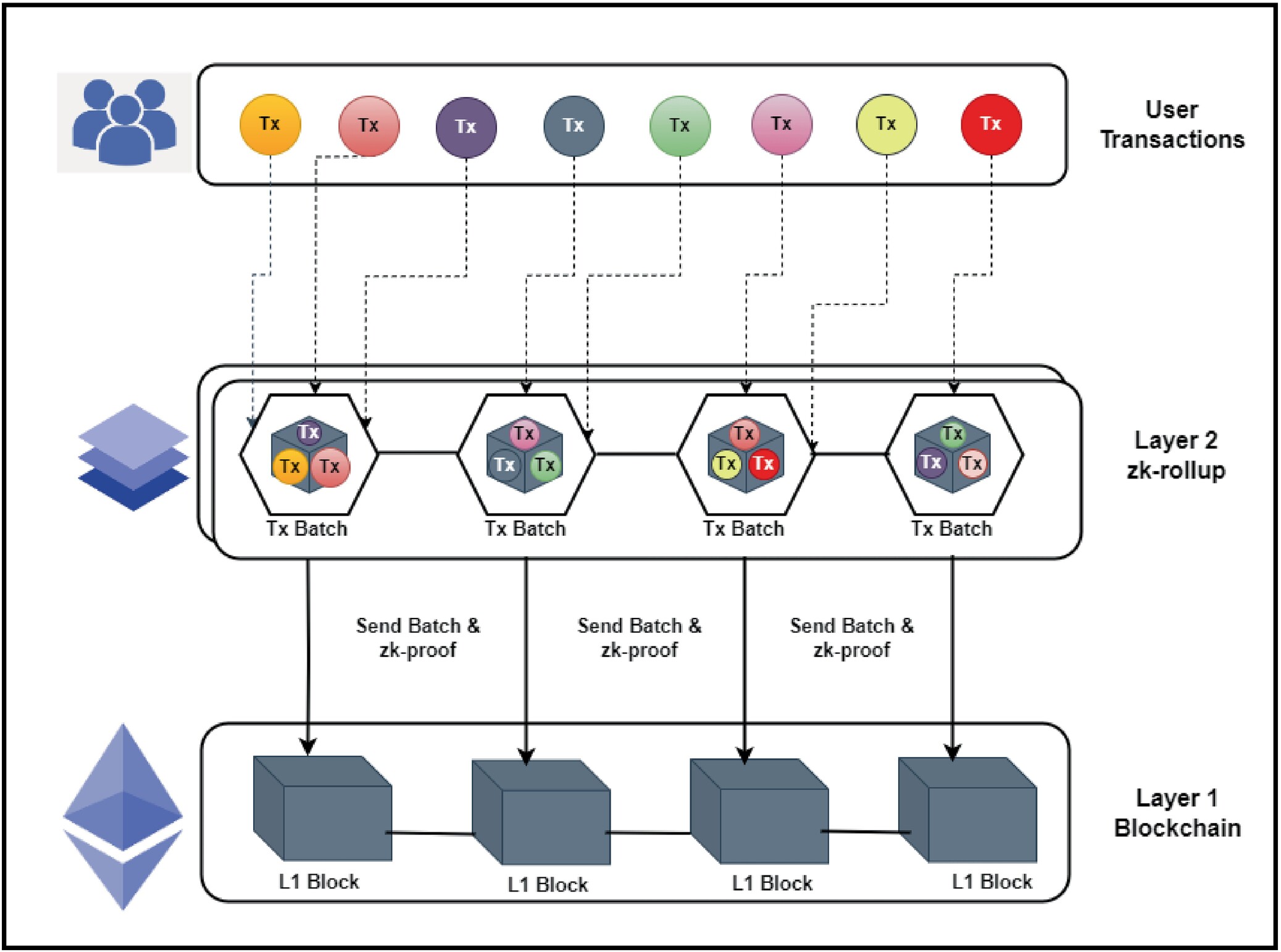
The image below illustrates the technical architecture of ZK-enabled privacy systems, showing how proofs are generated and verified without data exposure.
Market sentiment and adoption signals
The momentum behind zero-knowledge proofs 2026 has shifted from experimental research to tangible infrastructure deployment. Major organizations are no longer treating privacy as an afterthought but as a foundational requirement for scalable digital systems. This shift is evident in the strategic roadmaps of leading blockchain foundations and the growing standardization efforts within the developer community.
Ethereum’s recent roadmap updates highlight a decisive move toward zero-knowledge technology. The Ethereum Foundation’s Lean Ethereum initiative now explicitly leverages ZK proofs for post-quantum secure aggregatable signatures. This technical pivot signals that institutional-grade privacy is becoming a priority for network security and scalability, moving beyond niche applications to core protocol design.
Community engagement is also accelerating, with events like ZKProof 8 in Rome drawing over 1,000 practitioners focused on standardization. As the ecosystem matures, the focus is narrowing on interoperable standards that allow different ZK systems to communicate securely. This collaborative approach is reducing fragmentation and encouraging broader adoption across finance, identity, and data sovereignty sectors.
The correlation between ZK development activity and broader crypto market interest remains strong. As privacy-preserving technologies become more accessible, institutional investors are increasingly viewing ZK infrastructure as a critical layer for compliant data handling. This dual pressure from technical necessity and market demand is driving rapid innovation in proof generation and verification speeds.
Navigating zero-knowledge proofs 2026 choices
Selecting the right zero-knowledge proofs 2026 architecture requires balancing proof speed, verification cost, and regulatory compliance. There is no single standard; the correct choice depends on whether you prioritize public verifiability or private, high-throughput transactions.
The landscape splits primarily between general-purpose circuits and specialized protocols. General-purpose frameworks like Circom or Gnark offer flexibility for complex logic but demand significant engineering overhead to avoid soundness errors. Specialized protocols, such as those used in Zcash or Tornado Cash, are optimized for specific actions like anonymous transfers, offering faster setup but less adaptability.
Regulatory constraints narrow the field. If your use case requires a "proof of knowledge" that can be selectively revealed to authorities, you may need a zk-SNARK with a designated verifier or a hybrid approach that integrates zero-knowledge range proofs. Publicly verifiable zk-STARKs offer transparency but may face scrutiny in jurisdictions requiring identifiable transaction trails.
| Feature | zk-SNARKs | zk-STARKs | Bulletproofs |
|---|---|---|---|
| Proof Size | Small (KB) | Large (MB) | Medium (KB) |
| Verification | Fast | Fast | Slower |
| Trust Setup | Yes (usually) | No | No |
| Quantum Safe | No | Yes | No |
When evaluating vendors, prioritize those with open-source, audited codebases. The ZKProof community maintains rigorous standards for cryptographic soundness, which should be your baseline for any production deployment.
| Feature | zk-SNARK | zk-STARK |
|---|---|---|
| Trust Setup | Required | None |
| Proof Size | Small | Large |
| Quantum Resistance | No | Yes |
For market participants tracking the infrastructure layer, the cost of proving is directly tied to the underlying blockchain's computational resources. Monitoring the gas fees and computational load of leading ZK-rollups can provide insight into the efficiency of the chosen proof system.
No comments yet. Be the first to share your thoughts!