Zk rollups 2026 limits to account for
A ZK rollup is a Layer 2 blockchain that batches thousands of transactions offchain and settles them back to Ethereum using a single zero-knowledge proof. This architecture allows networks like Mantle, Lighter, Starknet, Linea, and ZKsync Era to process data without clogging the main Ethereum chain. The result is significantly lower fees and faster confirmation times while maintaining the security guarantees of the underlying Layer 1.
By 2026, the distinction between ZK rollups and optimistic rollups has sharpened around finality. Optimistic rollups assume transactions are valid unless proven otherwise, requiring a seven-day challenge period for withdrawals. ZK rollups, by contrast, generate a cryptographic proof of validity for every batch. This means users can withdraw funds almost instantly, a critical feature for enterprise applications requiring real-time settlement and privacy.
The primary constraint remains the computational cost of generating these proofs. While the infrastructure has matured, the hardware requirements for proof generation are still higher than for standard transaction validation. However, as chip manufacturers and software stacks like Circom and Halo2 continue to evolve, this gap is narrowing. For enterprises, the tradeoff is clear: pay more for computational resources now to gain instant finality and absolute privacy, or stick with optimistic models and accept slower withdrawal times.
Zk rollups 2026 choices that change the plan
Choosing a zero-knowledge rollup in 2026 requires balancing security guarantees against developer experience and user costs. Enterprise teams must evaluate how proof generation latency, data availability costs, and cryptographic complexity impact their specific use cases. The following comparison highlights the primary tradeoffs between leading ZK rollup architectures.
| Project | Proof System | Security Model | Best Use Case |
|---|---|---|---|
| ZKsync Era | STARKs | Ethereum L1 Settlement | General-purpose DeFi and high-throughput transactions |
| Starknet | STARKs (Cairo) | Decentralized Sequencer | Complex smart contracts and high-security applications |
| Linea | PLONK (SNARKs) | Centralized Sequencer | EVM compatibility and enterprise privacy |
| Mantle | MegaSTARKs | Modular L2 | High-performance applications with low latency needs |
The choice between STARKs and SNARKs often dictates the tradeoff between long-term quantum resistance and faster proof generation. STARKs, used by Starknet and ZKsync Era, offer quantum resistance and transparent setup but require larger proof sizes. SNARKs, like those on Linea, generate smaller proofs and verify faster but rely on a trusted setup and are potentially vulnerable to quantum computing advances.
For enterprise privacy, data availability is the critical bottleneck. Rollups that post compressed transaction data to Ethereum L1 incur significant gas costs during network congestion. Projects like Mantle and Linea optimize this by using modular data availability layers or compressed SNARK proofs, reducing costs by up to 99% compared to L1 direct posting. However, this optimization introduces reliance on the availability layer's decentralization. Teams prioritizing absolute censorship resistance may prefer rollups that post full calldata to L1, accepting higher fees for stronger security guarantees.
The decision ultimately hinges on whether the application prioritizes speed and cost or maximum decentralization. DeFi protocols often favor ZKsync Era or Starknet for their robust EVM or Cairo compatibility and established security. Enterprise applications requiring strict privacy and compliance may lean toward Linea or Mantle for their modular flexibility and lower operational costs.
How to choose a zk rollup for enterprise privacy
Selecting a zero-knowledge (zk) rollup requires moving beyond marketing claims to evaluate technical guarantees and compliance readiness. The decision hinges on three factors: proof latency, data availability costs, and ecosystem compatibility. Below is a practical framework to guide your selection.
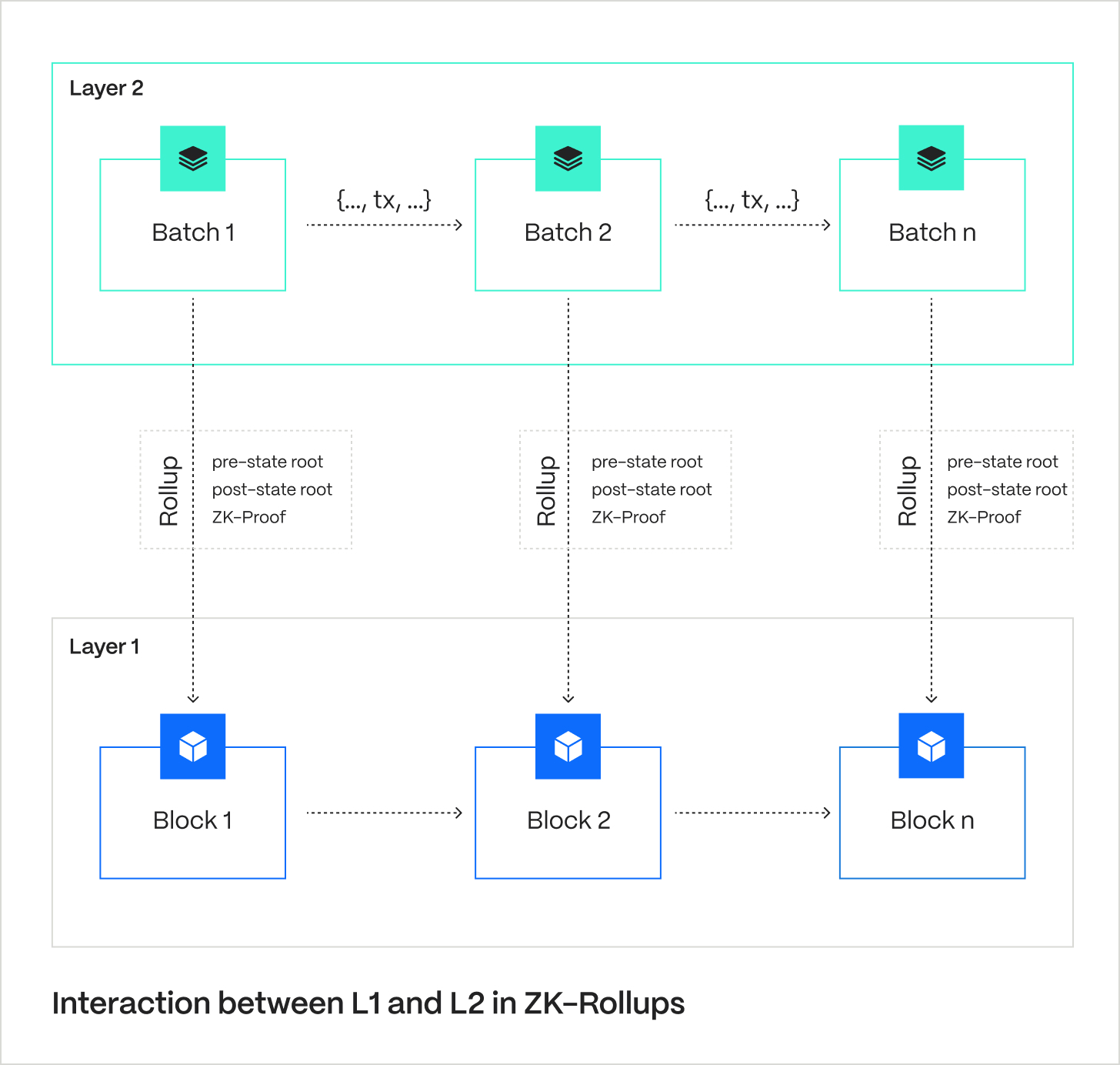
Enterprise applications often require predictable settlement times. zk rollups generate cryptographic proofs offchain, which must be verified on Ethereum L1. Evaluate the "proof generation time" versus "verification time." For high-frequency trading or real-time identity verification, prioritize rollups with optimized proof systems like STARKs or Halo2, which offer faster finality than older SNARK-based systems. Check L2BEAT Stage 2+ status to ensure security guarantees are met.
The cost of storing transaction data on Ethereum or alternative data availability layers (like Celestia or EigenDA) directly impacts your operational budget. zk rollups bundle hundreds of transactions into a single proof, drastically reducing gas fees compared to L1. However, costs vary by rollup architecture. Use a calculator to estimate monthly data costs based on your projected transaction volume. Lower data availability costs often correlate with higher centralization risks in the sequencer, so balance cost against trust assumptions.
Integration speed matters. Compare the SDKs, documentation, and community support for top zk rollups like Starknet, Linea, and ZKsync Era. A mature ecosystem reduces development time and risk. Check if the rollup supports your preferred programming language (e.g., Cairo for Starknet, Solidity for ZKsync). Also, verify interoperability with existing enterprise identity providers and wallet infrastructure to ensure seamless user onboarding.
For enterprise use, privacy must be configurable. Some zk rollups offer "transparent" accounts" where specific transactions are visible to regulators, while others are fully private. Ensure the protocol allows for selective disclosure, enabling you to prove compliance (e.g., AML/KYC) without exposing sensitive business data on-chain. Review the rollup's audit history and formal verification reports to confirm no critical vulnerabilities exist in the privacy circuitry.
| Rollup | Proof System | Finality | Eco Compatibility |
|---|---|---|---|
| Starknet | STARKs | Fast (~1-2 min) | Cairo (native), Solidity |
| ZKsync Era | SNARKs (Plonk) | Medium (~10-15 min) | Solidity (high) |
| Linea | SNARKs (Plonk) | Medium (~10-15 min) | Solidity (high) |
The right choice depends on your specific tradeoff between speed, cost, and compatibility. For most enterprises starting with zk privacy, ZKsync Era or Linea offer the easiest integration due to Solidity compatibility, while Starknet provides superior performance for high-throughput applications.
Avoiding Common ZK Rollup Pitfalls
Enterprise adoption of zk rollups often stalls not because of technology, but because of misleading vendor claims and poor architectural choices. As ZK rollups become the standard for privacy, understanding where implementations fail is critical for risk management.
Weak Options and Misleading Claims
Many providers market "zero-knowledge" as a black box that guarantees privacy without explaining the trust assumptions. A common mistake is ignoring the validity proof system. Some rollups use weak SNARK circuits that require periodic upgrades, introducing upgrade risks that enterprise auditors reject. Always verify if the proof system is post-quantum resistant or relies on legacy elliptic curve pairings.
Another weak option is the "fully decentralized" claim that hides centralized sequencers. If a single entity controls transaction ordering, censorship risks remain. Look for rollups with transparent, multi-signature sequencer setups or decentralized sequencer networks. The L2BEAT stage ratings provide a reliable baseline for this check.
Critical Tradeoffs by Use Case
When selecting a zk rollup, prioritize finality speed over raw throughput for financial settlements. Starknet offers high throughput but complex circuit design, while ZKsync Era provides EVM equivalence for easier migration. For enterprise privacy, the choice depends on whether you need data availability security (Ethereum L1) or cheaper, faster but less secure alternatives.
Don't assume all ZK rollups are equal. Some are optimized for gaming (low latency), others for finance (high security). Match the rollup's strengths to your specific compliance and performance needs.
No comments yet. Be the first to share your thoughts!