Why ZK rollups lead L2 scaling in 2026
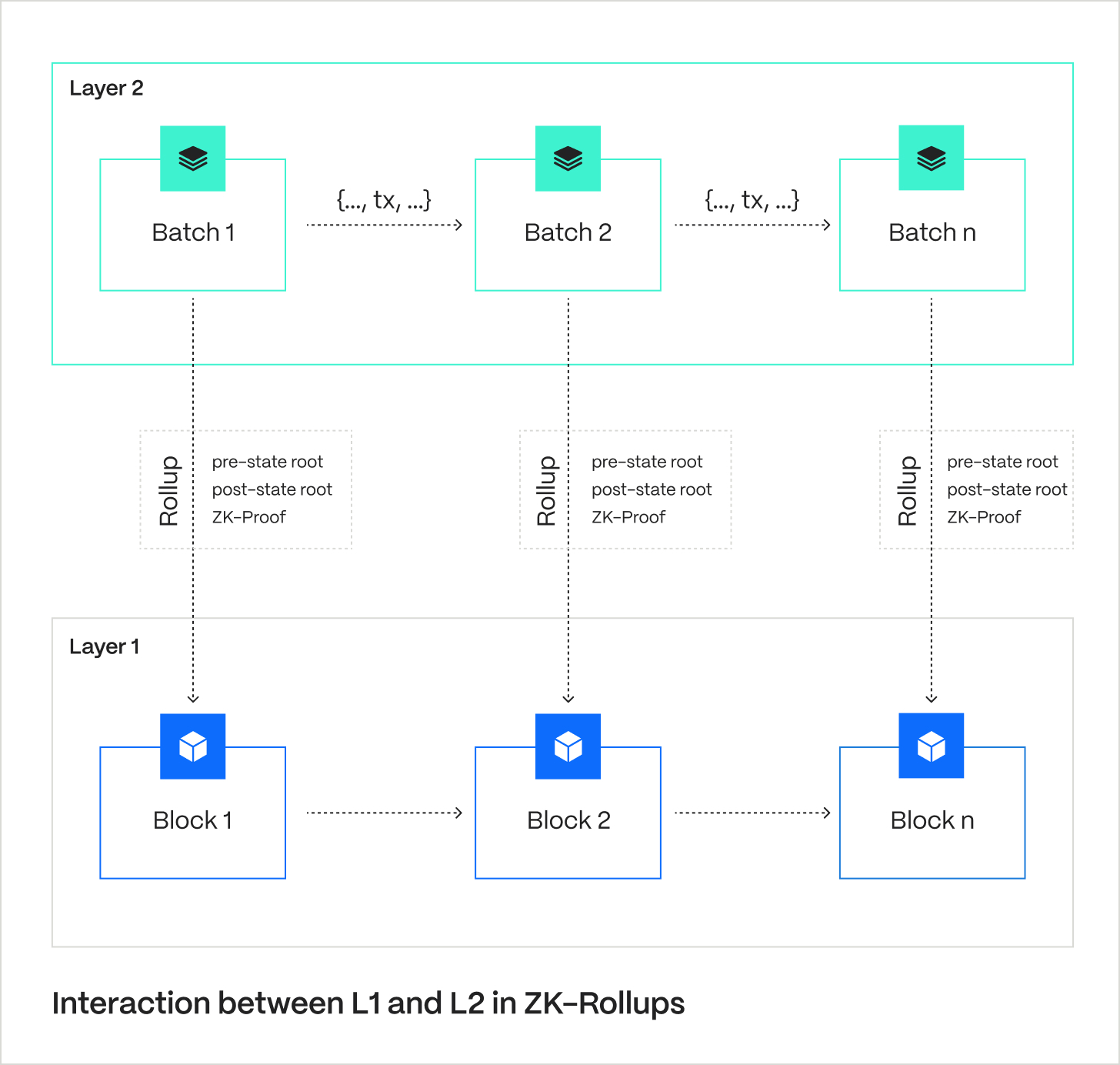
Zero-knowledge rollups have emerged as the dominant Layer 2 scaling mechanism for 2026, fundamentally shifting the market away from optimistic models. By batching thousands of transactions off-chain and settling them on Ethereum with a single validity proof, ZK rollups offer immediate finality. This stands in stark contrast to optimistic rollups, which rely on fraud proofs and a seven-day challenge window, making them unsuitable for high-frequency trading or enterprise applications requiring instant settlement.
The economic landscape for ZK rollups improved dramatically following EIP-4844 (proto-danksharding). This upgrade introduced blob-carrying transactions, which slashed data availability costs by over 90%. For ZK rollups, which are historically data-intensive due to proof generation and verification, this reduction in gas fees was a critical inflection point. It made ZK-based infrastructure viable for mass-market DeFi and enterprise use cases that previously found the economics prohibitive.
The security model of ZK rollups provides a "trustless" guarantee. Unlike optimistic rollups, which assume transactions are valid unless proven otherwise, ZK rollups mathematically prove correctness before settlement. This eliminates the risk of fraud during the challenge period and reduces counterparty risk for institutional participants. As Ethereum pushes toward higher throughput, the combination of immediate finality and lower data costs positions ZK rollups as the preferred layer for scaling both DeFi and enterprise-grade applications.
Comparing top ZK rollup architectures
The choice of ZK rollup architecture dictates the boundary between computational security and developer convenience. In 2026, the market has bifurcated around two distinct cryptographic paths: SNARK-based systems that prioritize EVM equivalence, and STARK-based systems that prioritize quantum resistance and larger proof sizes. For enterprise adoption, this distinction is not merely academic; it determines whether a project can inherit Ethereum’s existing tooling or must build a custom execution environment from the ground up.
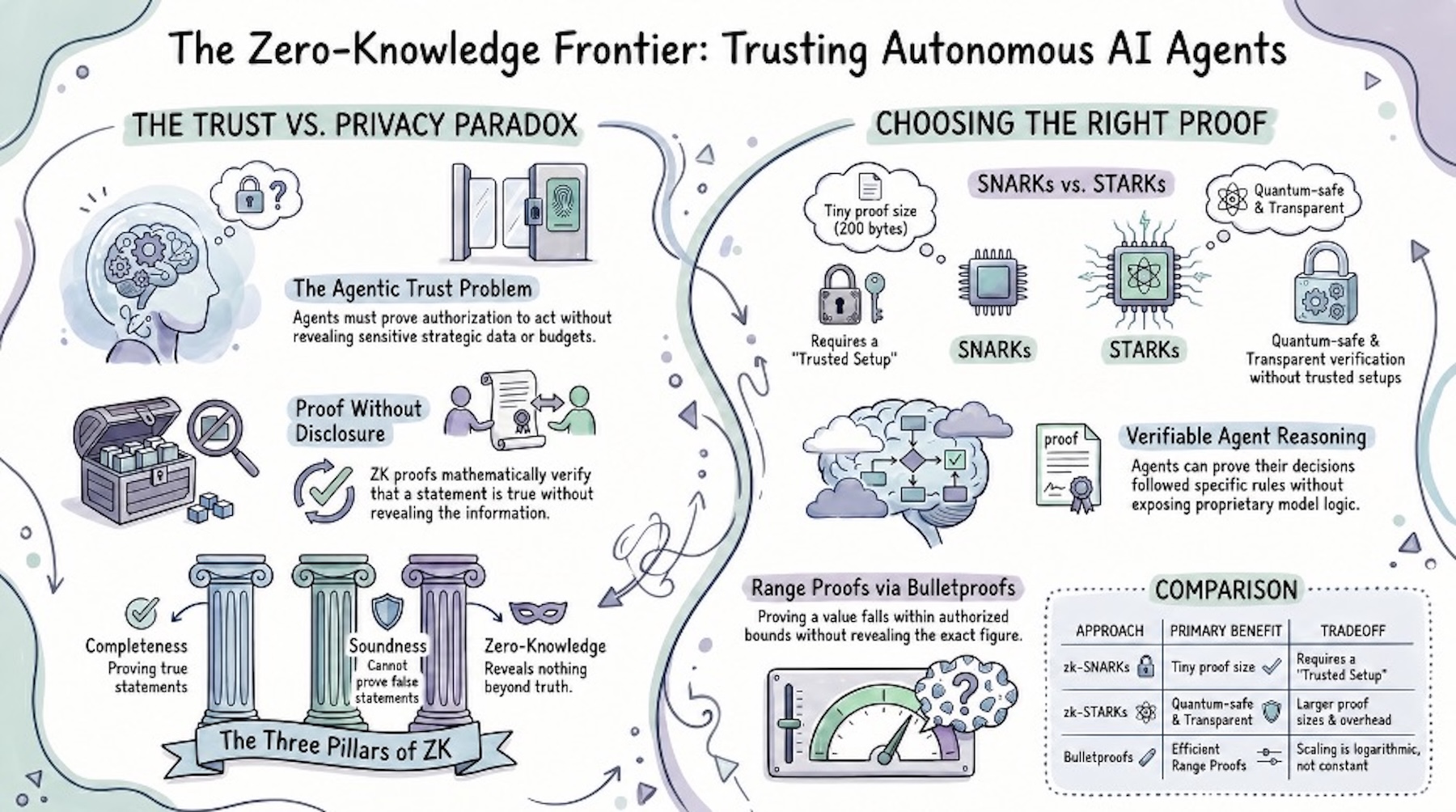
zkSync Era and Polygon zkEVM rely on SNARKs (Succinct Non-Interactive Arguments of Knowledge). These proofs are smaller and faster to verify, making them ideal for high-frequency trading and DeFi applications where latency matters. However, they require a trusted setup phase, a potential risk vector for high-stakes institutional capital. StarkNet, conversely, uses STARKs (Scalable Transparent Arguments of Knowledge). While the proofs are larger and verification is computationally heavier, STARKs are post-quantum secure and require no trusted setup, offering a more robust long-term security posture for critical infrastructure.
Linea represents a hybrid approach, leveraging zkEVM technology to maintain strict EVM compatibility while optimizing for enterprise-grade throughput. Its architecture is designed to minimize the friction of migration for existing Ethereum developers, making it a pragmatic choice for enterprises already embedded in the Ethereum ecosystem. The following comparison outlines the technical trade-offs between these four leading architectures.
| Project | Proof System | EVM Compatibility | Primary Use Case |
|---|---|---|---|
| zkSync Era | SNARKs (PLONK) | Full (EVM Equivalent) | DeFi & High-Frequency Trading |
| StarkNet | STARKs (STARK) | Partial (Cairo VM) | High-Throughput Apps & Gaming |
| Polygon zkEVM | SNARKs (PLONK) | Full (EVM Equivalent) | Enterprise & Web2 Migration |
| Linea | SNARKs (PLONK) | Full (EVM Equivalent) | Enterprise Infrastructure |
Enterprise blockchain privacy use cases
Public ledgers are transparent by design, which creates a structural conflict for institutions handling sensitive financial data. ZK rollups resolve this by allowing enterprises to process transactions off-chain while submitting a single cryptographic proof to the mainnet. This architecture enables private transactions on public ledgers, ensuring that while the validity of the transaction is verifiable, the underlying data remains hidden from external observers.
For regulated industries, this capability is not merely a feature but a prerequisite for adoption. Financial institutions must navigate strict compliance frameworks such as GDPR and HIPAA, which mandate the protection of personally identifiable information (PII) and health records. Traditional public blockchains fail these requirements because every transaction is permanently visible. ZK proofs allow institutions to demonstrate compliance—proving that a transaction adheres to regulatory rules—without exposing the actual business logic or customer data.
This separation of validity and visibility lowers the barrier for institutional capital. Banks and healthcare providers can participate in decentralized finance (DeFi) or supply chain networks without risking competitive intelligence or violating privacy laws. The result is a scalable infrastructure where security and privacy coexist, enabling high-volume enterprise operations that were previously impossible on public chains.
DeFi Scalability and Transaction Costs
Zero-knowledge rollups have fundamentally altered the economic mechanics of decentralized finance by decoupling transaction throughput from Ethereum mainnet congestion. The integration of validity proofs allows DeFi protocols to process thousands of transactions per second while settling only the final state on Layer 1. This architectural shift has driven gas fees down to fractions of a cent, enabling transaction types that were previously economically unviable on L1.
The reduction in cost structure has unlocked high-frequency trading strategies and micro-transactions within DeFi ecosystems. Liquidity providers can now rebalance portfolios and execute arbitrage opportunities with minimal slippage and negligible fee overhead. This efficiency is critical for maintaining deep order books and ensuring that automated market makers remain competitive against centralized exchanges.
While the speed and cost advantages are clear, the transition introduces new risk vectors. The complexity of ZK circuit verification requires rigorous audit standards to prevent exploits in the validity proof generation process. Protocols adopting ZK rollups must balance the demand for instant finality with the computational latency inherent in generating zero-knowledge proofs. This trade-off defines the current frontier of DeFi scalability, where security remains the primary constraint rather than raw throughput.
Choosing the right ZK rollup for your project
Selecting a zero-knowledge rollup is not a generic infrastructure decision; it is a strategic alignment of technical constraints, security assumptions, and ecosystem liquidity. In 2026, the market has fragmented into distinct categories: EVM-equivalent chains for developer velocity, non-EVM chains for custom VM efficiency, and specialized hyperchains for high-throughput consumer applications. Your choice dictates your total cost of ownership, exit liquidity depth, and the complexity of your bridge security.
Start by determining if your existing smart contract codebase can deploy without modification. EVM-equivalent rollups like zkSync or Scroll allow you to port Solidity code directly, drastically reducing migration risk and developer hiring costs. If your project relies on complex tooling or legacy contracts, this compatibility is often the primary filter, even if the underlying proof system is less efficient than a custom VM.
Not all ZK rollups offer the same level of decentralization. StarkNet and Polygon zkEVM utilize different proof generation architectures that impact finality times and potential trust assumptions. For enterprise applications handling institutional capital, verify whether the rollup relies on centralized sequencers or fully decentralized proof networks. High-stakes financial applications should prioritize chains with audited, battle-tested fraud or validity proof mechanisms over newer, experimental architectures.
Technical superiority means little if your users cannot exit or swap assets efficiently. Evaluate the depth of liquidity on centralized and decentralized exchanges for the native token of the rollup. Ecosystem maturity also includes the availability of reliable oracles, bridges, and developer support. Projects like StarkNet have carved out niches in high-performance gaming and DeFi by building robust native tooling, whereas others may offer better Ethereum compatibility but thinner liquidity pools.
| Rollup | Type | Security Model | Best Use Case |
|---|---|---|---|
| zkSync | EVM-equivalent | High (Ethereum L1) | DeFi and tokenized assets |
| StarkNet | STARK-based VM | High (Cairo VM) | High-throughput apps and gaming |
| Polygon zkEVM | EVM-equivalent | High (Polygon CDK) | Enterprise migration from Ethereum |
The decision ultimately hinges on balancing developer convenience against performance and security. For most enterprises, starting with an EVM-equivalent solution minimizes friction, while specialized high-volume applications may justify the overhead of a custom VM like StarkNet’s Cairo. Always stress-test your chosen rollup’s bridge security and liquidity exit routes before committing significant capital.
Frequently asked questions about ZK rollups
Investors and developers often conflate scaling architectures or chase price predictions without understanding the underlying technology. These questions address the most common misconceptions in the current market.
Understanding these distinctions is critical. Mistaking an optimistic rollup for a ZK rollup can lead to incorrect assumptions about transaction finality and security guarantees. Always verify the underlying proof system before deploying capital or applications.
No comments yet. Be the first to share your thoughts!