
Imagine a world where you can trust every AI-generated result - but without ever exposing your sensitive data or the proprietary guts of the model. Welcome to 2025, where zero-knowledge proofs (ZKPs) are rapidly redefining what it means for AI to be both powerful and private. As blockchain privacy and scalable AI solutions converge, ZKPs are stepping into the spotlight, enabling verifiable AI outputs that don’t leak secrets.
The Magic of Zero-Knowledge Proofs: Trust Without Exposure
The core idea behind zero-knowledge proofs is deceptively simple: one party (the prover) can convince another party (the verifier) that a statement is true without revealing any additional information. In the context of AI, this means you can prove an algorithm produced a specific output from certain inputs, yet keep both your data and model private.
This breakthrough isn’t just academic. In 2025, projects like ARPA Network’s Verifiable AI Framework and Lagrange Labs’ DeepProve are already operationalizing ZKPs for real-world use cases. Whether it’s verifying that an image was classified correctly or ensuring an LLM generated unbiased text, ZKPs provide cryptographic certainty - not marketing promises.
Key Applications: Where ZKPs Meet Real-World AI Challenges
1. Verifiable AI Inference: With ZKPs, users can demand proof that an AI model truly ran on their input and produced the claimed result - all without seeing the input or peeking at the model’s internals. This is game-changing for industries handling private medical records or confidential financial data.
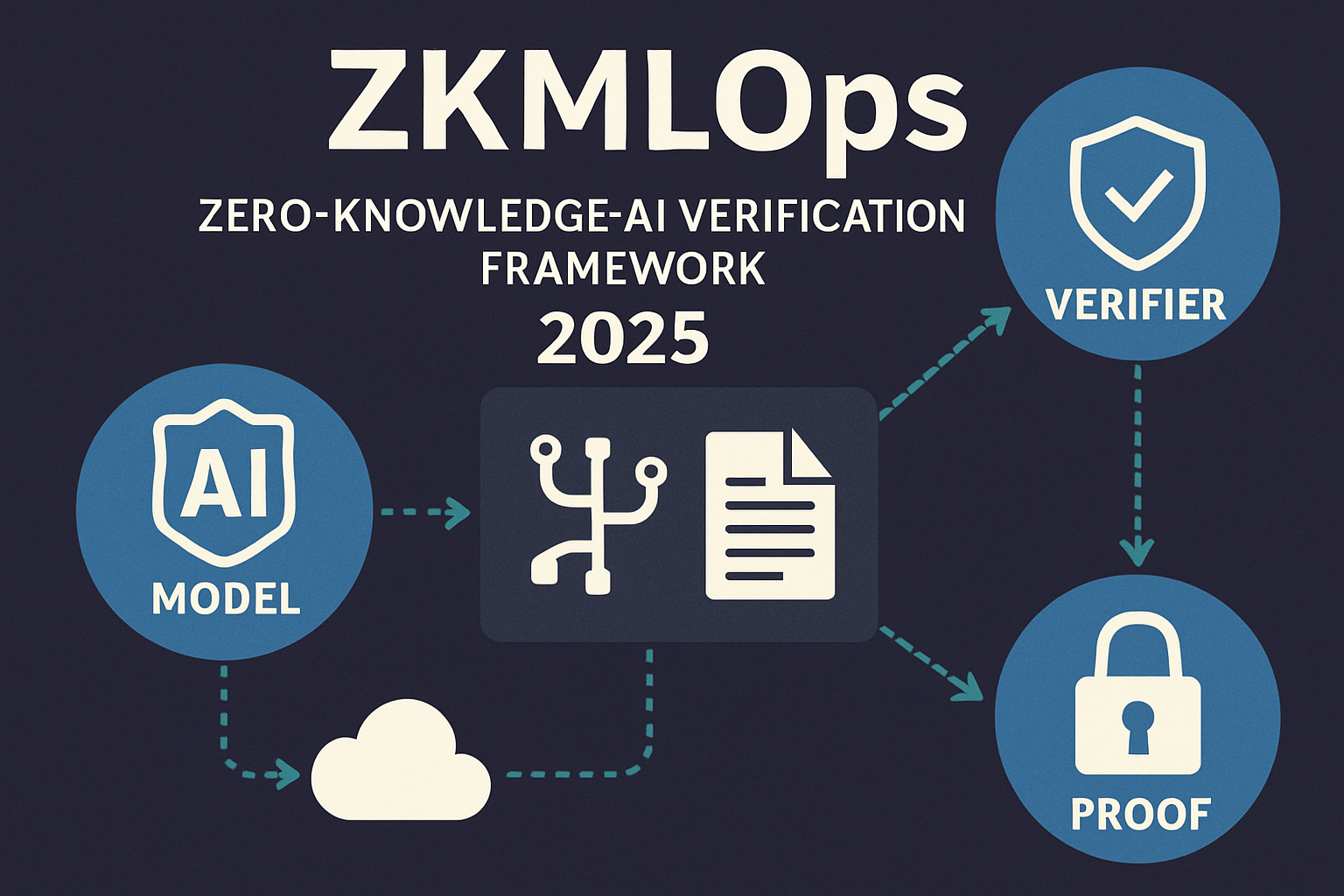
- ZKMLOps: A new breed of MLOps frameworks now integrates ZKP-powered verification directly into machine learning pipelines.
- ZKML: This emerging field focuses on creating zero-knowledge circuits for common ML tasks so proofs stay efficient even as models scale up.
2. Secure Federated Learning: Federated learning lets multiple parties train shared models without pooling their raw datasets. But how do you know everyone played fair? ZKPs let each participant prove their training updates were valid - no cheating, no peeking at rivals’ data.
3. Decentralized Identity and Data Sharing: From age verification to credential checks, ZKPs allow individuals to prove attributes about themselves without disclosing underlying documents. This privacy-preserving approach is perfect for decentralized apps where user control is paramount.
The Benefits: Why Everyone Wants Verifiable AI Outputs with ZKPs
The buzz around "verifiable AI outputs zk" isn’t just hype. Here’s why developers, enterprises, and regulators alike are flocking to this tech:
- Data Privacy: Sensitive info stays locked away during every proof process - ideal for GDPR compliance and beyond.
- Verifiability: Cryptographic guarantees mean no more black-box claims; every output can be independently checked by anyone with access to the proof.
- Regulatory Compliance: Transparent yet private verification helps organizations satisfy tough global standards without compromising trade secrets or user privacy.
This paradigm shift is not limited to theory; it’s being implemented right now by pioneers across finance, healthcare, supply chain management, and even decentralized social networks. As these sectors demand more trustworthy automation without sacrificing privacy or control, zk proofs for trustworthy AI become mission-critical infrastructure rather than optional add-ons.
Of course, no revolution comes without its hurdles. The integration of zero-knowledge proofs into AI workflows is not a plug-and-play affair. Computational overhead remains a real challenge, as generating and verifying ZKPs can require significant resources, especially when scaling up to complex models or high-frequency inference tasks. This means that developers must balance the privacy and verifiability benefits against the need for smooth, responsive user experiences.
Another major consideration is scalability. While advances like ZKML and optimized circuits are making proofs more efficient, there’s still work to be done before zero-knowledge-powered AI can support massive, real-time applications at Web3 scale. The ecosystem is moving fast, but standardization and interoperability between frameworks will be key for mainstream adoption in 2025 and beyond.
Emerging Solutions: Who’s Leading the Verifiable AI Charge?
The race to deliver trustworthy AI isn’t just theoretical, several projects are already shipping solutions that blend blockchain privacy with AI transparency:
Top zk-AI Verification Projects Leading in 2025
- ARPA Network: Pioneering verifiable AI frameworks with zero-knowledge proofs, ARPA Network enables trusted AI output verification while safeguarding sensitive data. Their 2025 launch set a new standard for privacy-preserving AI integrity.

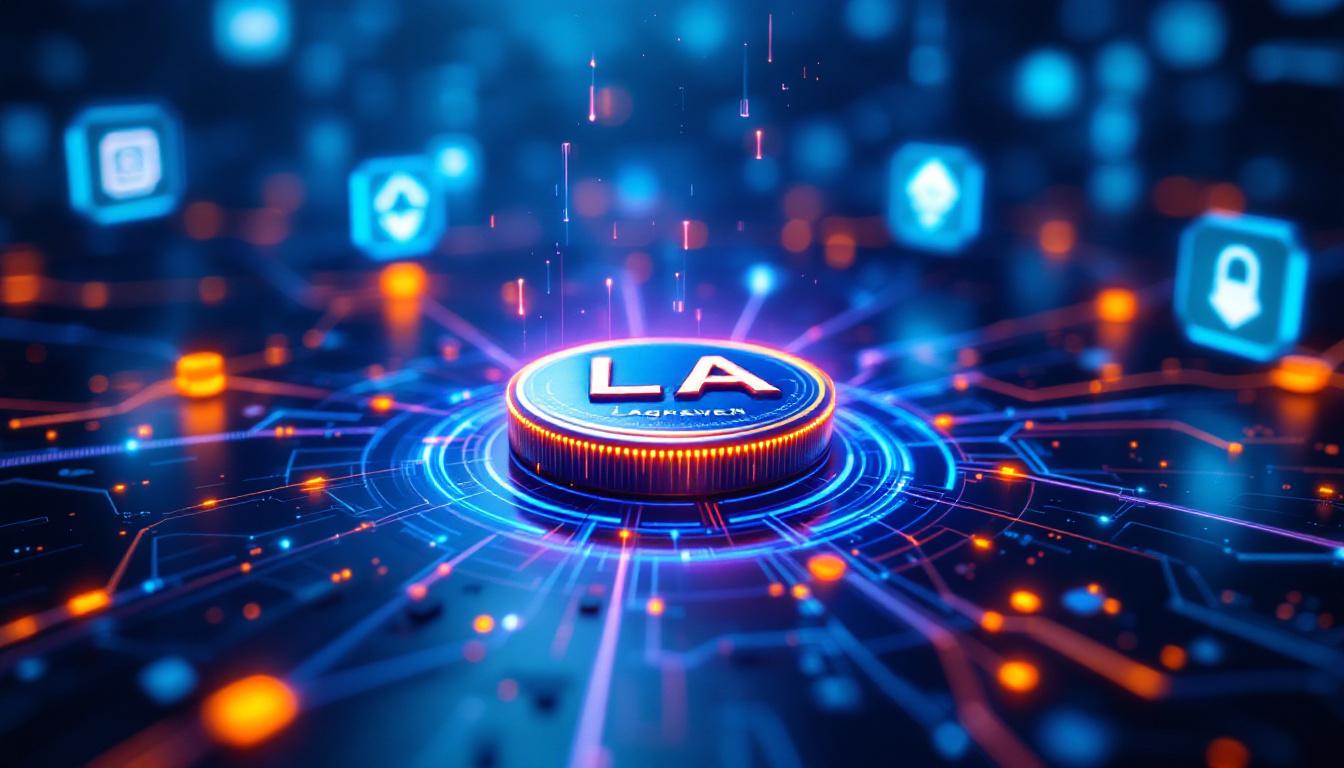
- DeepProve by Lagrange Labs: DeepProve leverages ZKPs to cryptographically prove that an AI model produced a specific output from a given input—without exposing model weights or proprietary information. This empowers organizations to share AI results with confidence.
- ZKMLOps: Introduced as a novel MLOps verification framework, ZKMLOps operationalizes zero-knowledge proofs for AI-enabled systems. It allows for robust, transparent AI auditing without revealing underlying data or model details.
These trailblazers are setting new standards for what’s possible when you fuse cryptography with machine learning. Whether it’s ARPA Network’s focus on trusted AI verification for enterprise or DeepProve’s ability to prove model outputs without leaking weights or data, the practical impact is already being felt across industries.
What Does This Mean For You?Action Steps For Developers and Innovators
If you’re building or deploying AI in 2025, now is the time to get hands-on with zero-knowledge technology. Start by exploring open-source libraries for zkML circuits or contribute to frameworks like ZKMLOps that make integration smoother. Experiment with testnets from emerging zk-AI providers and join community discussions on best practices for balancing privacy and performance. Remember: early adopters of verifiable AI outputs will have a distinct edge as regulations tighten and users demand more transparency.
The synergy between zk scaling solutions for AI and decentralized identity protocols also opens doors for entirely new business models, think privacy-preserving marketplaces for verified data or automated compliance audits that never expose a byte of user information.
Looking Forward: The Future Is Trust-Minimized
The bottom line? Zero-knowledge proofs aren’t just another buzzword, they’re fundamentally reshaping how we trust (and verify) artificial intelligence in an increasingly decentralized world. As technical barriers fall and standards emerge, expect ZKP-powered systems to become the gold standard not only in blockchain privacy but also across every sector where data integrity matters.
The next wave of innovation belongs to those who can adapt fast and build smart, embracing verifiable computation as the new normal for responsible, scalable AI.


No comments yet. Be the first to share your thoughts!