
In the race to scale Ethereum without compromising its security, zkEVMs have emerged as the gold standard for rollups, but not all deliver the same flavor of compatibility. Vitalik Buterin’s 2022 classification into types cuts through the hype, ranking them from Type 1’s unyielding Ethereum equivalence down to Type 4’s performance-optimized native execution. Today, projects like Taiko, Scroll, Polygon zkEVM, and zkSync Era embody these categories, forcing developers and investors to weigh bytecode fidelity against proof speed. This zkEVM types breakdown spotlights the tension between seamless Ethereum tooling and zk-native efficiency.

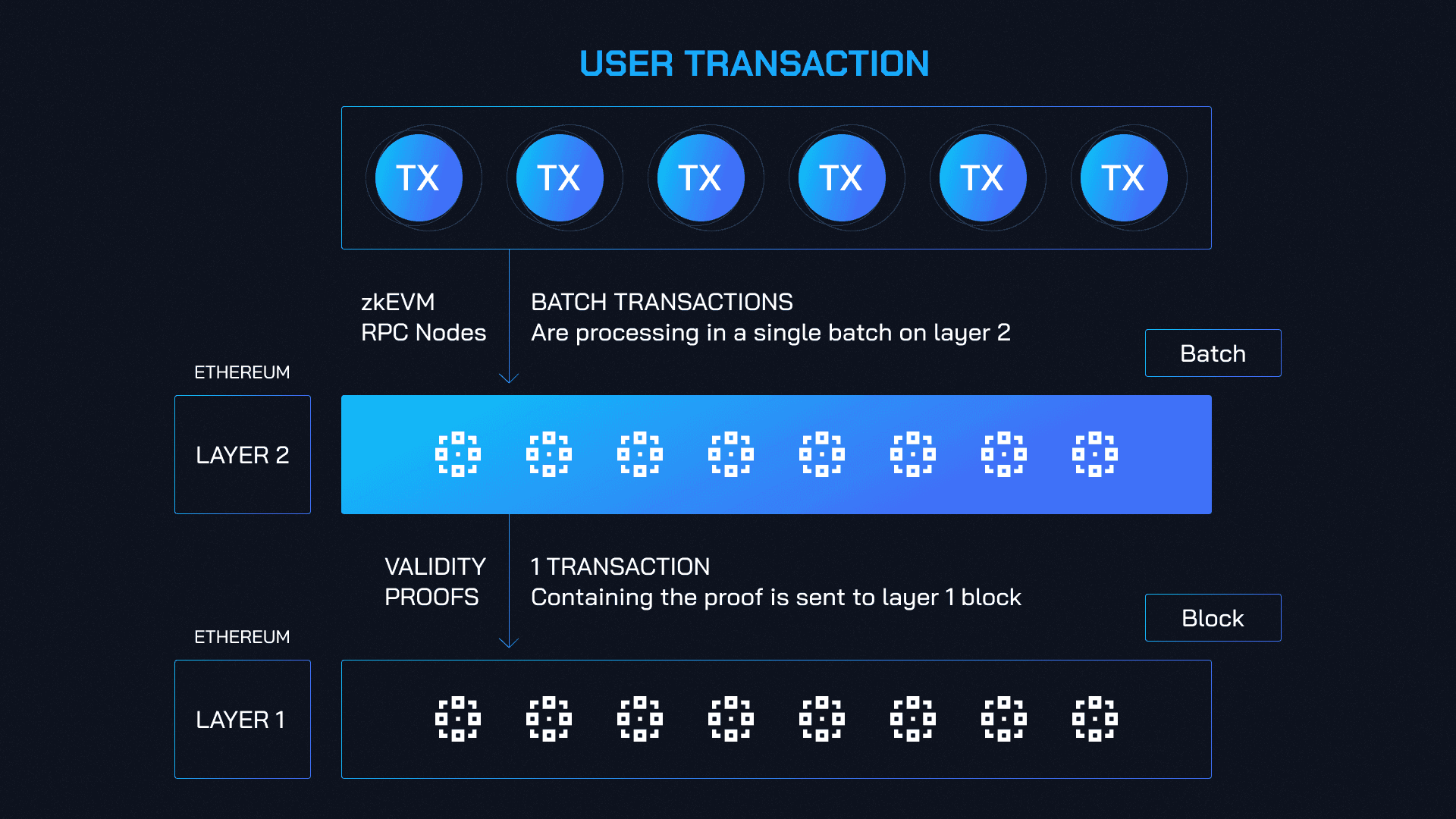
Vitalik’s Framework: From Full Equivalence to Native Optimization
Vitalik laid out the typology based on how faithfully a zkEVM mirrors Ethereum’s execution environment. Type 1 zkEVMs execute EVM bytecode identically, proving every opcode without alteration. This purity ensures zero friction for Ethereum dApps but burdens provers with Ethereum’s non-zk-friendly opcodes like arbitrary memory access. As we push toward mass adoption, understanding these gradients matters for zk rollups EVM compatibility and where capital flows next.
Fast-forward to 2026, and the landscape sharpens. Polygon zkEVM sits at Type 3, leveraging precompiles for zk-friendly code verification while approximating EVM semantics. zkSync Era, a Type 4 stalwart, compiles Solidity straight to its zkEVM bytecode, slashing prove times at the cost of tools expecting vanilla EVM. Scroll threads the needle at Type 2, bytecode-equivalent yet tweaking internals for prover gains. Taiko anchors Type 1, betting on Ethereum’s exactness even if proofs lag.
ZK-EVM Types Classification by Vitalik Buterin: Trade-offs between EVM Equivalence and Performance/Proof Efficiency
| Type | EVM Equivalence | Proof Efficiency | Examples | Key Trade-offs |
|---|---|---|---|---|
| Type 1 | Fully Ethereum-equivalent (no changes to Ethereum) | Low (slowest proof generation) | Taiko | Perfect compatibility but inefficient ZK proofs due to Ethereum’s non-ZK-friendly design |
| Type 2 | Fully EVM-equivalent (bytecode compatible) | Medium | Scroll | High compatibility with EVM bytecode, better proofs than Type 1 |
| Type 3 | Almost EVM-equivalent (minor changes, e.g., precompiles) | Higher | Polygon zkEVM | Balances compatibility and efficiency; Polygon aims for full equivalence |
| Type 4 | Native ZK-friendly (compiles source code to ZK circuits) | High (fastest proofs) | zkSync Era | Optimal performance but sacrifices bytecode-level compatibility and debugging |
Type 1 zkEVM: Taiko’s Bet on Ethereum Purity
Taiko exemplifies type 1 zkEVM rigor, implementing the EVM opcode-for-opcode with no deviations. Every contract deploys and runs as on Ethereum mainnet; debuggers, static analyzers, and MEV bots port over untouched. The catch? Ethereum’s design prioritizes expressiveness over provability. Opcodes involving unstructured data jumps or unbounded loops inflate circuit sizes, stretching finality to minutes or hours in early iterations.
Pragmatically, Taiko appeals to purists eyeing Ethereum’s $1 trillion and ecosystem. Institutions allocating to L2s favor this seamlessness, avoiding the migration headaches plaguing alternatives. Yet in a world where user experience trumps bytecode trivia, Taiko’s roadmap hinges on hardware acceleration and recursive proofs to close the speed gap. For developers, it’s deploy-and-forget; for provers, a marathon.
Type 2 zkEVM: Scroll’s Bytecode Bridge
Moving to Type 2 zkEVM, Scroll maintains bytecode equivalence, meaning existing contract artifacts run unmodified. Unlike Type 1, it alters the virtual machine’s internals, mapping EVM ops to zk-optimized equivalents during proving. This yields 2-5x faster proofs without touching developer workflows, a sweet spot for Polygon zkEVM comparison seekers.
Scroll’s approach shines in hybrid setups, where L1 verification stays Ethereum-native. Gas metering aligns closely, minimizing surprises for DeFi protocols. Drawbacks emerge in edge cases, like hand-optimized assembly code, but for 99% of Solidity devs, it’s indistinguishable from mainnet. Investors note Scroll’s momentum in TVL growth, underscoring Type 2’s market fit amid zkSync’s native push.
Type 3 zkEVM: Polygon’s Practical Compromises
Polygon zkEVM embodies Type 3, “almost EVM-equivalent, ” using precompiles to offload complex ops to zk circuits. It diverges on transaction formats and some precompiles, requiring light adaptations for full Ethereum tools. Jarrod Watts notes it’s inches from Type 2 upgrades, promising smoother interoperability soon.
This pragmatism suits Polygon’s aggregator ambitions, blending zk proofs with aggressive sequencer decentralization. Performance edges Type 1-2, with sub-minute proofs in tests, but tooling gaps slow enterprise onboarding. For zkSync zkEVM rivals, Polygon’s path highlights evolution over revolution, prioritizing ecosystem lock-in.
zkSync Era charges ahead as the poster child for type 4 zkEVM, ditching EVM bytecode altogether. Developers write in Solidity or Rust, but contracts compile to zkSync’s native instruction set, purpose-built for SNARK circuits. This lets provers churn out validity proofs in seconds, enabling real-time finality that crushes optimistic rollups.
Type 4 zkEVM: zkSync Era’s Native Speed Demon
In practice, zkSync’s approach means no EVM emulation overhead. Opcodes favor structured data and predictable control flow, shrinking proof sizes by orders of magnitude. The trade-off hits tooling: EVM debuggers falter, and bytecode introspection tools need reworks. Yet for new dApps, zkSync offers account abstraction baked in, native parallelism, and paymasters that Ethereum devs dream of. TVL surges reflect this; zkSync Era captures share from Polygon by delivering sub-cent fees at scale.
Critics decry the compatibility tax, but pragmatists see Type 4 as the endgame for consumer apps. Why lug Ethereum’s legacy when zk circuits demand reinvention? zkSync broadens standards support, inching toward hybrid compatibility, yet doubles down on native strengths. For investors, it’s a bet on velocity over fidelity in a multi-chain world.
Type 1 vs Type 4 zkEVM Comparison: Taiko vs zkSync Era
| Aspect | Type 1 zkEVM (Taiko) | Type 4 zkEVM (zkSync Era) | Advantage |
|---|---|---|---|
| EVM Equivalence | Fully Ethereum-equivalent (no changes to execution) | Sacrifices bytecode-level compatibility (compiles source code to ZK-friendly format) | Type 1: Perfect compatibility |
| Proof Generation Speed | Slower (Ethereum ops not ZK-optimized) | Significantly faster (ZK-friendly instruction set) | Type 4: Performance edge |
| Native Execution | Standard EVM bytecode | Direct compilation to native ZK instructions | Type 4: Efficient execution |
| Tooling & Debugging | Seamless (all Ethereum tools work) | Potential issues with bytecode-dependent tools | Type 1: Developer-friendly |
| Trade-offs | Prioritizes equivalence over speed | Prioritizes speed over full equivalence | Depends on needs: Compatibility vs Performance |
Zooming out, these zkEVM types form a spectrum where Type 1 Taiko clings to Ethereum’s exactness, Scroll Type 2 smooths the bytecode path, Polygon Type 3 bridges with precompiles, and zkSync Type 4 redefines the VM for zk supremacy. Each nails a niche: Taiko for institutional ports, Scroll for DeFi migrators, Polygon for aggregator plays, zkSync for fresh builds chasing UX.
Trade-offs in Action: Compatibility vs Prover Efficiency
Proof generation tells the tale. Type 1’s opcode purity balloons circuits; Taiko proofs clock 10-30 minutes today, viable with recursion but lagging batched throughput. Type 4 zkSync flips it, proving 1,000 TPS blocks in under 10 seconds, fueling gaming and social dApps. Polygon Type 3 splits the difference at 1-2 minutes, while Scroll Type 2 hovers near 5 minutes with optimizations.
zk rollups EVM compatibility weighs developer mindshare. Type 1-2 lure Ethereum’s $100B DeFi TVL effortlessly; Polygon and zkSync hustle for scraps via grants and airdrops. Yet as hardware scales, Type 4’s efficiency moat widens. Scroll’s bytecode wins suit complex protocols, but zkSync natives parallelize EVM’s sequential bottleneck, hinting at 10x scaling.
For builders, pick by pain points. Legacy audits? Taiko or Scroll. Bleeding-edge performance? zkSync. Ecosystem glue? Polygon. Markets reward hybrids; watch Polygon climb to Type 2 as zkSync grafts EVM layers. Capital flows to where execution meets adoption, and Type 4’s momentum signals zk’s pivot from equivalence to excellence. In scaling Ethereum, purity yields to pragmatism, with zkSync Era leading the charge toward L2s that outpace L1 dreams.
About the Author