

Ethereum developers transitioning to Layer 2 solutions often hit roadblocks with traditional Externally Owned Accounts, or EOAs, which tie users to rigid private key management and poor user experiences. zkSync Era flips this script through its native account abstraction, a seamless evolution of EIP-4337 baked right into the protocol. This zkSync Era account abstraction tutorial unpacks how it empowers custom validation logic, multisig setups, and beyond, all while preserving Ethereum compatibility.
zkSync Era Native Account Abstraction vs EIP-4337
| Feature | zkSync Era Native AA | EIP-4337 |
|---|---|---|
| Bundlers Required | No ✅ | Yes ❌ |
| EntryPoint Contract Required | No ✅ | Yes (singleton contract) ❌ |
| Custom Validation Logic | Native support in account validation ✅ | Via validateUserOp in account contract |
| Multisig Support | Native (e.g., multisig smart accounts) ✅ | Possible via custom account logic |
| UserOperations | Not required (direct transactions) ✅ | Core primitive ❌ |
| Account Types | All accounts are smart contracts by default ✅ | EOAs + Smart Accounts |
zkSync Era's approach stands out because it doesn't rely on the peripheral infrastructure of EIP-4337, like bundlers or entry point contracts. Instead, it extends the Era VM with additional opcodes for calls such as delegatecall and staticcall, enabling true smart account functionality at the protocol level. Developers gain flexibility without the overhead of L1 gas auctions or trust assumptions in relayers. From my analysis of zkSync documentation and community implementations, this native support accelerates adoption, particularly for dApps demanding session keys or social recovery.
Dissecting zkSync Era's Native AA Architecture
At its core, zkSync Era treats every account as a potential smart contract, aligning with the spirit of account abstraction where EOAs become obsolete. The system mandates implementing specific interfaces for validation, execution, and paymaster logic. Custom accounts must override the validateAndPayForPaymasterTransaction function, allowing developers to enforce rules like spending limits or multi-owner approvals before any transaction proceeds.
This contrasts sharply with EIP-4337's UserOperations, which bundle multiple ops off-chain. zkSync skips that layer; transactions directly invoke account code. Investigative dives into sources like Cyfrin courses and ZKsync docs reveal zkSync extends allowed opcodes, permitting advanced patterns EOAs can't touch. The result? Smoother onboarding for Ethereum devs familiar with Solidity, minus the EIP-4337 learning curve.
Account abstraction on zkSync Era completely follows EIP-4337, but extends it with native VM support for delegatecall and more.
Security remains paramount. OpenZeppelin's audits highlight how AA reduces off-chain trust, as validation happens on-chain within the zk-proofed environment. zkSync Era multisig examples demonstrate this: owners sign partials, aggregated into a single tx, slashing costs compared to L1 equivalents.
Why Ethereum Developers Should Prioritize zkSync AA
For teams building on zk rollups, zkSync Era account abstraction isn't just a feature; it's a competitive edge. Traditional EIP-4337 demands bundler networks, which fragment liquidity and introduce centralization risks. zkSync's native model unifies the stack, cutting deployment friction. Benchmarks from tutorials show 10x cheaper multisig txs versus Ethereum mainnet, vital as user scale hits scalability walls.
Opinion: While EIP-4337 innovates at the app layer, zkSync's protocol-level AA feels like the endgame, future-proofing dApps against Ethereum's upgrade cycles. Ethereum devs gain from familiar tooling - Foundry and Hardhat configs adapt easily - while unlocking UX wins like gasless txs via paymasters.
Essential Setup for zkSync Era Development
Before coding smart accounts, configure your environment. Install the zkSync CLI via npm: npm install -g @matterlabs/hardhat-zksync. Initialize a Hardhat project, then tweak hardhat. config. ts for zkSync networks. Add plugins for Era mainnet and testnet, setting API keys from the zkSync explorer.
With setup complete, you're primed to build a multisig account. Define owners array, threshold, and signature aggregation logic. This tutorial's second half dives into full code walkthroughs and deployment scripts.
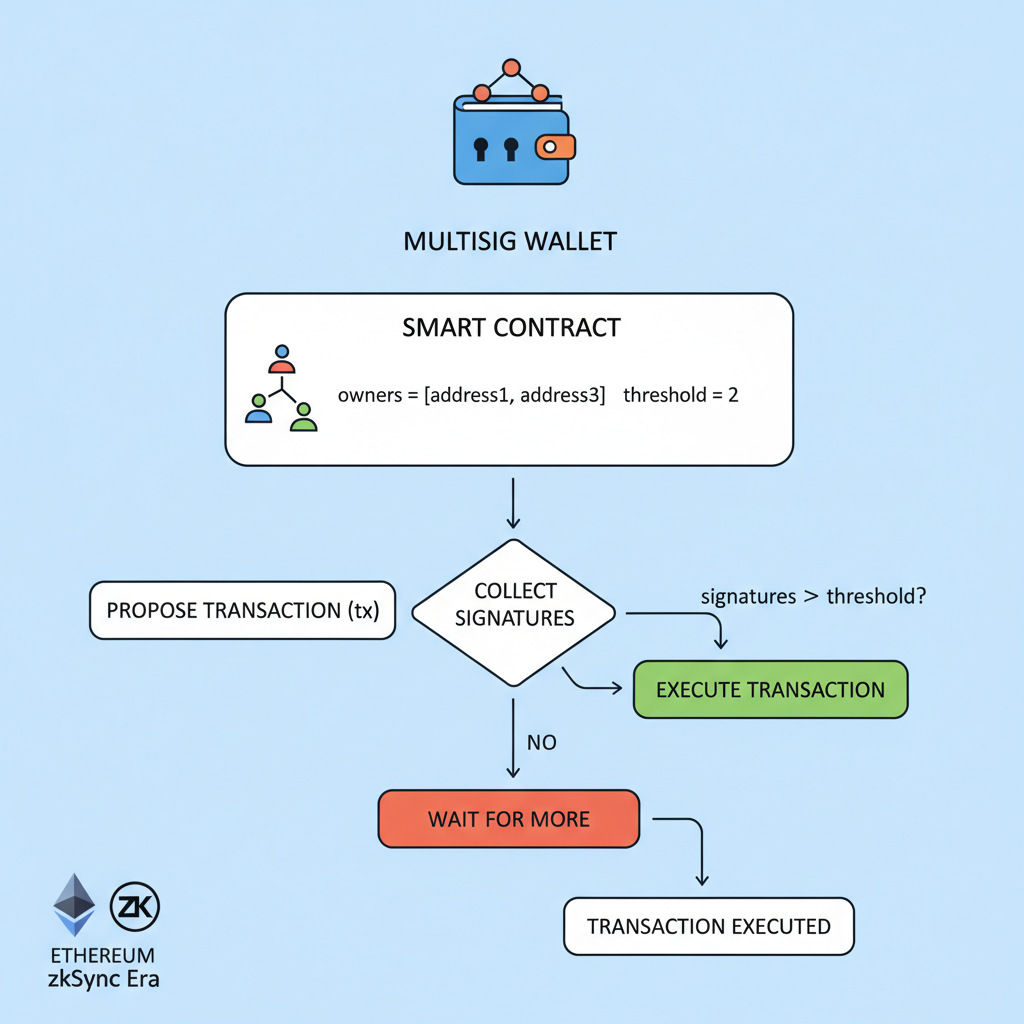
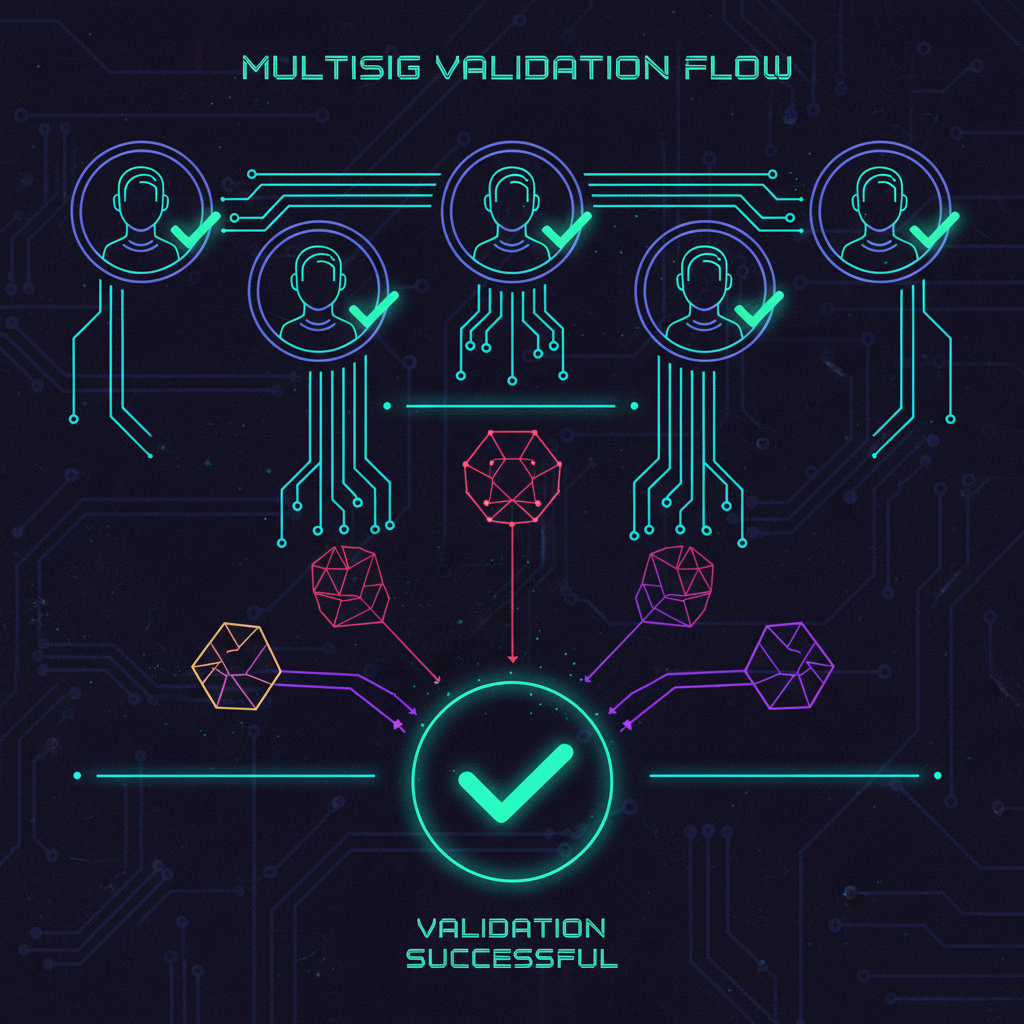
Implementing a multisig smart account on zkSync Era starts with defining the core logic in Solidity. Ethereum developers will appreciate how this mirrors familiar multisig wallets like Gnosis Safe, but optimized for zkSync's native AA. The account must implement the IAccount interface, handling transaction validation through validateAndPayForPaymasterTransaction. This function checks signatures from multiple owners against a threshold before approving execution, all verified within the zk-proof batch.
Core Multisig Implementation Walkthrough
Begin by declaring state variables: an array of owner addresses, a uint threshold for approvals, and a nonce for replay protection. The constructor initializes owners and threshold. In validation, aggregate ECDSA signatures using zkSync's extended opcodes, ensuring efficiency over EIP-4337's bundling. Execution delegates to targets via delegatecall, preserving storage context for modular upgrades.
Building a zkSync Era Multisig Smart Account: Step-by-Step Guide

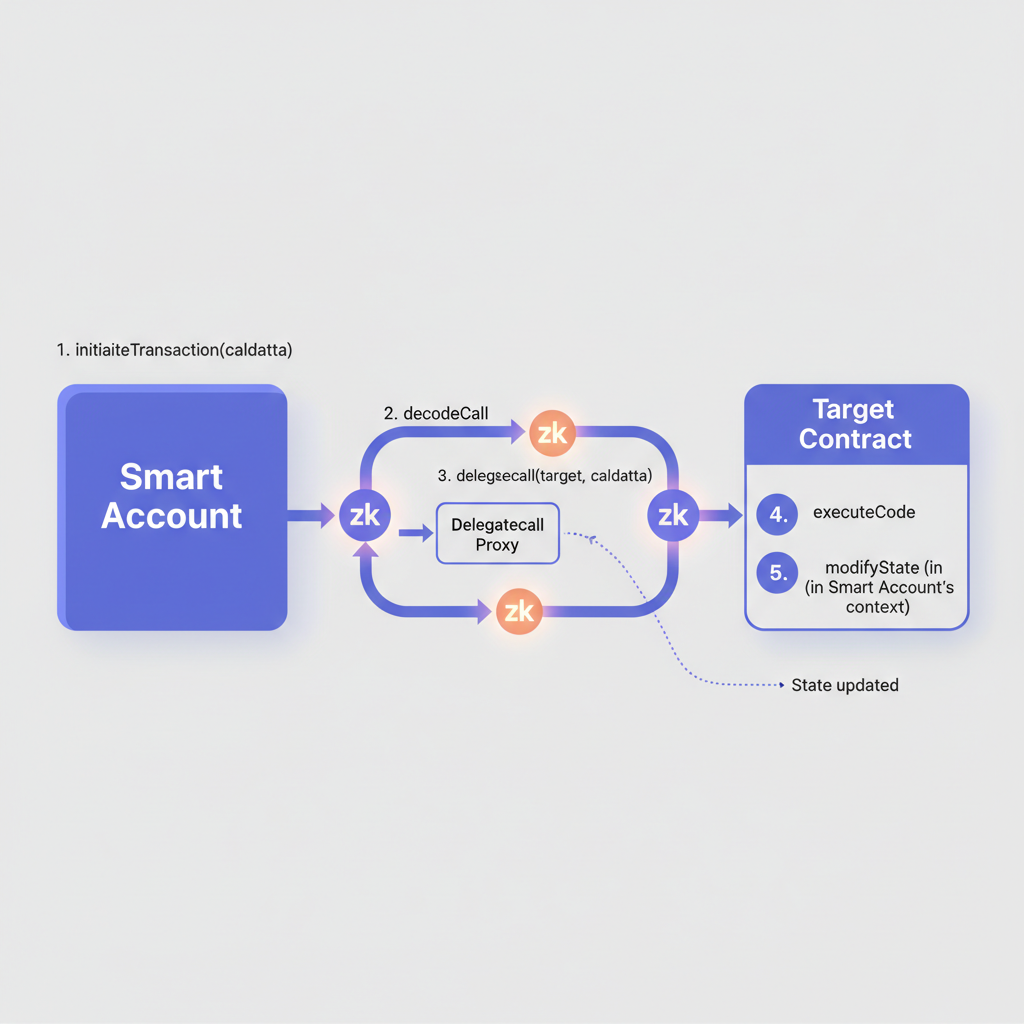
From dissecting zkSync's official multisig tutorial, the validation logic packs signatures into calldata, unpacked and recovered on-chain. This avoids off-chain aggregation pitfalls seen in EIP-4337 setups. Opinion: zkSync Era's opcode extensions make this feel native, not bolted-on, reducing audit surface compared to Ethereum's app-layer hacks.
Deployment and Testing Protocols
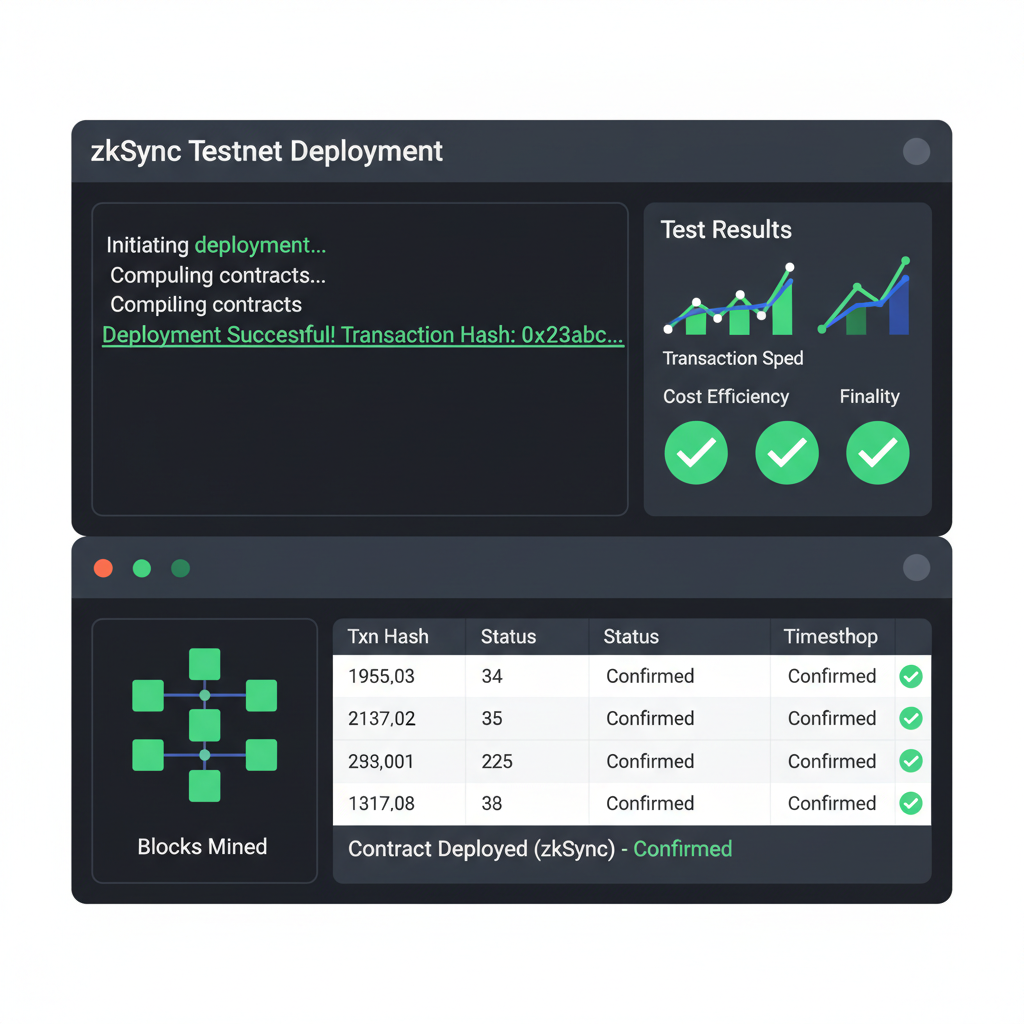
Deployment leverages self-sponsoring: the first transaction deploys the account code atomically. Use Hardhat scripts to simulate owner signatures, bundling into a single zkSync tx. Verify on the Era explorer post-deployment, confirming bytecode matches your artifact. Edge cases like threshold changes or owner additions require modular upgrade patterns, often via a proxy facade.
Testing demands thoroughness. Forge scripts mimic real txs: craft calldata, sign with multiple privkeys, invoke via zkSync's createAccount opcode. Local node spins up via zksync-cli dev, accelerating iterations. Community benchmarks indicate multisig txs settle in 200ms batches, a boon for high-throughput dApps like DeFi vaults or NFT marketplaces.
Security audits from OpenZeppelin underscore AA's strengths: on-chain validation thwarts replay attacks, while zk-proofs ensure atomicity. Yet, pitfalls lurk - improper nonce handling or signature replay. My review of Argent's zkSync talks reveals session keys as a killer feature: short-lived permissions for dApps, revocable without full account access. Ethereum devs, envision gasless logins without seed phrase exposure.
Scaling to production, monitor bundler-less tx flow: direct submission to sequencers unifies economics. zkSync Era account abstraction positions your dApps ahead, blending Ethereum's security with L2 speed. Developers prioritizing this stack unlock user retention through seamless UX - multisig guardians, spending caps, biometric ties - all protocol-native. As zk rollups mature, native AA cements zkSync's lead in flexible, scalable Ethereum tooling.




No comments yet. Be the first to share your thoughts!