

As Ethereum thrives at $3,016.02, up $117.80 in the last 24 hours, the ZKsync Elastic Network emerges as a powerhouse in zk rollups interoperability. Chains like Sophon and GRVT are not mere add-ons; they are catalysts reshaping how ZK rollups connect, settle, and scale across ecosystems. In early 2026, with protocol upgrades live and deprecation of ZKsync Lite on the horizon, this network promises unified liquidity and seamless interactions, all while tying the $ZK token directly to real revenue streams.

ZKsync (ZK) Price Prediction 2027-2032
Professional forecast driven by ZKsync Elastic Network revenue streams, interoperability with Sophon & Grvt, institutional adoption, and ZK Rollup advancements (2026 baseline average: $0.50)
| Year | Minimum Price (USD) | Average Price (USD) | Maximum Price (USD) | YoY Growth % (Avg) |
|---|---|---|---|---|
| 2027 | $0.40 | $0.85 | $1.50 | +70% |
| 2028 | $0.70 | $1.60 | $3.00 | +88% |
| 2029 | $1.20 | $2.80 | $5.50 | +75% |
| 2030 | $2.00 | $4.50 | $9.00 | +61% |
| 2031 | $3.00 | $7.00 | $14.00 | +56% |
| 2032 | $4.50 | $11.00 | $22.00 | +57% |
Price Prediction Summary
ZK token is projected to experience significant growth from 2027-2032, with average prices rising from $0.85 to $11.00 (over 12x), fueled by revenue-sharing via buybacks, Elastic Network expansion, and interoperability. Minimums reflect bearish cycles/regulatory risks; maximums assume bull markets, mass adoption, and tech dominance. Realistic ranges account for crypto cycles, competition from other L2s, and Ethereum ecosystem synergies.
Key Factors Affecting ZKsync Price
- ZKsync Elastic Network revenue from on-chain interoperability fees and off-chain licensing, enabling token buybacks
- Interoperability upgrades linking ZK Chains (Sophon, Grvt) with Ethereum for unified liquidity and MEV protection
- Institutional adoption via GRVT hyperchain targeting $2.9T derivatives market and privacy-focused trading
- Protocol enhancements like Q1 2026 upgrade and deprecation of ZKsync Lite for advanced ZK Rollups
- Broader market cycles, Ethereum scaling (ETH at ~$3,000 baseline), regulatory clarity, and competition from other L2 solutions
- Partnerships with Aethir, Mirai Labs, OPEN Ticketing boosting gaming/AI use cases and ecosystem TVL
Disclaimer: Cryptocurrency price predictions are speculative and based on current market analysis.
Actual prices may vary significantly due to market volatility, regulatory changes, and other factors.
Always do your own research before making investment decisions.
The ZKsync Elastic Network transcends traditional Layer 2 boundaries. It is a dynamic web of public and private chains built on the ZK Stack, enabling developers to launch sovereign chains that interoperate effortlessly. Picture ZKsync Era as the core, with satellites like Abstract Chain, Sophon, GRVT, Lens, and Nodle orbiting it. This setup allows users on these zksync chains to tap Ethereum protocols such as Aave directly, without sacrificing performance or privacy. Institutions love it; GRVT, for instance, shields large trades from MEV bots, a game-changer in a market rife with front-running.

https://t.co/C08z9Sn4Dp
Sophon Zksync: Gas-Free AI and Gaming Frontier
Sophon stands out in the zksync chains list by fusing cryptocurrency with AI and gaming, delivering a gas-free experience with near-instant finality. Powered by the ZK Stack, it targets consumer applications where friction kills adoption. Partnerships with OPEN Ticketing for seamless events, Aethir for cloud compute, Mirai Labs for AI agents, and Anomaly for gaming primitives create a buzzing ecosystem. Sophon is not chasing hype; it solves real pain points, like eliminating gas fees that deter casual users from dipping into Web3 gaming or AI-driven apps. In my view, this chain exemplifies how ZK rollups interoperability can onboard millions by making blockchain feel invisible.
Grvt ZK Chain: Institutional Derivatives Powerhouse
GRVT, ZKsync’s pioneering hyperchain, eyes the $2.9 trillion Web3 derivatives market with a hybrid exchange model. Institutions trading here avoid the pitfalls of public chains: no position exposure, no MEV predation. ZKsync’s infrastructure has proven battle-tested, running flawlessly for high-stakes volumes. Tweets from exchanges highlight GRVT’s role in accelerating secure trades, with liquidity syncing across Ethereum and ZK Stack chains post-upgrade. This is ZKsync building the settlement layer for finance pros and sovereign entities alike. GRVT proves the Elastic Network’s versatility, turning zk tech into tangible revenue for $ZK holders.
ZKsync (ZK) Price Prediction 2027-2032
Forecasts based on Elastic Network expansion, token buybacks from interoperability fees and revenue sharing, integrations with Sophon and GRVT, amid bullish L2 adoption and Ethereum scaling trends (2026 baseline avg: $0.65)
| Year | Minimum Price | Average Price | Maximum Price | Est. YoY % Change (Avg) |
|---|---|---|---|---|
| 2027 | $0.50 | $1.00 | $2.50 | +54% |
| 2028 | $0.80 | $2.00 | $5.00 | +100% |
| 2029 | $1.20 | $3.50 | $8.00 | +75% |
| 2030 | $1.80 | $5.50 | $12.00 | +57% |
| 2031 | $2.50 | $8.00 | $18.00 | +45% |
| 2032 | $3.50 | $11.00 | $25.00 | +38% |
Price Prediction Summary
ZK token outlook remains strongly bullish through 2032, driven by revenue-tied buybacks, ZK Elastic Network growth with chains like Sophon (AI/gaming) and GRVT (institutional derivatives), and protocol upgrades for seamless Ethereum interoperability. Average prices projected to rise from $1.00 in 2027 to $11.00 by 2032 (17x growth), with maximum potentials exceeding $25 amid bull cycles, though minimums account for bearish corrections and competition.
Key Factors Affecting ZKsync Price
- Token buybacks funded by on-chain interoperability fees, off-chain licensing, and network revenue
- Elastic Network proliferation via Sophon (gas-free AI/gaming) and GRVT (MEV-resistant Web3 derivatives trading)
- Q1 2026 protocol upgrade enabling unified liquidity and direct Ethereum L1 settlement
- Institutional adoption for private, performant trading without public chain exposures
- Deprecation of ZKsync Lite shifting focus to advanced ZK Rollups
- Market cycles, Ethereum price correlation (ETH at $3,016 in 2026), regulatory clarity on L2s
- Competition from other L2s (Arbitrum, Optimism) and emerging scaling solutions
Disclaimer: Cryptocurrency price predictions are speculative and based on current market analysis.
Actual prices may vary significantly due to market volatility, regulatory changes, and other factors.
Always do your own research before making investment decisions.
Zksync Atlas Upgrade: Unifying Liquidity and Settlement
The Atlas upgrade, rolled out in Q1 2026, marks a pivotal shift in zk rollups interoperability. During the transition, ZKsync Era and Elastic chains settled directly on Ethereum Layer 1, enabling expanded asset transfers and bundled calls. This creates a synchronized liquidity pool, where chains like Sophon and GRVT plug in without silos. Deprecating ZKsync Lite clears the path for advanced solutions, focusing resources on hyperchains that deliver. Meanwhile, the founder’s ZK token buybacks proposal leverages on-chain interoperability fees and off-chain licensing to boost $ZK value, aligning incentives across the network. Ethereum’s steady climb to $3,016.02 underscores the timing; as L1 solidifies, ZKsync’s elastic expansion captures the overflow.
These revenue streams are no afterthought. On-chain fees from cross-chain interactions will fund buybacks, directly pumping $ZK value as adoption surges. Off-chain licensing lets non-ZKsync projects tap the stack, creating a flywheel effect. I see this as a masterstroke; it turns interoperability from a tech feature into a profit engine, something other rollups envy.
ZKsync Chains List: Expanding the Elastic Ecosystem
Beyond Sophon and GRVT, the zksync chains list paints a picture of relentless innovation. Abstract Chain experiments with modular designs, Lens focuses on social primitives, and Nodle brings IoT into the fold. Each chain sovereign yet interconnected, sharing ZK proofs for settlement on Ethereum at $3,016.02. This federation crushes fragmentation plaguing other L2s. Developers gain templates for hyper-specialized chains, while users roam freely, liquidity flowing like water. In 2026, expect more: sovereign funds testing private chains, gaming guilds on Sophon, derivatives desks on GRVT.
ZKsync Elastic Chains
-
Sophon: Consumer-focused ZK chain merging crypto with AI/gaming. Offers gas-free experience, near-instant finality. Partnerships: OPEN Ticketing, Aethir, Mirai Labs, Anomaly. Enables direct Ethereum interactions like Aave.
-

GRVT: ZKsync’s first hyperchain for $2.9T Web3 derivatives. Hybrid exchange, MEV-proof trading protects institutions from frontrunning. Unified liquidity with Ethereum.
-
Abstract Chain: Modular ZK chain in Elastic Network. Supports seamless interoperability, asset transfers, and bundled calls post-Q1 2026 upgrade.
-

Lens: Social protocol chain leveraging ZKsync for decentralized social features. Benefits from Elastic Network’s unified settlement and privacy.
-
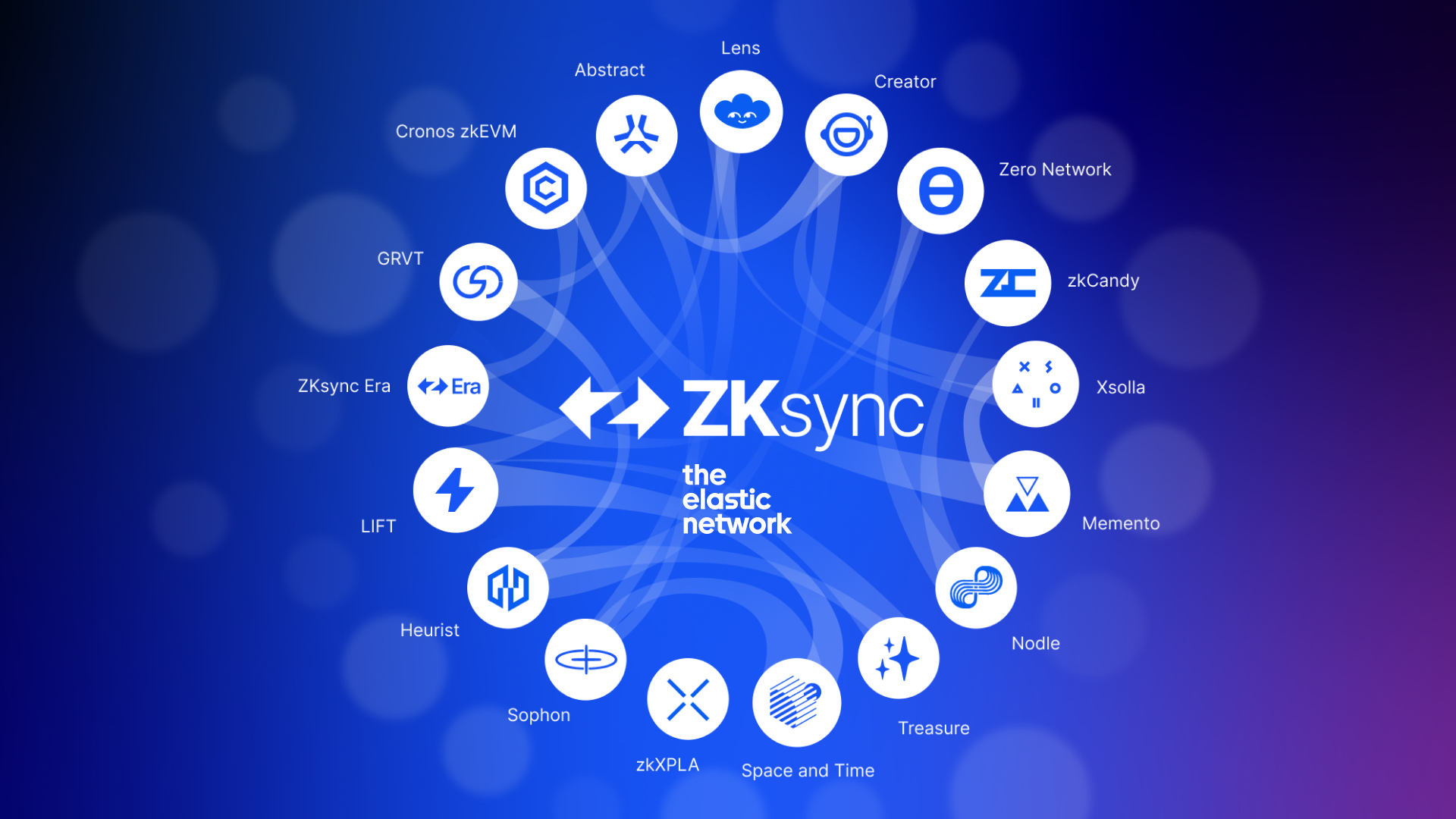
Nodle: IoT-focused chain on ZKsync. Enables secure, interoperable IoT data with Ethereum protocols while retaining chain sovereignty.
What sets this apart in the zk rollups interoperability race? Native validity proofs. Unlike optimistic rollups waiting days for challenges, ZKsync’s cryptographic guarantees mean instant trust. Chains settle in batches, but users feel native speed. Sophon’s near-instant finality? That’s ZK magic at scale. GRVT’s privacy? Selective disclosure hides orders until execution. Ethereum’s modest 24-hour gain to $3,016.02 signals stability, perfect for ZKsync to layer on without volatility shocks.
Challenges Met, Dominance Ahead in 2026
Sure, hurdles remain. Proving time for complex states can lag, but ZKsync’s hardware acceleration and recursive proofs chip away at that. Deprecating ZKsync Lite? Bold, but necessary; it forces migration to Era and hyperchains, pruning dead weight. Critics call the Elastic Network fragmented, yet shared sequencing and unified bridges prove otherwise. Liquidity fragmentation? Atlas fixes it with pooled reserves. My take: ZKsync flips the script on L2 wars. Instead of competing in isolation, it federates, drawing talent and TVL. Institutions sniffing around GRVT aren’t tourists; they’re committing billions.
Zoom out to 2026. With Ethereum humming at $3,016.02, ZKsync’s Elastic Network positions $ZK as the interoperability kingpin. Buybacks from fees will stabilize price swings, revenue ties reward builders, and chains like Sophon onboard normies via fun apps. GRVT captures TradFi escapees tired of CEX risks. This isn’t hype; it’s execution. Blockchain scalability hits escape velocity when chains talk fluently, privacy holds, and tokens accrue real value. ZKsync delivers that triad, empowering devs, traders, and dreamers to build without borders.
About the Author