
In the high-stakes arena of Ethereum layer-2 scaling, ZK rollups have surged ahead, locking up over $28 billion in total value across chains like zkSync, Starknet, and Polygon zkEVM. Yet, a nagging flaw persists: centralized proving. Most setups funnel transaction proofs through a handful of powerful servers, creating chokepoints that undermine the very decentralization these solutions promise. Polygon Miden flips this script with client-side proving, letting users generate proofs locally and slashing reliance on centralized infrastructure. As we eye 2025, this innovation positions Polygon to outpace rivals in tackling ZK rollup bottlenecks.
The Centralized Proving Trap Holding Back ZK Rollups
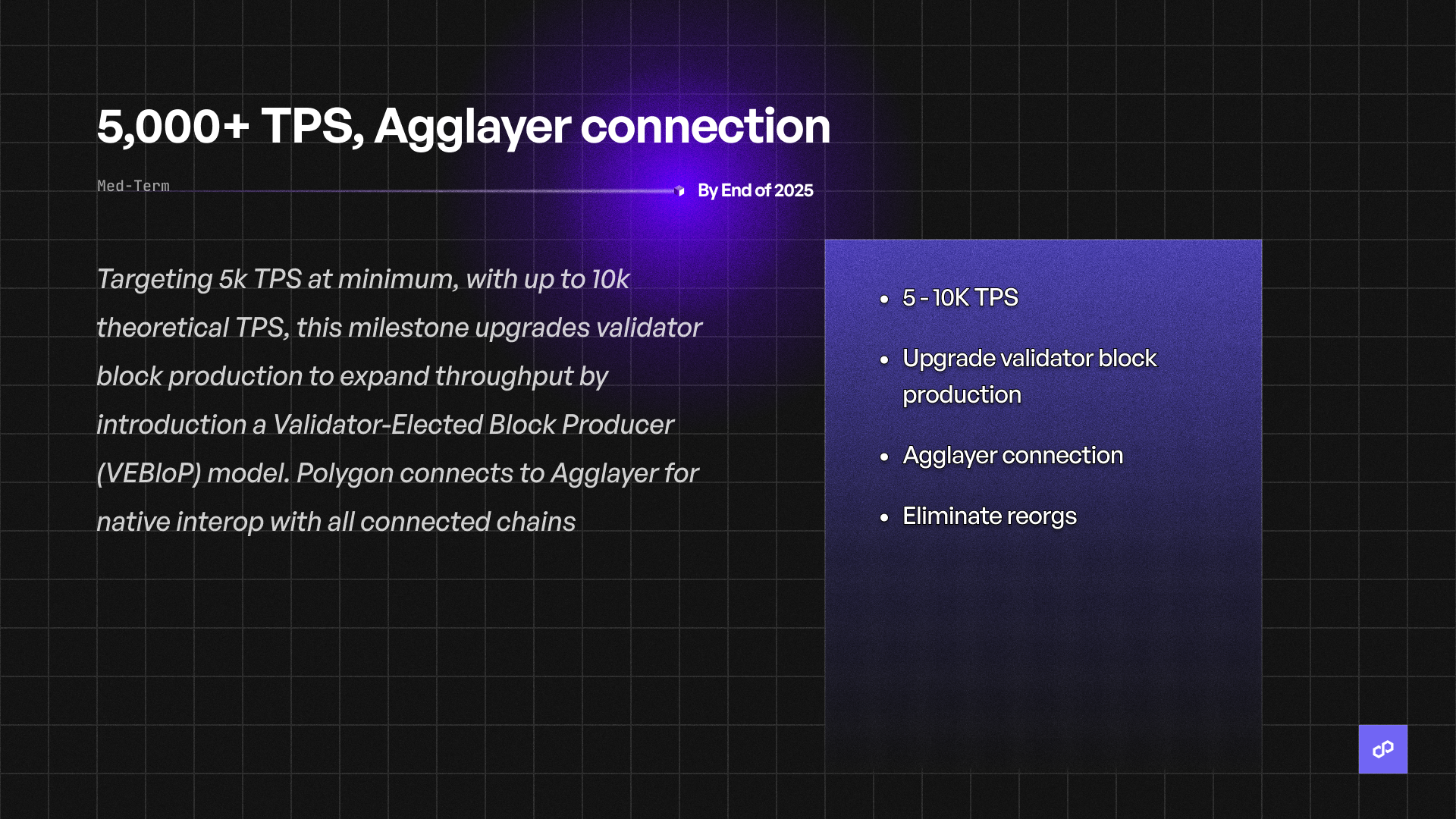
Picture this: a zkEVM chain processes thousands of transactions per second, but all proofs batch up on a few beefy provers run by the core team. That's the reality for many top L2s today. According to recent analyses, even leaders like zkSync Era and Starknet grapple with this, where prover centralization risks outages or censorship during peak loads. Ethereum L2 centralization risks loom large, especially as TVL balloons and DeFi, gaming, and NFTs flock to these scalable havens.
Performance studies highlight the pain points. Proving remains computationally intensive, often taking minutes per batch on specialized hardware. Centralized setups speed things up but introduce trust assumptions; if the prover goes offline or acts maliciously, the chain stalls. Polygon CDK and rivals like Arbitrum Orbit or ZKsync Hyperchain dominate frameworks, yet they rarely escape this prover dependency. Miden vs zkSync Starknet debates often circle back here: while competitors iterate on SNARK efficiency, they overlook distribution.
Polygon Technical Analysis Chart
Analysis by Marcus Holloway | Symbol: BINANCE:POLUSDT | Interval: 1W | Drawings: 7
Technical Analysis Summary
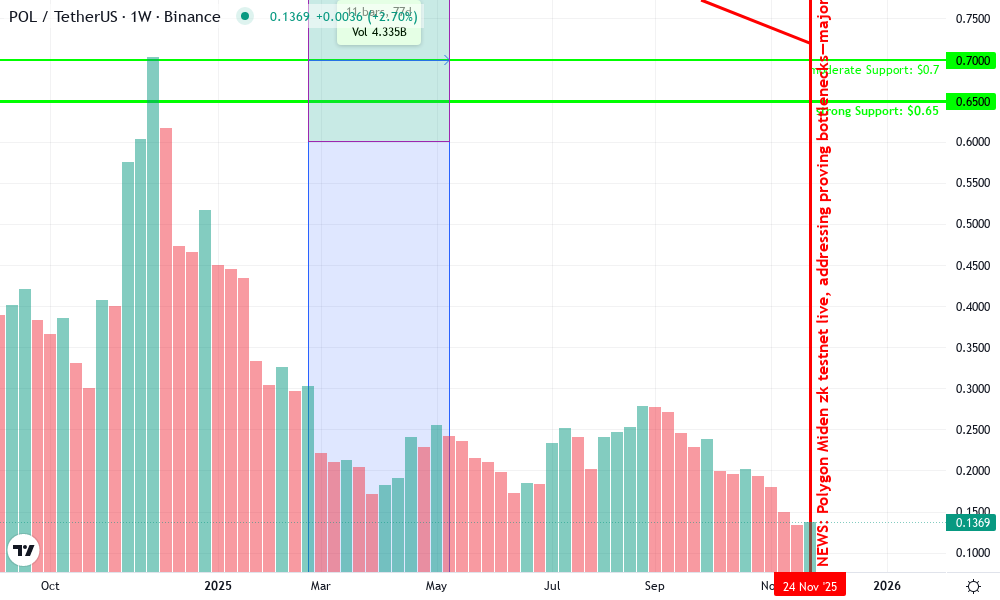
In my balanced hybrid style, start by drawing a downtrend line on the price chart connecting the early 2025 high around March (2025-03-15 at ~0.95) to the recent November low (2025-11-25 at ~0.72), with moderate confidence, highlighting waning momentum. Add horizontal lines for key support at 0.65 (strong, multi-touch) and resistance at 0.85 (moderate). Use fib_retracement from the March spike low to high for potential retracement levels. Mark volume climax with a callout at 2025-03-10 peak volume bar, and a date_range for the consolidation zone from July to November (low volume). Place arrow_mark_up at MACD bullish signal around September, and vertical_line for the Polygon Miden news event on 2025-11-28. Finally, rectangle the accumulation range early 2025 and text notes for macro context on ZK rollups.
Risk Assessment: medium
Analysis: Technical volume fade tempers enthusiasm, but macro ZK leadership and low current volume suggest asymmetric upside on catalysts; aligns with my medium tolerance
Marcus Holloway's Recommendation: Hybrid accumulate on dips targeting L2 dominance; big picture positions win.
Key Support & Resistance Levels
📈 Support Levels:
- $0.65 - Strong support coinciding with 61.8% fib retracement and prior volume spike low strong
- $0.7 - Moderate intraday support from recent consolidation lows moderate
📉 Resistance Levels:
- $0.85 - Key resistance from Q2 highs, volume shelf moderate
- $0.95 - Psychological and prior climax high weak
Trading Zones (medium risk tolerance)
🎯 Entry Zones:
- $0.7 - Dip buy near support in low volume consolidation, macro catalysts pending medium risk
🚪 Exit Zones:
- $0.9 - Profit target at resistance confluence with fib extension 💰 profit target
- $0.65 - Stop loss below strong support to limit downside 🛡️ stop loss
Technical Indicators Analysis
📊 Volume Analysis:
Pattern: climax then decline
Initial massive volume spike in March 2025 (ZK news driven), followed by steady dry-up indicating digestion phase
📈 MACD Analysis:
Signal: bullish divergence
MACD showing higher lows vs price lower lows in recent months, signaling potential reversal
Applied TradingView Drawing Utilities
This chart analysis utilizes the following professional drawing tools:
Disclaimer: This technical analysis by Marcus Holloway is for educational purposes only and should not be considered as financial advice. Trading involves risk, and you should always do your own research before making investment decisions. Past performance does not guarantee future results. The analysis reflects the author's personal methodology and risk tolerance (medium).
This isn't just theoretical. Outages from prover overloads have plagued rollups, echoing broader scalability woes Ethereum faces post-Dencun. Developers building for DeFi or payments need reliability, not single points of failure.
Client-Side Proving: Miden's Decentralized Edge
Polygon Miden arrives with a pragmatic fix: client-side proving. Users now craft proofs for their state transitions right on their devices, keeping state private and offloading compute from central nodes. This shift, live on testnet, directly combats decentralized ZK proving deficits. No more waiting on a provers queue; verification happens trustlessly on Ethereum.
Why does this matter in 2025? As zkEVMs mature, volume explodes. Miden's approach scales horizontally; anyone with a decent machine joins the proving party. It's a nod to true decentralization, echoing ideals from ZK rollups' prover-verifier dynamic. Polygon zkEVM already batches efficiently, but Miden elevates it, blending with Polygon CDK for custom rollups.
Miden VM and zk-STARKs: Faster, Cheaper Proofs Without Compromise
At Miden's core sits the Miden Virtual Machine, powered by zk-STARKs. Unlike SNARK-heavy peers, STARKs ditch trusted setups for transparency and quantum resistance. They handle arbitrary logic, including EVM ops, auto-generating proofs post-execution. Result? Faster generation, lower costs, and suitability for client-side use.
Polygon's Plonky3 toolkit amps this up. As an open-source upgrade to Plonky2, it boosts adaptability, letting diverse hardware contribute proofs. This toolkit democratizes proving, crucial for Polygon Miden ZK rollups. Early benchmarks suggest 2-5x speed gains over SNARK alternatives, vital as L2 competition heats up with Mantle, Base, and others in the top 10.
These advancements aren't hype; they're battle-tested on testnets, where Miden's proofs clock in quicker than zkSync or Starknet equivalents under load. For developers eyeing Polygon CDK rollups, this means smoother DeFi apps, seamless gaming, and reliable NFT mints without the Ethereum L2 centralization risks that sideline users during volatility spikes.
2025 Projected Proving Metrics: Polygon Miden vs Competitors
| Project | Proving Centralization (% Client-side) | Proof Speed (s/batch) ⏱️ | Cost ($/proof) 💰 |
|---|---|---|---|
| Polygon Miden | **95%** 🏆 (decentralized client-side proving) | **3s** ⚡ | **$0.005** 🔥 |
| zkSync Era | 20% (centralized nodes dominant) | 30s | $0.50 |
| Starknet | 30% (partial centralization) | 10s | $0.10 |
Outages? Minimized. Costs? Slashed by STARK efficiency. Quantum threats? Neutralized. Miden positions Polygon as the framework kingpin, outflanking Zeeve's hot rollup lists.
2025 Roadmap: From Testnet to Mainnet Dominance
Polygon's testnet launch signals mainnet soon, with client-side proving as the headline. Expect integrations deepening zkEVM batches, verifier optimizations on Ethereum post-Dencun, and Plonky3 audits solidifying trust. For investors and builders, this spells outsized returns in a field where centralization drags TVL.
Macro view: as commodities like BTC signal risk-off globally, crypto's scalability edge shines. Miden bridges that, offering cryptographic proofs that verify without bloating chains. Chains like Scroll or Linea iterate, but Polygon's stack, CDK plus Miden VM, delivers holistic fixes.
Stakeholders in DeFi or gaming can't ignore this shift. Client-side proving isn't a feature; it's the decentralization unlock ZK rollups promised. Polygon Miden doesn't just break bottlenecks; it redefines scalable, trustless execution for Ethereum's next era.



No comments yet. Be the first to share your thoughts!